• Deputy PM, CDF hold separate calls with Iranian FM, discuss regional developments
• Iran links sustainable security to regional dialogue, says efforts ongoing to revive Islamabad agreement
ISLAMABAD: Deputy Prime Minister and Foreign Minister Ishaq Dar spoke to Iranian Foreign Minister Abbas Araghchi on Saturday and discussed the “latest regional developments”, according to the Foreign Office.
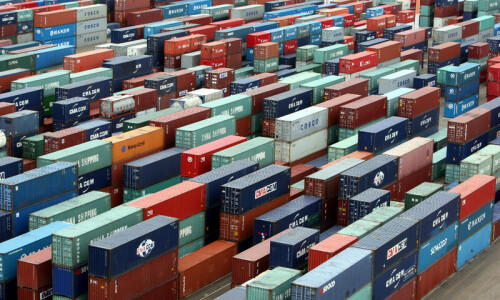
Mr Dar stressed the importance of uninterrupted energy supplies and the safe and expeditious passage of ships, particularly given their implications for developing countries and global supply chains.
He also underscored that dialogue and diplomacy remained the only viable means to ensure peace and stability in the region.
The two agreed to maintain close cooperation and meet in New York on the sidelines of the 81st session of the UN General Assembly.
Mr Araghchi also discussed the latest regional developments during a phone call with Chief of Defence Forces and Chief of Army Staff Field Marshal Asim Munir, according to Iran’s state-run IRNA news agency.
Meanwhile, Iranian interior ministry spokesperson Ali Zeynivand said efforts and international diplomatic mediation were continuing to resolve outstanding issues and return to the Islamabad agreement.
Iran wanted “the other party to adhere to its commitments in this agreement”, Mr Zeynivand said at a press briefing, according to Al Jazeera, which cited the semi-official Tasnim news agency.
He said it was an “agreement that has been approved by the Supreme National Security Council and confirmed by the supreme leader and is considered an official decision of the system”.
“Active diplomacy continues with the president’s participation in the Shanghai and Brics meetings in India and Kyrgyzstan, and through intensive consultations,” he added.
Araghchi stresses regional dialogue
Mr Araghchi said sustainable security could only be achieved through continued dialogue, cooperation and mutual respect among regional countries, while rejecting the presence of foreign military powers, according to IRNA.
He said regional countries should be able to discuss and find solutions for their own security, stability and shared future independently.
“The world we live in needs a fundamental change, of course more than ever, because war, intervention, sanctions, and the use of force have become normal policy tools rather than exceptions,” Mr Araghchi was quoted as saying. “Today’s world needs genuine multilateralism more than ever.”
Dar, Malaysian FM discuss bilateral ties
Separately, Mr Dar also spoke to Malaysian Foreign Minister Mohamad Hasan on Saturday.
The two ministers discussed Pakistan-Malaysia relations, with a focus on expanding trade and economic cooperation. They underscored the importance of sustained high-level engagement to further strengthen ties between the two countries.
They also agreed to meet in New York on the sidelines of the 81st session of the UN General Assembly.
Published in Dawn, September 20th, 2026