UK lawmakers reject bid to legalise assisted dying
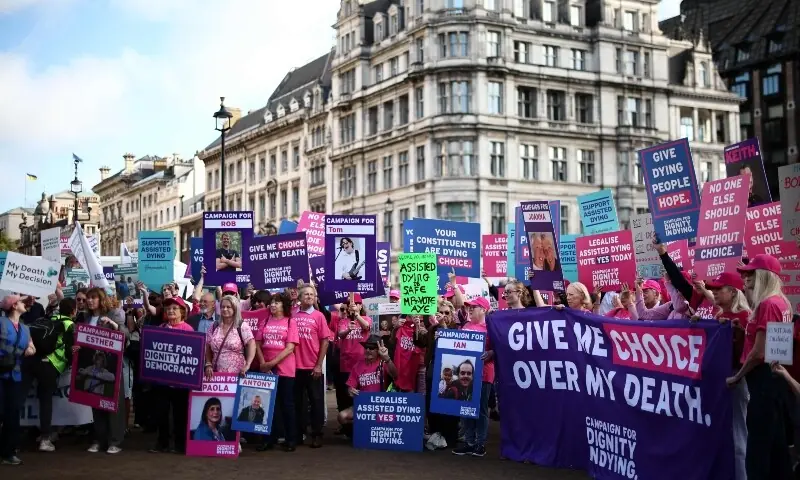
British lawmakers rejected on Friday a proposal to legalise assisted dying for terminally ill people, dealing a major setback to campaigners and bringing the latest effort to change the law to an end.
The result leaves Britain’s ban on assisted dying unchanged, extending a decades-long debate over whether terminally ill people should be allowed to end their lives with medical assistance and how vulnerable people could be protected from coercion if the law was changed.
Parliament’s lower chamber, the House of Commons, rejected the legislation by 286 votes to 270.
The bill would have allowed mentally competent, terminally ill adults in England and Wales with six months or fewer to live to end their lives with medical assistance following approval from a panel of professionals.
Bill falls
Lauren Edwards, a lawmaker in Prime Minister Andy Burnham’s Labour Party, had brought the legislation back through a mechanism known as a Private Member’s Bill, whereby an individual lawmaker selected in a ballot can try to pass a law independently of the government.
“This is a hugely disappointing result not for me but for the many thousands of terminally ill people and their loved ones who were given hope when the Commons voted for this Bill last year,” she said in a statement, referring to the lower house’s previous backing for the legislation.
The previous attempt to pass the bill failed after it ran out of time in the House of Lords, the unelected upper chamber.
Dignity in Dying, one of the groups campaigning for the bill, also decried Friday’s outcome as “a devastating setback for dying people”, but added: “this issue is not going away. Law change on assisted dying remains a matter of when, not if.”
Since Friday’s measure failed at its first parliamentary hurdle, it cannot be revived during the current legislative session, which is expected to run until the spring of next year.
Gordon Macdonald, chief executive of campaign group Care Not Killing, welcomed the result, saying lawmakers had recognised concerns that changing the law could put pressure on vulnerable people to end their lives prematurely.
“Our current laws protect vulnerable people and (members of parliament) have rightly said they do not need changing; it’s time to move beyond this debate and fix palliative care,” Macdonald added.
Concerns over safeguards
Prime Minister Andy Burnham has previously said the debate over legalising assisted dying should wait until Britain’s palliative and adult social care systems had been improved, though his government remained neutral on the legislation and allowed lawmakers to vote according to their conscience.
Burnham did not take part in Friday’s vote.
The latest legislation was identical to the bill approved by lawmakers last year, a move supporters hoped would eventually allow them to use the Parliament Acts, which give the lower house supremacy over the upper chamber to overcome opposition in the House of Lords if peers again refused to pass it.
During Friday’s debate, bill sponsor Edwards said improving end-of-life choice did not have to come at the expense of palliative care. “We can and we should do both,” she said.
Questions over safeguards for vulnerable people remained central to the debate, with opponents arguing the bill could expose some terminally ill people to pressure to end their lives. Parliament also rejected a similar attempt to legalise assisted dying in 2015.
A poll published by Ipsos on Monday showed two in three Britons supported the legalisation of assisted dying in principle, though in some cases, that backing hinged on additional funding being provided for palliative care.