The sugar merry-go-round

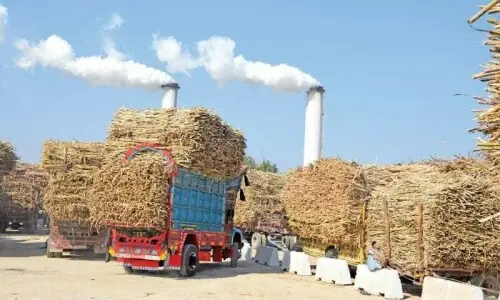
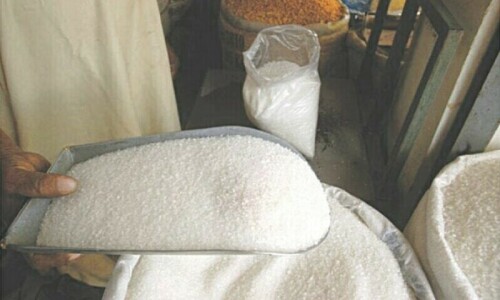
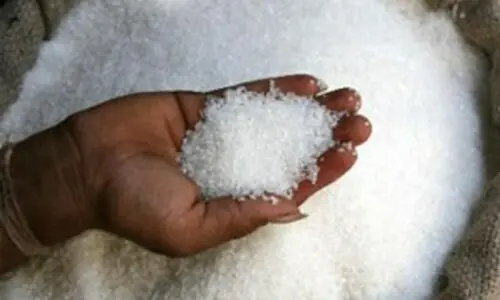
EVERY few years, Pakistan’s sugar industry makes the same demand: the country has a surplus, warehouses are full and exports must be allowed immediately. And every few years, the country ends up asking the same question: if there was so much surplus, why did sugar become scarce and expensive at home?
The country is at that crossroads again. The Pakistan Sugar Mills Association (PSMA) wants permission to export one million tonnes, claiming a surplus of 1.03 million tonnes (mt) and another bumper crushing season beginning in November.
The industry says exports are needed to clear warehouses, generate liquidity and enable mills to buy the next sugarcane crop. It estimates the sales could earn around $600 million in foreign exchange.
The central question is deceptively simple: does Pakistan genuinely have enough surplus sugar to export? The answer depends largely on who is being asked — and on whether anyone outside the industry has counted the bags.
The script is all-too familiar: a surplus is declared and exports allowed, then prices climb and sugar is imported back. As crushing season looms, the same loop has come around once again
Ghosts of inquiries past
The federal government initially appeared reluctant to entertain the millers’ demand. A committee reviewing the PSMA request reportedly deferred an immediate decision, fearing a repeat of the previous year’s experience, when exports were followed by a sharp increase in domestic prices.
Retail sugar climbed beyond Rs180 per kg, raising serious questions about the accuracy of surplus calculations and the state’s ability to protect consumers.
The Ministry of Commerce was even more cautious, telling a parliamentary committee that no proposal to export surplus sugar was under consideration. Its reluctance was rooted in the controversy over the last export-and-import cycle, when Pakistan exported sugar and then imported it back at considerable cost.
That cycle is worth recalling in detail. Last year the government allowed the export of around 0.75mt after concluding that sufficient stocks were available, earning roughly $402 million. It insisted the decision rested on verified production and stock data, and that a strategic reserve of 0.5mt had been retained.
Within months, prices began climbing and the agreement with millers collapsed. The announced ex-mill price of Rs159 per kg and retail ceiling of Rs164 per kg simply did not hold; sugar was selling for Rs178 to Rs180 in some markets.
By July, a fresh arrangement fixed the ex-mill price at Rs165, with retail expected between Rs173 and Rs175. In June and July 2025, the government approved the import of up to 0.5mt to stabilise supplies, later saying actual imports would be around 300,000 tonnes at a cost of about $150 million.
The government’s position then took an interesting turn in August this year. The Economic Coordination Committee considered exporting 108,000 tonnes of sugar lying with the Trading Corporation of Pakistan — what remains of the 300,000 tonnes imported last year.
Rather than opening the door to private millers, the ECC decided to call international tenders, with the final decision resting on prices offered and cabinet approval.
The contradiction at the heart of the controversy is hard to miss: the state is weighing the export of sugar it imported during a shortage, while declining to fully accept the industry’s claim that a large exportable surplus exists.
The millers’ arithmetic
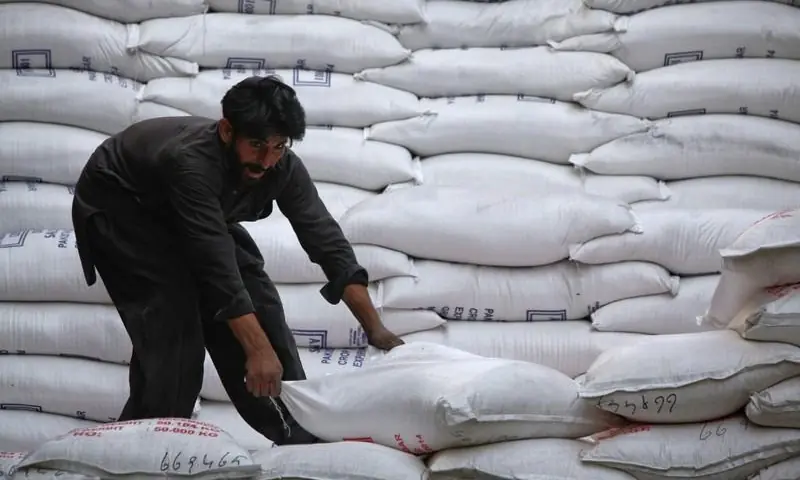
PSMA President Zaka Ashraf maintains that 1.03mt is ready to ship and wants one million tonnes cleared immediately. According to him, stocks are already monitored through the Federal Board of Revenue system and every bag is accounted for, making another physical verification unnecessary. His argument is straightforward: mill warehouses must be emptied before crushing begins in November.
Yet the association’s own figures have moved. It earlier reported stocks of 3.4mt as of July 15 with a projected surplus of about 1.158mt by the start of the next season; later it put stocks at 3.171mt on July 31 with a surplus of 1.197mt by Nov 15.
The differences may reflect consumption and stock movement, but they invite an obvious question: if the position is electronically monitored and reconciled with the FBR, why do the estimates keep shifting?
Millers say blocked inventories have created a liquidity crisis, leaving them struggling to repay bank loans, buy cane and settle growers’ dues. Ashraf puts the cost of production at around Rs160 per kg and argues that exports would not significantly affect domestic prices because fresh supply enters the market from November. He expects the coming season to yield some eight million tonnes.
Most controversially, he says most mills have cleared their dues and that remaining payments can be settled as export proceeds begin to flow. That raises a troubling question of its own: should farmers’ payments depend on the government allowing millers to export?
Farmers divided
The Pakistan Kissan Ittehad (PKI) president Khalid Mahmood Khokhar has demanded immediate permission to export one million tonnes before crushing starts on Nov 15, warning that failure to clear the surplus could collapse cane prices and cost farmers as much as Rs100 billion — a repeat, in his telling, of the 2017-18 crisis.
PKI says a bumper crop spread over more than 3.5m acres is ready for harvest while some 1.3mt of surplus sugar already sits in the system. Its fear is the mirror image of the consumer’s: not that exports will empty the shelves, but that full warehouses will leave mills with neither space nor money for the new crop, forcing growers to sell below cost.
The group wants the sector deregulated, a ban on new mills until existing ones reach 75pc capacity utilisation, and minimum distances between mills.
The PTI Kisan Wing takes the opposite view. Its general secretary, Ejaz Shafi, says growers in Rahim Yar Khan have been paid, receiving Rs300 to Rs350 per 40kg — but he opposes exports, arguing that the 2021 and 2025 episodes were both followed by shortages and price shocks.
In theory, exports improve mill liquidity, allowing timely payments and better cane prices. In practice, he says, the market does not work that way. Sugarcane is perishable and expensive to move, leaving farmers dependent on nearby mills.
“Export windfalls,” the wing argues, “predominantly benefit mill owners rather than automatically translating into higher cane prices.” Shafi wants an independent forensic audit of both stocks and mill finances before any export permission.
Pakistan’s sugarcane production reached a record 89.45mt in 2025-26, according to the Pakistan Economic Survey, contributing 0.8pc to GDP and 3.2pc to agricultural value addition. A genuine surplus would therefore be a real problem for mills and growers alike.
The sector’s history explains why claims are met with suspicion. The Sugar Inquiry Commission report, made public in 2020, found that more than four million tonnes had been exported over five years and that millers had received over Rs29 billion in export subsidies. In 2017-18 alone, the ECC approved a subsidy of Rs10.70 per kg on two million tonnes, with provinces adding their own support — public money underwriting exports while consumers paid more at home.
The commission estimated windfall profits exceeding Rs100 billion and documented allegations of under-reporting, supply manipulation, tax irregularities and exploitation of growers. It also noted how few groups control production, and how ownership cuts across the political divide — which is precisely why the sector has proved so difficult to regulate.
The Competition Commission of Pakistan found prima facie evidence of price coordination and in 2021 imposed penalties of Rs44 billion on mills and the PSMA, a decision challenged in the courts.
Whose numbers can we trust?
The dispute ultimately turns on the credibility of the surplus, not on whether exports are inherently good or bad. Sugar left to rot in warehouses, or prices depressed to the point where mills cannot buy the next crop, is economically wasteful. But a miscalculated surplus is worse: it manufactures a shortage and forces the state to import at a much higher price.
The burden of proof must now sit with the industry. Before permission is granted, the government should conduct and publish independent physical and forensic verification of mill-wise stocks, disclose outstanding payments to growers, calculate domestic consumption until the next season and fix an adequate strategic reserve.
Crucially, permission must carry enforceable safeguards: a defined retail price threshold at which exports halt automatically, and real-time monitoring of prices and stocks. Last year showed that announcements and agreements alone cannot hold a price.
Published in Dawn, September 7th, 2026