Living Among Giants (Volume 1)
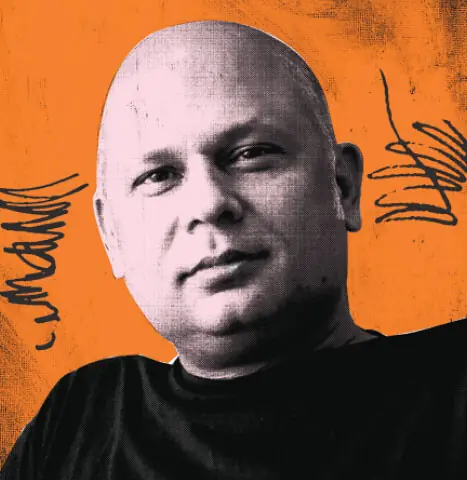
By Asghar Qadir
Pakistan Academy of Sciences
ISBN: 978-969-8223-48-9
292pp.
Few people are lucky to have been brought up by Pakistan’s most famous lawyer, taught by a British Nobel laureate, influenced by Pakistan’s greatest scientist and first Nobel Prize winner, and worked with leading scientists in the USA and beyond.
Asghar Qadir, a renowned physicist and mathematician and a former head of the mathematics and natural sciences departments at Quaid-i-Azam University (QAU) in Islamabad, is one such fortunate individual.
The first volume of his autobiography, appropriately titled Living Among Giants, is not only a chronicle of the first half of his life, till the age of 40, but also a heartfelt tribute to five exceptional figures, for profoundly shaping his life and thoughts. These five giants, as he calls them, are his father, Manzur Qadir, his teacher and Nobel laureate Sir Roger Penrose, his mentor and Nobel laureate Dr Abdus Salam, and two illustrious scientists associated with theories about black holes — Remo Ruffini and John Archibald Wheeler — with whom he worked.
Born in Simla in 1946, Asghar Qadir is the youngest son of Manzur Qadir, Pakistan’s leading lawyer, who served as foreign minister in Gen Ayub Khan’s cabinet and later as chief justice of the Lahore High Court. Asghar Qadir’s academic journey took him from Gordon College, Rawalpindi and Government College Lahore to Imperial College and Birkbeck College in London, where he earned his PhD in relativity in 1971 under Sir Roger Penrose.
During his distinguished academic career spanning over four decades, Qadir taught at premier institutions such as QAU, Government College Lahore and the National University of Science and Technology (NUST). He authored hundreds of interdisciplinary research papers, spanning physics, mathematics, economics and the history and philosophy of science. In his book, he has also documented the tragic decline of Pakistan’s educational standards since the 1970s.
The first volume of the autobiography of a renowned Pakistani physicist and mathematician covers the first 40 years of his life and the five remarkable figures who shaped his life and thinking
Qadir advanced science in Pakistan and developing nations mainly through the International Centre for Theoretical Physics and The World Academy of Sciences, set up by Dr Abdus Salam in Trieste, Italy. He spent five years during two sabbaticals at the University of Texas at Austin, USA, and Saudi Arabia’s King Fahd University for Petroleum and Minerals. His hobbies include writing English and Urdu poetry, playing folk guitar, chess and bridge.
Qadir hails from a very illustrious family: both his grandfathers, Mian Sir Fazl-i-Hussain and Sheikh Sir Abdul Qadir were giants in their respective fields, although he does not include them among the giants who influenced him. The reason is simply a matter of timing: one passed away before he was born, and the other died just as he started school.
Sir Fazl-i-Hussain was the strongman of Punjab’s politics during the 1923-1936 period and was the founding member of the Unionist Party. Sir Abdul Qadir was a jurist and a literary figure who edited the Urdu magazine Makhzan. As both stalwarts were friends, Manzur Qadir married Asghari, daughter of Sir Fazl-i-Hussain, in 1936. Asghari Manzur Qadir was a stunning beauty whom the noted artist Svetoslav Roerich used as a model for his portraits of the Madonna during his stay in pre-Partition India.
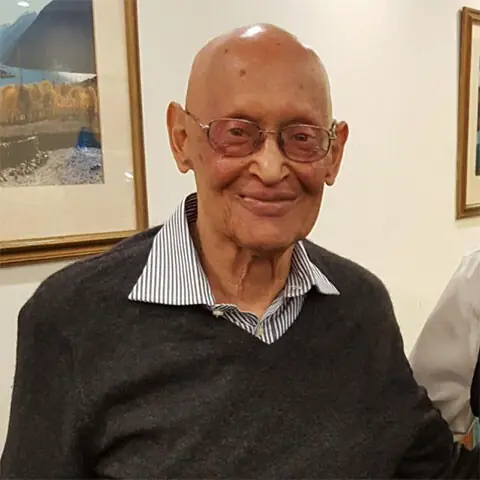
Sir Fazl-i-Hussain’s family uniquely bridged the India-Pakistan diplomatic divide. His sons-in-law, Manzur Qadir and Arshad Hussain, both served as foreign ministers under Gen Ayub Khan, while his sons Naseem and Azim became diplomats for Pakistan and India, respectively. Despite opting for India in 1947, Azim’s career repeatedly crossed paths with his Pakistani relatives: in the 1950s, he, as India’s Deputy High Commissioner to the United Kingdom, divided the assets of the India Office Library in London — which consisted of priceless books, documents and resources — with his brother-in-law and Pakistan’s foreign minister, Manzur Qadir.
In the 1960s, he was concurrently India’s ambassador to Egypt and Lebanon while his elder brother Naseem was Pakistan’s ambassador in Beirut at the same time. And, in 1965, as India’s foreign secretary, Azim signed the Rann of Kutch agreement with Pakistan’s ambassador in New Delhi, Arshad Hussain, his younger brother-in-law and first cousin.
Manzur Qadir and Khushwant Singh, the celebrated Indian journalist, were best friends. Both were lawyers, agnostics (Qadir later turned to religion during his illness shortly before his death) and shared a love for literature. They practised law at the Lahore High Court in the 1940s. Khushwant wrote that Manzur was the most honest person he knew, someone who never told a lie and took great pains to avoid hurting people. Manzur’s friends, according to Khushwant, used him as a sort of moral benchmark to test their own integrity, and whenever in doubt about what the right thing to do was, they would ask themselves: would Manzur Qadir approve?
Days before Partition in 1947, when the situation in Lahore became quite tense, Khushwant handed over the keys of his home to Manzur Qadir and drove off to India with his family, hoping to return to Lahore once the situation improved. As it became obvious that Khushwant would not be coming back, Manzur made sure to have all his household items — even the half-empty whiskey bottles — delivered to his address in India through a sessions judge at Ferozepur named Bhagwan Das.
Asghar Qadir has inherited his father’s integrity and penchant for hard work. Apart from his father, the leading Pakistani influence on Qadir’s life is Prof Abdus Salam, with whom he worked in Italy. It is a matter of utter shame that Dr Salam’s rich life and legacy are not celebrated as they should be in Pakistan, due to religious bigotry, while he is internationally honoured. The Imperial College in London, where Salam taught for decades, has named its prestigious library after him. In his book, Qadir has recounted his various interactions with Salam in both Italy and Pakistan.
Interestingly, Qadir points out that Salam could have won the Nobel Prize twice before 1979. First, a student hastily published a paper omitting Salam’s co-authorship and his prediction of a new particle, for which another scientist later won a Nobel Prize. Second, Salam shared a paper with the physicist Wolfgang Pauli, who derided the idea expounded in the paper, causing Salam to abandon it. In 1969, two scientists won a Nobel Prize for that exact same idea, and Pauli later not only acknowledged but also apologised for discouraging Salam.
The chapters on the three illustrious scientists in Qadir’s life — Penrose, Ruffini and Wheeler — are quite detailed and would be of great interest to science students in Pakistan. The book is a valuable blend of autobiography and biography, providing pen sketches of all five giants in his life.
There are also some interesting anecdotes, laced with humour, in the book. Qadir shares that, in 1976, an international conference was held at QAU to commemorate the centenary of the Quaid-i-Azam’s birth. Eminent scholar Dr Ahmad Hassan Dani later edited a book, based on papers presented during the conference. By the time the book was published, Gen Ziaul Haq had toppled Zulfikar Ali Bhutto’s government in a military coup.
Zia, due to his ‘Islamisation’ drive, did not like the Quaid-i-Azam’s photographs in Western suits and wanted him portrayed in a sherwani. When Dr Dani presented the book to Zia, the first page featured a photo of the Quaid in a suit with a glass in his hand at a party. Outraged, Zia ordered all 300 copies to be unbound and the photo replaced before they could be rebound.
Qadir’s book is slow-paced, as this first volume covers only the initial 40 years of his life. It could have benefitted from better editing as well, as the book suffers from a few repetitive paragraphs and typographical errors. Dr Salam’s year of birth has been wrongly mentioned as 1911 instead of 1926. For the second volume, the author is advised to use formal and full names of persons instead of just their first names, as this confuses the reader, especially when multiple individuals share the first name.
The reviewer is the author of Views and Reviews.
He tweets @AmmarAliQureshi and can be reached at ammar_ali@yahoo.com
Published in Dawn, Books & Authors, September 6th, 2026