1,000 nomads to be relocated for Shor Parod operation: Balochistan CM Bugti
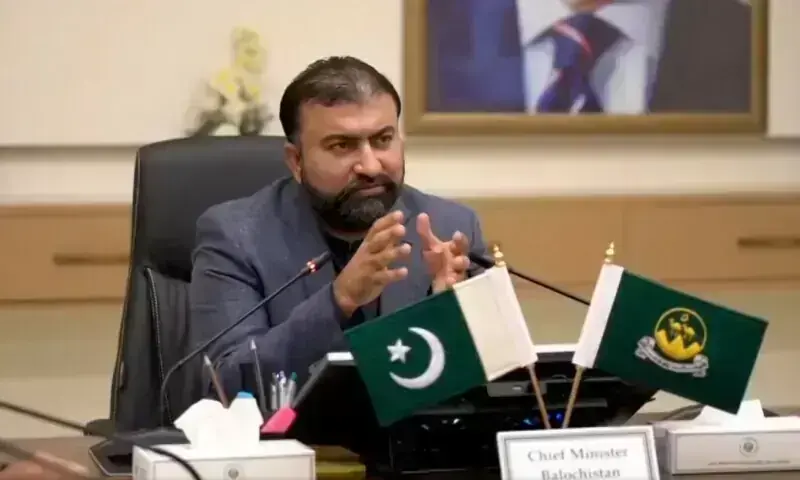
QUETTA: Balochistan Chief Minister Sarfraz Bugti has said the authorities are planning to temporarily relocate around 1,000 people living in a nomadic settlement in the mountainous Shor Parod area of Mastung district to facilitate a security operation against terrorists.
Speaking on the floor of the Balochistan Assembly on Saturday, while responding to a point of order raised by Leader of the Opposition Mir Younis Aziz Zehri about the cutting of fruit orchards and relocation of the population, CM Bugti clarified that no other part of Mastung was included in the relocation plan and that no mass displacement was being carried out elsewhere in Balochistan.
He said Shor Parod was a mountainous area where “armed groups and farari camps” had existed at different times since the 1970s.
According to a government survey, around 1,000 people currently live in the area, most of them belonging to nomadic communities.
Says security forces need ‘enabling environment’ to combat terrorism
CM Bugti said the affected people would be temporarily relocated and that the government would make all necessary arrangements for their welfare, with particular attention to women, children and the elderly.
He stressed that the measure was temporary and aimed at facilitating action against terrorist hideouts. He said terrorists used such hideouts to plan attacks and subsequently used civilians as human shields while targeting state personnel.
The chief minister said the current relocation plan was limited to a small population living in the foothills, including people who move seasonally with their livestock. He added that the plan was still at the planning stage and had not yet been implemented.
He said maintaining a balance between civilian and military institutions was essential under the prevailing circumstances, stressing that security forces needed an enabling environment to effectively combat terrorism.
He said security forces were currently operating in a “grey zone” and that the issue of terrorism needed to be understood in this context.
He rejected what he described as an out-of-context interpretation of his earlier remarks, saying his responsibility was to present the state and government’s position on terrorism, development and governance before the assembly.
The chief minister said it was deeply disturbing that almost every assembly session began with prayers for those killed, adding that people and security personnel were being killed on a daily basis. He clarified that neither the army and other security forces nor the Balochistan government had ever asked citizens to take up arms against terrorists.
He said the security forces were only seeking an “enabling environment” in which they could effectively perform their duties. He said if militants used private properties, including orchards, houses, shops or hotels, as hideouts or launching points for attacks, the state could not ignore the situation.
Published in Dawn, September 6th, 2026