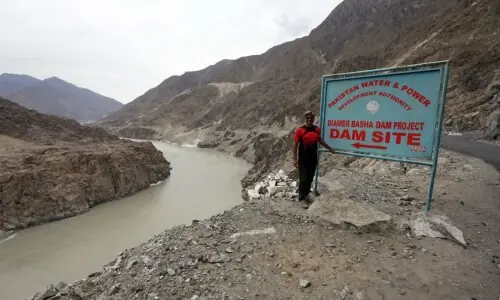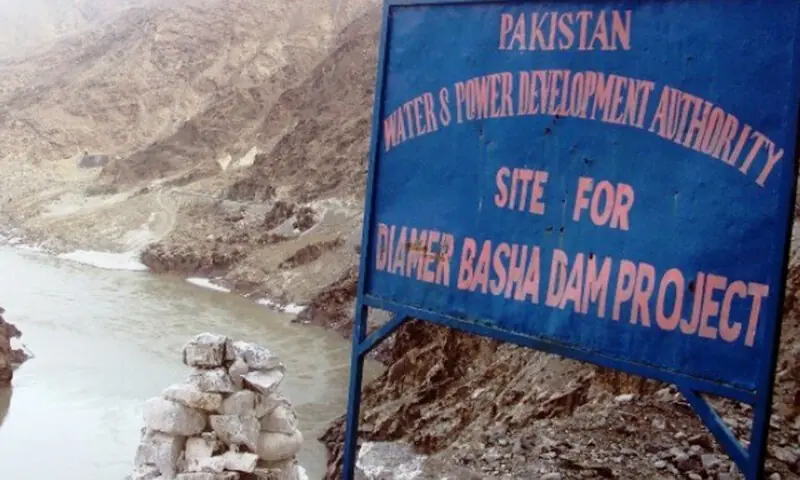
To err is human, but to insist on being right in error is bovine. One wonders what led a web-based publication to get so excited about an internal message from the Economic Affairs Division (EAD) to the Ministry of Water Resources on the electricity generation component of the Diamer-Bhasha Dam and make the claim that the 4,500 megawatt (MW) generation plan of the project has been cancelled.
When the cancellation claim met a swift and emphatic rejection from both Wapda and the EAD, the platform ‘revealed’ a document to aver that this news was correct.
A plain reading of the text says nothing of the sort. It quotes a para from the Power Division (responsible for electricity generation) from the Prime Minister’s portal of assigned tasks that makes a case for more spending in the first stage on water storage, in response to Indian nefarious designs of tinkering with the Indus Waters Treaty. It qualifies the recommendation with a stage-wise expenditure without ever suggesting that the electricity component of the project ought to be abandoned or cancelled.
If anything, it recommends provision of civil works to “enable the dam’s utilisation for power generation at a later stage after assessing the supply-demand at the national level.” It is possible that the closing sentence of the paragraph might have made the story brief with obvious facts and jump to self-serving conclusions: “The task may be closed.” But the sentence is not about closing the electricity production and dissemination part of the project; it is about the task that the Prime Minster’s Portal assigned the Power Division to “immediately finalise the power evacuation plan,” which entails raising finances for the generated electricity to be connected to the national grid.
The task was assigned in December 2025. So it is all about aligning fundraising priorities with the two stages of the project: water storage first; electricity generation next, while both remain an integral part of the full project. This much was adequately explained in official rebuttals.
Thereafter, anyone remotely interested in getting the story right would have reviewed the sensational claim about the dam’s electricity production part being abandoned. None of that happened. The platform’s second attempt at proving itself right is making the baseless controversy linger on. Bad journalism? Ego trip? Something less innocent? All are possible.
Fake news of a certain category travels longer and faster than missiles in war-like situations. Pakistan is facing exactly this situation. India’s weaponisation of water distribution, sharing, and release arrangements under the Indus Water Treaty has already posed a clear and present danger to Pakistan’s security. With the Strait of Hormuz and Bab al-Mandab supply routes becoming militarised war zones, fuel security has become a paramount concern fraught with grave, long-term economic, political, and social consequences. Chronic shortage of vital energy inputs can hold a nation by the throat. Ask the Cubans. Water shortages can upend national security strategies even in the presence of big weapons. Ask the Gulf states.
The Diamer-Bhasha Dam project, therefore, is a strategic target. Fake news spreading confusion about its future hits the very core of the country’s water and energy security. The storage, housed in what would be the world’s tallest RCC dam, is 8.1 million acre-feet, which for a water-scarce and agriculture-dependent economy, is a lifeline. Its annual electricity production potential, 4,500MW, is roughly 16 per cent of the total national generation. With the lowest cost per unit, it can save up to Rs800 billion per year of imported fuel costs, including, crucially, the most expensive furnace oil. Water storage can also unleash new farming opportunities; cheap electricity can trigger an industrial revolution. Free from India’s water blackmail and Gulf supply routes’ challenges, Pakistan can plan a better tomorrow on the back of this dam.
But the dam has to be built first; finances have to be lined up. Nearly $10 billion or more is the required amount, out of which 80pc has to be raised from outside sources. If the planning stage is deliberately riddled with confusion, the future can be made to look murky. Lining up finances can be made even more of a challenging task than it already is. That’s a big game.
It bears mentioning that out of the nearly 4,000 targets in Iran the United States (US) and Israel have hit, almost 30pc are energy or related industrial infrastructure. Out of the over 2,000 attacks that Tehran carried out against Gulf states, one out of two has been on energy supply lines and water facilities.
The point? Wars are no longer about obliterating the adversary’s military hardware. Waterways, storage sites, dams, and energy supply chains, among others, are equally crucial components of the strategy to claim victory and/or inflict crippling costs. And it is not always bombs that do the job: cannonballs of havoc and disruption include propaganda that paints a desperate picture of the enemy’s core vulnerabilities and stretches the notion of its defeat to the realm of economic strangulation caused by broken and choked supply lines of water and energy.
This is why both Iran and the US have excessively used social media to boast about “critically wounding the enemy”, listing relentless attacks on non-military targets. This might sound like overdramatic context analysis of what at first glance appears to be a small storm in an even smaller teacup that a web-based platformed generated. But you can’t rule anything out in this day and age. Big things start small.
There are other factors at work too. The high cost of electricity from Independent Power Producers, and the capacity payments built into old contracts, has been the subject of sustained government and public scrutiny in recent years. Water is a great leveller. Cheap, abundant hydropower would put real pressure on that cost structure, and it is not hard to see why a shift away from expensive thermal generation would be unwelcome in some quarters. Whatever lay behind the original post, the effect is the same: anything that creates doubt about a project like Diamer-Bhasha Dam is a material gain in a long war against energy security. That, in itself, is reason enough to correct the record quickly and firmly, as Wapda and the Power Division have done.
It is good that the record has been swiftly set right. However, the task does not end here. The fake narrative only highlights the need to build the dam and tap its full potential with declared and transparent timelines. Only that will reduce the scope of misleading speculation and sordid propaganda. Every avoidable delay in building it, at home or abroad, only pushes those gains further out of reach.