THE second phase of the China-Pakistan Economic Corridor (CPEC 2.0) involves a trilateral geographical expansion aimed at connecting landlocked Afghanistan to the corridor and to establish a direct land route to Central Asia. While most discussion about the project revolves around new roads and railways, the fact is that it is nothing but Torkham that will decide whether CPEC 2.0’s boldest bet yet will survive the test of reality.
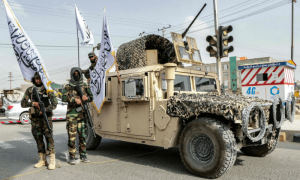
Torkham is a narrow gap in the Khyber hills where trucks line up for days, drivers sleep beside their cargo, and diplomats in Beijing and Islamabad now quietly admit that their newest infrastructure ambitions rise or fall on whether or not the border crossing is functional.
There have been at least five substantial shutdowns of the crossing since 2023. The pattern now facing CPEC planners is quite uncomfortable: every diplomatic step forward on the Afghan extension has been followed, almost on schedule, by a fresh rupture at the exact crossing the extension depends on. The deeper problem is that Pakistan does not actually have an alternative route to offer.
Virtually all trade between Pakistan and Central Asian entities has always moved through Afghanistan, because the parallel route via China into Kazakhstan has never taken off commercially. When Torkham closes, there is no viable workaround.
The only other option is to reroute the entire trade permanently through Iran’s Chabahar port or new rail links into Uzbekistan and Kazakhstan. That re-routing is already taking shape, a trend that has little to do with any single Torkham closure, and everything to do with the trading parties concluding that Pakistani territory can no longer be relied upon.
Even before the October 2025 closure, Pakistan’s average time to clear a border crossing point had already risen 15 per cent in a single year, to 38 hours, while costs and delays had both moved in the wrong direction. Torkham’s own crossing corridor ranked as the slowest-performing of the six major routes across the entire region.
Further capital spending on the Afghan extension — the Peshawar-Kabul motor-way, the ML-1 railway, the Karakoram Highway realignment — risks repeating an old mistake if it is not paired with something less visible, but more urgent: a standing protocol that keeps pre-cleared commercial cargo moving even when political relations sour, full digitalisation of customs paperwork, and making Chaman and other crossing points functional so that a single dispute may not paralyse the entire trade network.
Gwadar and Karachi remain geographi- cally the shortest route to the sea for landlocked Central Asia. That has not changed. What has changed is whether traders in Kabul, Tashkent and Almaty still believe Pakistan will keep that route open when it is politically inconvenient to do so. The undeniable fact is that every week Torkham stays shut only pushes them towards the opposite conclusion.
CPEC 2.0 was announced as a shift from concrete to competitiveness, from roads to reliability. Torkham is where that promise will actually be tested — shipment by shipment — the next time politics and trade collide at the border.
Mujtaba Arshad
Islamabad
Published in Dawn, August 24th, 2026