The paradox of wheat policy

Things are back to square one in wheat crop management in Sindh. The Sindh cabinet on Aug 5 decided to import five million tons of wheat through the Trading Corporation of Pakistan to meet the province’s food security requirements amid a shortfall of 1.69m tons.
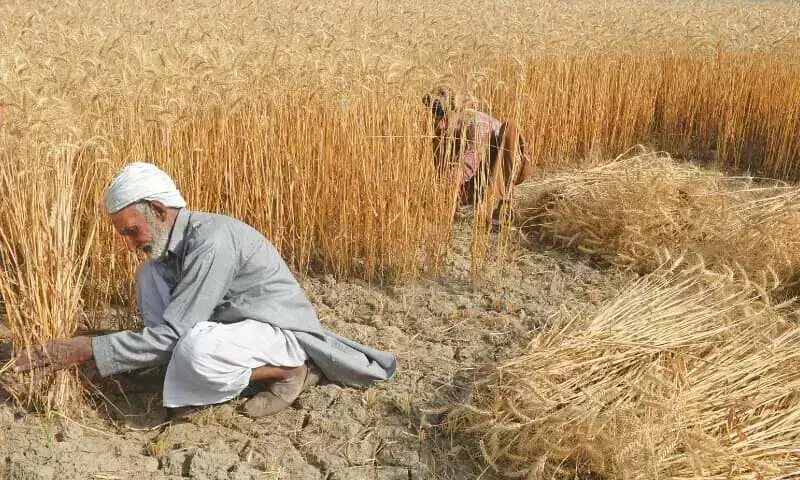
The province has estimated consumption at 6.53m tons against availability of 4.91m tons in FY26, resulting in a deficit of 1.59m tons. This is despite production exceeding the target of 4.22m tons by 688,194 tons, with the crop cultivated on 1.57m hectares. Compared with FY25, acreage increased by 25.7 per cent and production by 39pc from 1.25m hectares and 3.1m tons, respectively.
The provincial agriculture department has attributed the increase in area and production to the government’s wheat support programme, under which cash subsidies on inputs were provided to 0.3m growers, encouraging them to produce more grain.
The programme was launched in November 2025, with the Sindh chief minister announcing a Rs55bn package to target 412,000 small and medium-sized farmers cultivating wheat across 2.26m acres in 2025-26 through the Benazir Hari Card. However, only 0.33m farmers were enrolled. While wheat production remained impressive, the food department procured only 81,000 tons against a target of 1m tons, highlighting planning gaps and possible disarray within the department.
Despite an increase in area and production, Sindh will be importing 5m tons of the grain
One of Pakistan’s leading economists, Dr Kaiser Bengali, said everything revolves around accurate estimates — acreage, production, inputs and consumption requirements. “The food department’s performance was no less chaotic. Unless estimates are correct, we will keep shooting in the dark and are bound to land in a never-ending mess,” he said, adding that procurement and import issues should be left to the private sector. “The government must have correct estimates as we have to protect farmers’ economic interests on one hand and consumers’ rights on the other,” he said.
Initially, the department began issuing wheat to chakki owners and flour millers towards the end of 2025 at Rs9,500 per 100kg bag, while buying wheat at Rs8,500 from the open market. Given the lower market price, the government revised its issue price to Rs8,500 per 100kg to deplete its reserve stocks.
It was then announced that 1m tons of wheat would be procured at Rs3,500 per 40kg, or Rs8,750 per 100kg, in 2025-26. Sindh was to procure wheat after a gap of one year. Since last year, the Afghanistan border has remained closed, shutting conventional and unconventional routes for wheat smuggling. Although grain remains available in the market, the procurement target of 1m tons remains unmet.
The food department deals with a single wheat crop each year but ends up creating a financial and administrative mess. This prompted the provincial government machinery to launch a crackdown on wheat hoarding after flour prices rose sharply within a month of the new crop’s arrival. Wheat was traded at substantially higher prices in the open market.
Sindh is seeking grain from the Pakistan Agricultural Storage and Services Corporation (Passco). A senior Sindh government official anticipates the province will have 6m-6.5m tons of wheat in the next couple of months. This includes 81,000 tons procured in FY26, a little over 200,000 tons carried over from last year, an undeclared quantity of 150,000 tons, and 100,000-200,000 tons to be released from Passco’s reserves in Sindh, depending on quality. Currently, 40kg of wheat is being sold for Rs4,880 in Hyderabad’s grain market.
According to the Ministry of National Food Security, Pakistan’s total wheat production this year stood at 29.58m tons, with Punjab producing close to 22m tons and exceeding its annual consumption target by roughly 5.5m tons. Sindh produced 4.8-4.9m tons against consumption of 6.53m tons. Reports, however, indicated that Punjab still needed another 0.8m tons to maintain its reserves. The province also fell short of its procurement target, buying only 480,000 tons against a target of 3m tons, and is therefore seeking additional reserves, such as Sindh.
Sindh’s farmers do not absolve the federal and provincial governments of their responsibility to manage the farm sector efficiently. “Rather, they have played havoc with wheat markets for the last two years, causing growers to lose over a trillion rupees in the name of deregulation. Deregulation was implemented only to the extent of removing price support for growers, while the government chose to import wheat in a year when production was bumper in FY25,” says Sindh Abadgar Board president Mahmood Nawaz Shah.
His contention was that the promised deregulation to open up markets and allow exports never materialised. “It led to a glut, with grain prices crashing from Rs4,200 to Rs1,800 in 2025,” he said.
Punjab, as usual, had a grain surplus this year. However, the ban on interprovincial movement prevented Sindh’s traders from sourcing supplies there, said a senior Sindh official. “Passco maintains annual reserves of 2m tons. After supplying Sindh and Punjab from its reserves, or even Gilgit-Baltistan, Passco will itself need to maintain its strategic reserves, hence the demand to import 1m tons of grain,” he said.
Earlier, Sindh had recommended a support price of Rs4,000 per 40kg to the federal government, which insisted on a lower price of Rs3,500 per 40kg before wheat sowing. Sindh Food Minister Mehboob Zaman said that by the time the fresh wheat crop began reaching the market, its wholesale price had started to rise, with growers understandably selling to the market rather than the food department for a better price. “Procurement in Sindh was restricted to eligible, registered Benazir Hari Card farmers holding up to 25 acres. Ultimately, 81,812 tons were procured, with a purchase value of approximately Rs7.16bn,” he claimed.
As wheat and flour prices rose sharply by May, the Sindh government used district administrations to recover hoarded grain, which stabilised prices temporarily. Sindh Chief Secretary Asif Hyder Shah, who oversaw the province-wide crackdown on hoarding, said the government had decided to import 0.5m tons of wheat for food security. However, he acknowledged that the provincial food department itself needed root-and-branch reforms.
“The department must have accurate estimates of wheat acreage and production, besides ensuring flawless procurement. It should digitise everything, as it did while enlisting small farmers under the Benazir Hari Card,” commented Mr Shah.
Published in Dawn, The Business and Finance Weekly, August 17th, 2026