Sindh cabinet approves import of wheat to meet projected shortfall

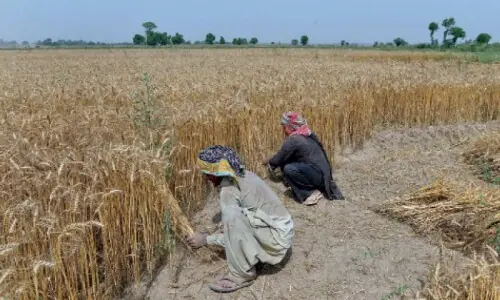
KARACHI: The Sindh cabinet on Wednesday approved the import of 500,000 metric tons of wheat to meet the province’s food security requirements for the current fiscal year amid a projected shortfall of 1.69 million metric tons (MMT).
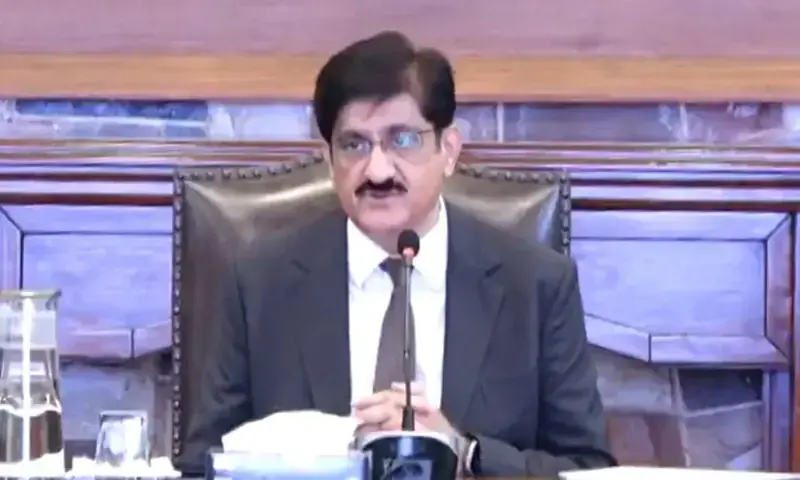
The decision was taken at the cabinet meeting chaired by Chief Minister Syed Murad Ali Shah at the CM House, where officials informed him that the province’s estimated wheat availability for FY 2026-27 was 4.84 MMT against an estimated consumption of 6.53 MMT.
The chief minister said that the move was aimed at safeguarding food security, stabilising prices and ensuring adequate wheat stocks across the province.
According to a statement issued after the meeting by the CM House, the cabinet approved the import of 0.5 MMT of wheat through the Trading Corporation of Pakistan under the framework being coordinated by the federal government.
CM Murad says decision aimed at bolstering food security, stabilising prices
The meeting was attended by provincial ministers, advisers, Chief Secretary Asif Hyder Shah and other senior officials.
On that occasion, the CM said that the decisions taken were part of a reform-oriented agenda focused on food security.
Institute for Democracy and Federalism
The cabinet endorsed the constitution of the Board of the Shaheed Benazir Bhutto Institute for Democracy and Federalism, set up under the SBBIDF Act, 2024.
Education Minister Syed Sardar Ali Shah was nominated as chairperson. The board will also include representatives of the Bhutto family, academia, civil society and relevant government departments.
The Universities and Boards Department has been authorised to issue the notification for the board’s formation. The institute is mandated to promote research and dialogue on democracy, federalism and constitutional governance.
Also, the cabinet reviewed proposals related to off-road vehicle de-registration, relief in the motor dealer holding period and continuity of motor third-party insurance at the time of ownership transfer.
After deliberations, the chief minister directed the excise, taxation and narcotics control department to make necessary amendments to the relevant law and resubmit the proposals for final approval.
Restructuring of Public-Private Partnership Unit approved
The cabinet approved the restructuring of the PPP unit into a wholly government-owned private limited company under the Companies Act, 2017.
The new entity will take over the functions of the existing PPP unit and will handle policy formulation, governance, project facilitation and portfolio management.
The meeting was informed that the move was aimed at addressing weak departmental capacity, improving project delivery and retaining specialist staff.
The cabinet sanctioned an authorised capital of Rs8 billion and paid-up capital of Rs2 billion for the company, along with Rs500 million in seed funding.
The finance department was assigned to complete the incorporation formalities. The current director general of the PPP Unit will serve as the first CEO. The cabinet also approved amendments to the Sindh PPP Act to provide legal backing and strengthen monitoring.
The chief minister said the restructuring would help the province attract private investment and accelerate infrastructure projects.
The cabinet also deliberated on the proposed Sindh Government Lands Management Bill, 2026, aimed at replacing the Colonisation of Government Lands Act, 1912.
The proposed legislation seeks to address longstanding issues in land governance by introducing market-based valuation, transparent public auction mechanisms, clear eligibility criteria for allotments, stronger enforcement provisions, and an effective grievance redressal system.
The new framework will cater not only to agricultural land but also to industrial, residential, commercial, public-purpose and amenity projects.
The cabinet also approved several other items, including extending the Sindh Peoples Housing Initiative to Gilgit-Baltistan for 196 flood-affected houses, imposing toll on the 135-kilometre Nawabshah-Ranipur Mehran Highway for heavy traffic and extending the contracts of 254 employees of the Town Municipal Corporation Lyari.
Published in Dawn, August 6th, 2026