Restored temples of Makhad Sharif revive forgotten heritage
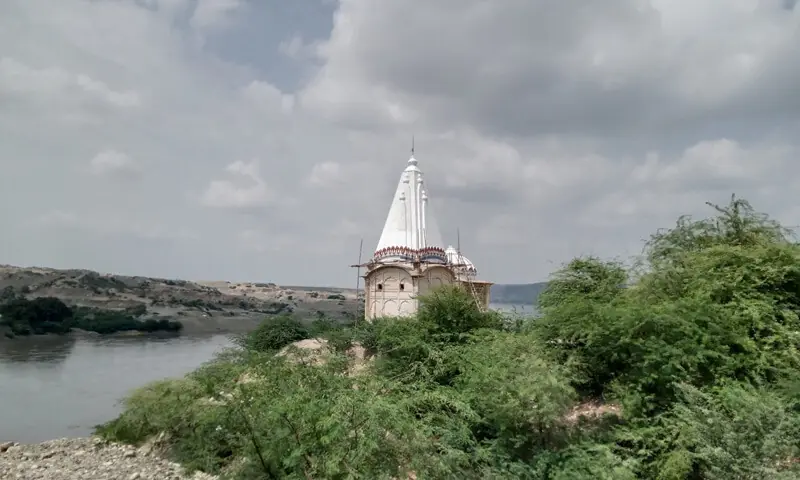

Standing majestically on the eastern bank of the Indus River in Jand, a remote town of Attock, the centuries-old Hindu temples of Makhad Sharif are once again emerging as symbols of Pakistan’s rich and diverse civilisational heritage.
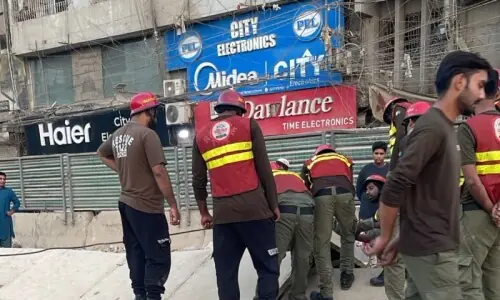
Once left to the mercy of time, weather and neglect after Partition, the remarkable monuments are now undergoing a scientifically planned conservation and restoration programme by the Punjab Department of Archaeology, bringing new life to one of Attock district’s significant yet overlooked archaeological treasures.
Situated at the confluence of the Indus and Soan rivers, Makhad Sharif has for centuries occupied a strategic position on historic trade routes connecting northern Punjab with Sindh. Long before the advent of the railway system, the town flourished as an important river port where merchant vessels transported grain, textiles, timber and other commodities through the Indus trade network.
Its commercial prosperity attracted wealthy Hindu merchants, Muslim traders and Sikh businessmen, who collectively transformed Makhad into one of the region’s vibrant trading centres during the 18th, 19th and early 20th centuries.
Their prosperity gave rise to magnificent temples, imposing merchant havelis, elegant mosques and public buildings, creating a remarkable architectural landscape that reflected the multicultural character of pre-Partition Punjab.
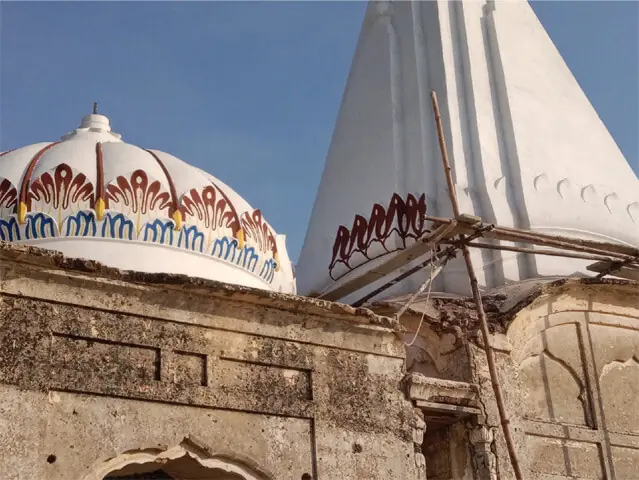
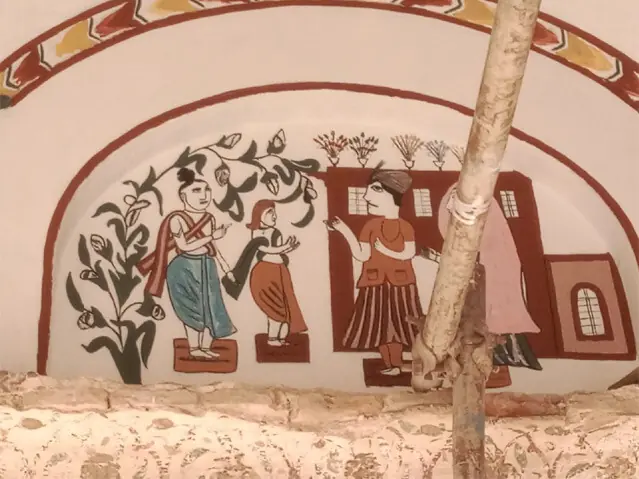
Among these monuments, the ancient Hindu temples occupy a special place. Built on elevated ground overlooking the Indus River, the temples are distinguished by towering shikharas, intricate brick masonry, ornamental frescoes and finely executed architectural details. Their commanding location made them visible from passing boats on the Indus, serving both as places of worship and landmarks for traders navigating the river.
Following the migration of the Hindu community during Partition in 1947, the temples gradually fell silent. Without caretakers, decades of exposure to harsh weather, moisture, biological growth and structural settlement caused significant deterioration. Cracked masonry, damaged plaster, fading frescoes and weakened foundations threatened the survival of the monuments.
Recognising their historical and cultural value, the Directorate General of Archaeology Punjab has initiated an extensive conservation programme aimed at preserving the temples in accordance with internationally recognised principles of architectural conservation.
“The restoration project marks a milestone in Punjab’s heritage conservation efforts and reflects a growing commitment to preserving monuments belonging to all faiths and cultures that have shaped the history of the region,” said Director General of the Punjab Department of Archaeology Zaheer Abbas Malik.
He said the initiative would not only safeguard an irreplaceable architectural legacy but also transform Makhad Sharif into an important destination for cultural, historical and religious tourism.
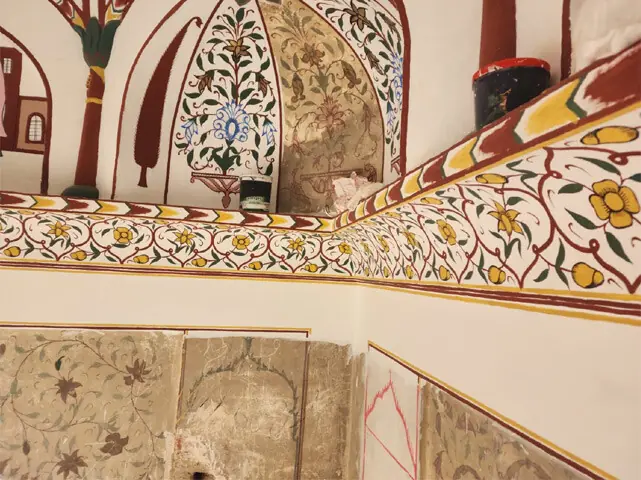
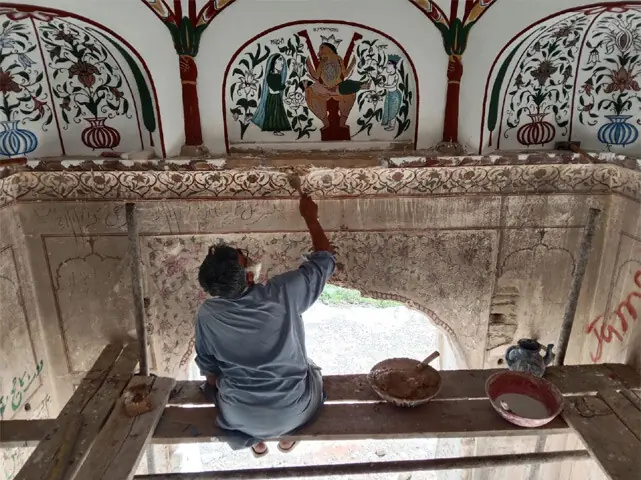
Mr Malik said one of the most delicate aspects of the restoration was the conservation of the temple’s historic frescoes, which represented an invaluable artistic legacy. Conservation specialists are undertaking painstaking cleaning of painted surfaces, consolidating fragile plaster layers, stabilising detached pigments and preserving surviving decorative motifs using internationally accepted scientific methodologies.
“Every intervention is aimed at retaining the maximum amount of original artistic material so that the temple’s historic decorative character remains intact for future generations,” he added.
He described the ongoing work as a model of scientific restoration, where the objective was not to create a new structure but to conserve the authentic historic fabric with the least possible intervention.
Imran Zahid, director of construction and development at the Directorate General of Archaeology, told Dawn that unlike ordinary renovation, the project followed globally accepted conservation standards that emphasised minimum intervention, preservation of original historic fabric, reversibility wherever possible and the exclusive use of traditional materials and indigenous craftsmanship compatible with the monument’s original construction.
He said that before restoration began, conservation architects and heritage specialists carried out an exhaustive condition assessment and scientific documentation of the entire monument.
“Every crack, structural weakness, deteriorated surface and damaged architectural component was carefully mapped and analysed to identify the causes of decay and formulate an appropriate conservation strategy,” he said.
One of the first phases of the project involved the painstaking removal of biological growth, including algae, moss, lichens and microbial deposits that had accumulated on the historic masonry over several decades.
Mr Zahid said conservation experts employed carefully controlled cleaning techniques to eliminate harmful biological agents without damaging the original bricks, stone surfaces or decorative elements.
“This meticulous process has significantly reduced moisture retention within the masonry, preventing further biological deterioration while revealing much of the temple’s original architectural beauty,” he added.
Responding to a question, he said specialised underpinning works were being undertaken beneath the monument to address structural instability caused by foundation settlement.
Raja Noor Muhammad Nizami, a historian of the Potohar region, believes that, together with its spectacular Indus River landscape, ancient river port, traditional architecture and rich archaeological remains, the restored temple complex has the potential to place Makhad Sharif prominently on Pakistan’s cultural tourism map.
“The site offers exceptional opportunities for archaeological research, heritage education and responsible tourism while contributing to the local economy,” he said.
of preserving the nation’s priceless historical legacy for generations to come.
Published in Dawn, August 17th, 2026