The strategic imperative: Why Europe cannot afford to sideline Pakistan

The European Union faces a sobering geopolitical reality: its influence in regions, such as the Middle East and the Persian Gulf, that directly affect its security and economic interests is diminishing. The Iranian dossier serves as the clearest example.
Once a primary architect of the Iran nuclear deal, the EU now finds itself marginalised as US-Iran backchannel negotiations and regional security calculations dictate the trajectory of the relations with Iran. Europe neither participated in any combat operations nor did it play any diplomatic role in bringing the conflict to its resolution. Brussels has been reduced to the role of a concerned but impotent bystander.
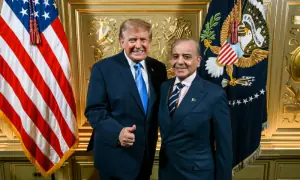
Into this vacuum, Pakistan has moved with strategic intent. Islamabad has close military-to-military relationship with Washington, with Field Marshal Asim Munir having forged a relationship of trust with US President Donald Trump.
On the other hand, Pakistan has long historical ties with Iran, as well as deep relationships with China, Saudi Arabia, Turkiye and Gulf monarchies. As Europe moved closer to the US-Israeli position on Iran, with the German Chancellor Friedrich Merz openly welcoming the war on Iran, the EU has lost its leverage in Tehran — without gaining it in Washington.
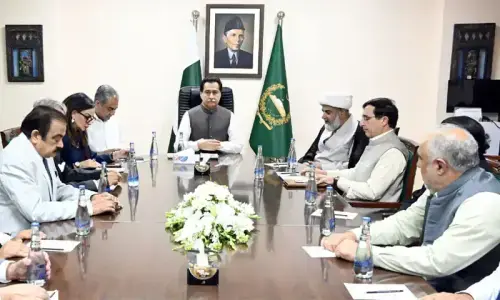
All of this helped enable Islamabad open a diplomatic corridor that Europe cannot replicate. Islamabad has convened the highest-level US–Iran meeting since 1979. The meeting resulted in Memorandum of Understanding, which even under the current severe strain, remains the most realistic framework to end the war that risks destabilising the world, including directly impacting EU security.
EU-Pakistan relations
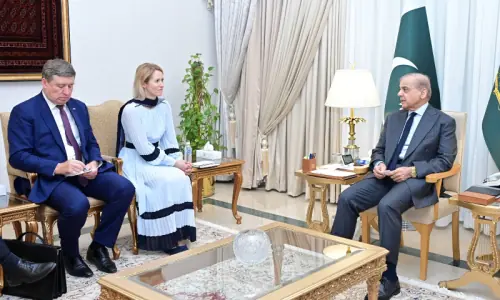
EU foreign policy chief Kaja Kallas has acknowledged this reality, noting that Pakistan’s diplomatic push is now the primary vehicle for de-escalation. For Brussels, this is not a matter of preference but of necessity: Pakistan provides one of the very few functional channels to a regime with which Europe has lost direct leverage.
This places the EU-Pakistan relationship in a new light.
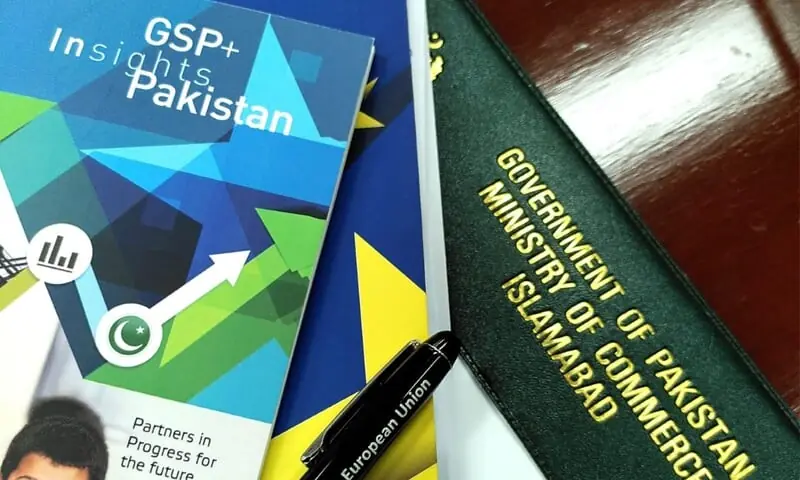
The GSP+ framework grants Pakistan preferential trade access in exchange for adherence to 27 core international conventions covering human rights, labour rights, environmental protection and good governance.
It has always been presented as a developmental tool. In practice, it has become the EU’s primary structural lever over Pakistani policymaking.
The trade preferences are worth approximately €732 million annually, a significant figure for Pakistan’s export-driven sectors. For the EU, GSP+ is not charity; it is the mechanism that keeps Pakistan engaged with European regulatory and governance standards.
The recent European Commission report on Pakistan’s GSP+ compliance is therefore a document of considerable weight. Its findings — that Pakistan has regressed on enforced disappearances, civic space, and the application of counter-terrorism laws — are not peripheral observations. They reflect governance deficits that, if unaddressed, might trigger a reassessment of Pakistan’s eligibility when the GSP+ framework is renewed post-2027.
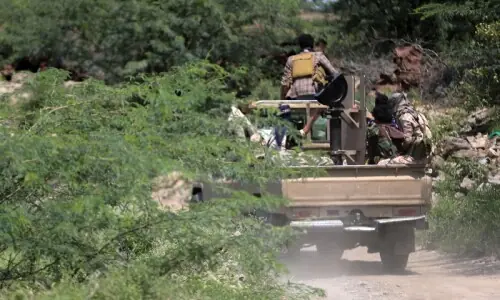
However, the EU’s critique operates within a framework that often abstracts Pakistan’s security environment from its governance performance. Pakistan is facing terrorist activities from various militant groups such as the Tehreek-i-Taliban Pakistan (TTP) and the Balochistan Liberation Army (BLA).
The ground realities
This is not a theoretical threat. The TTP and BLA’s operational capabilities, demonstrated in the regular attacks on security forces and civilians, represent a sustained campaign of violence aimed at fracturing the Pakistani state’s authority. The EU currently does not designate the BLA as a terrorist organisation, a position that diverges from US policy.
From a Pakistani perspective, this absence of designation complicates counter-terrorism cooperation and signals an incomplete understanding of the security pressures that shape Islamabad’s governance choices.
There is an argument to be made that the EU’s ability to demand improved human rights performance from Pakistan would be strengthened, not weakened, by a more robust counter-terrorism partnership.
A state under persistent militant pressure faces structural constraints in delivering the kind of civic and judicial reforms the EU seeks. Deeper intelligence-sharing and operational cooperation in dismantling the BLA-linked networks, such as the extradition of suspected militants and the disruption of financial and propaganda apparatuses, would address a root cause of instability, allowing Pakistan to redirect state capacity toward the governance benchmarks that the EU seeks to promote.
Pakistan, for its part, has structural incentives to heed the EU’s criticisms. The GSP+ renewal is not guaranteed, and the economic cost of losing preferential access would be substantial. The Pakistani state has historically demonstrated capacity for policy adjustment when external and internal incentives are clearly framed. The question is whether the EU can calibrate its engagement to recognise that Pakistan’s internal challenges are not solely a matter of political will, but also of the security environment.
The strategic logic is straightforward: Europe requires Pakistan’s diplomatic weight in Iran, its geopolitical position in South Asia, and its role in stabilising Afghanistan. Pakistan requires European market access and the policy space to manage its internal security threats. An approach that isolates governance critiques from security realities will not advance EU interests. A partnership that addresses both dimensions — through continued GSP+ conditionality paired with enhanced counter-terrorism cooperation — offers a more sustainable and mutually beneficial sustainable framework.
Pakistan has signalled its readiness to act as a regional interlocutor. The EU’s challenge is to structure its engagement to make that role sustainable, not to demand performance without acknowledging the threats that constrain it.