In the 1990s, when I was teaching English and becoming increasingly interested in how people learn, Abbas Hussain, the renowned teacher-trainer from Karachi, introduced me to American psychologist Howard Gardner’s theory of multiple intelligences. It was an exciting idea for a teacher: intelligence need not be confined to what conventional examinations happened to measure.
I began reading Gardner, moving from one book to another and, later, followed his writings on the internet. It was through Gardner, rather unexpectedly, that I first encountered British philosopher Anthony Kenny.
In the early 2010s, while following discussion of one of Gardner’s books, I came across comments by Kenny. I knew almost nothing about him. Curiosity led to another article, then another book and, before long, Gardner had inadvertently introduced me to someone who would become one of my favourite writers on philosophy. After Bertrand Russell, few philosophers gave me quite the same pleasure of discovering that difficult questions could be discussed without making the reader feel intellectually inadequate.
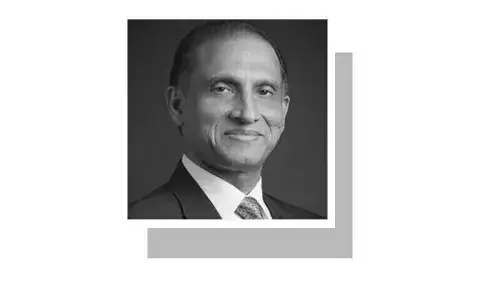
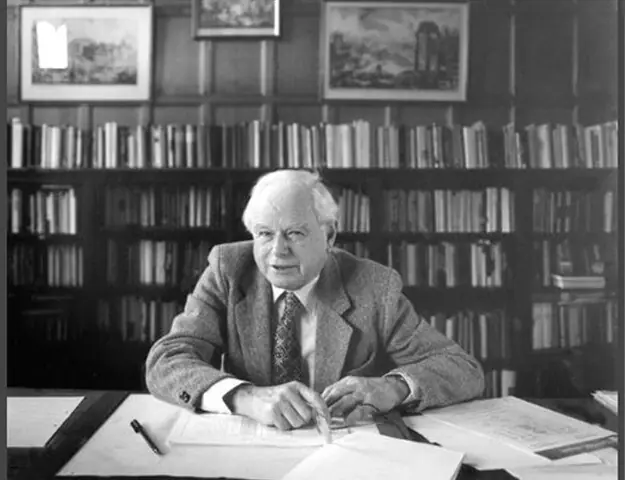
Sir Anthony Kenny, who died aged 95 on August 3, 2026, was an unusual philosophical guide. He possessed immense learning without making a performance of it. He could move from Aristotle and St Thomas Aquinas to René Descartes and Ludwig Wittgenstein while maintaining the tone of a patient teacher rather than a guardian of an esoteric profession. His life also gave his philosophy an unusual authority.
A former Catholic priest who became one of Britain’s great philosophers, Sir Anthony Kenny passed away on August 3. He spent his life making philosophy accessible and modelling the rare courage of admitting uncertainty
Anthony John Patrick Kenny was born in Liverpool in 1931. His youthful Catholic faith was sufficiently serious for him to train for the priesthood. He studied in Rome, was ordained in 1955 and served as a Roman Catholic priest. But doubts that might have been suppressed by a less intellectually scrupulous man became impossible for him to ignore.
In 1963 he left the priesthood. The former priest eventually became one of Britain’s most distinguished philosophers and academic administrators: master of Balliol College from 1978 to 1989, later pro-vice-chancellor of the University of Oxford, president of the British Academy and chairman of the British Library. He was knighted in 1992.
MAPPING WESTERN PHILOSOPHY
Yet the most interesting office Kenny occupied was an unofficial one: cartographer of Western philosophy. His four-volume A New History of Western Philosophy ranged from the ancient Greeks through mediaeval scholasticism and the rise of modern philosophy to the contemporary world.
Aristotle, Augustine, Aquinas, Descartes, John Locke, David Hume and Immanuel Kant emerged not as monuments to be admired from a distance, but as minds struggling with questions that remain alive. His treatment of mediaeval philosophy was particularly valuable because he took Christian and Islamic thinkers seriously as philosophers rather than treating the Middle Ages merely as an interval between Greece and the Renaissance.
Kenny did something similar for the British philosopher Ludwig Wittgenstein. Wittgenstein can be intimidating even to experienced readers. His compressed sentences, shifts of method and refusal to construct a conventional philosophical system have generated an enormous secondary literature, some of it scarcely more accessible than its subject.
Kenny’s Wittgenstein, first published in 1973 and subsequently revised, became a classic because he managed the rare trick of explaining without flattening. He showed the connections between the early Wittgenstein of the Tractatus and the later philosopher of the Philosophical Investigations, making the development of Wittgenstein’s thinking intelligible rather than presenting two almost unrelated philosophers.
The revised edition has been described as among the best general introductions to Wittgenstein’s work as a whole. This was Kenny’s great pedagogical gift. He did not pretend that philosophy was easy. He demonstrated that obscurity and profundity were not synonyms.
BETWEEN BELIEF AND DOUBT
But it was his writing about God that affected me most. Here, Kenny was not an atheist celebrating an escape from childhood superstition. He had been inside belief: had prayed, studied theology, received ordination and administered sacraments. His agnosticism, therefore, had an autobiographical seriousness absent from many fashionable arguments about religion.
In The Five Ways, he subjected Aquinas’ celebrated arguments for God’s existence to philosophical examination. In The God of the Philosophers, he challenged the coherence of the deity constructed by traditional natural theology. Yet he refused to travel from criticism of theism to dogmatic atheism.
Kenny’s position is expressed with admirable economy in What I Believe. The true default position, he wrote, is neither theism nor atheism, but agnosticism. His explanation was even better: a claim to knowledge needs to be substantiated; ignorance need only be confessed.
I remember encountering that argument and being struck by its intellectual modesty. Here was a man who had spent years studying Aquinas, Aristotle, logic, mind and metaphysics, yet was prepared to say, on perhaps the largest question human beings can ask: I do not know. There is courage in those four words.
Kenny thought atheism could itself make a claim exceeding the available evidence. If “God” can be defined in different ways, he argued, the atheist who declares every possible proposition “God exists” false assumes a formidable burden of proof.
WHY IT MATTERS NOW
Kenny concluded that neither theism nor atheism had established its case conclusively. That position deserves renewed attention in 2026. Religion has not disappeared before modernity, as generations of secularisation theorists expected. It remains entangled with nationalism, identity and political power.
In Iran, political authority continues to speak through the vocabulary of an Islamic republic. In Israel, biblical history and religious claims increasingly intersect with arguments about territory, nationhood and war. In America, sections of political life employ an explicitly Christian vocabulary in debates over national destiny and public morality.
These cases are profoundly different and should not be lazily equated. But they demonstrate a common danger: once political objectives acquire Divine sanction, compromise becomes more difficult. A tax rate can be negotiated; the will of God cannot. Territory can theoretically be divided; sacred territory is harder to divide. Political opponents can be accommodated; enemies of Divine purpose are more easily demonised.
Kenny offers no foreign-policy programme for this predicament. He offers something more elementary: epistemic humility. Before declaring that God commands something, how do we know? Before imposing a religious proposition on another human being, what evidence justifies our certainty? And if philosophers who have spent lifetimes examining such questions remain uncertain, what entitles politicians, clerics or television preachers to such confidence?
His agnosticism was therefore not intellectual laziness. It was disciplined restraint. That may be particularly valuable for young people. They often encounter religion today as a crude binary choice. On one side stands certainty: believe what you have inherited or risk moral and, perhaps, eternal catastrophe. On the other stands another certainty: intelligent modern people have discarded God and religion altogether.
Kenny demonstrates a third possibility. One can doubt without sneering. One can abandon orthodox belief without abandoning moral seriousness. One can find traditional arguments for God unsuccessful without claiming to have solved the mystery of existence. Most importantly, changing one’s mind need not be regarded as betrayal. It may instead be evidence that one has continued thinking.
This matters in societies where questioning inherited beliefs can carry heavy social costs. Kenny’s journey from Catholic priesthood to agnosticism illustrates an important distinction between integrity and consistency. Consistency means continuing to say today what one said yesterday. Integrity sometimes requires admitting that yesterday’s answer no longer convinces.
Nor did leaving the priesthood turn Kenny into a professional enemy of Catholicism. His continuing engagement with Aquinas showed how intellectually mature disbelief can operate. Ideas one no longer accepts can still deserve study; traditions one has left can still contain wisdom.
That is another reason I kept returning to him.
Russell had first shown me the exhilaration of philosophy written with clarity and personality. Kenny later offered something quieter: the companionship of a scholar who seemed to say that one need not reach a final answer in order for the search to be worthwhile.
The writer is a columnist, educator
and film critic. He can be reached at
mnazir1964@yahoo.co.uk
X: @NaazirMahmood
Published in Dawn, EOS, August 16th, 2026