SHC orders formation of committee to probe HIV outbreak among children at Karachi hospital
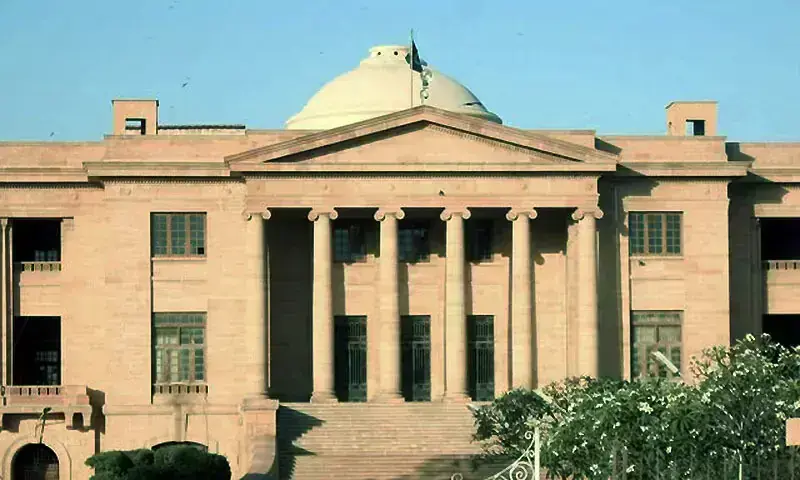


KARACHI: The Sindh High Court (SHC) directed the provincial government on Thursday to constitute a committee for an “independent, impartial and comprehensive” inquiry into the HIV outbreak among children at Karachi’s Kulsum Bai Valika Hospital.
A two-member SHC bench, headed by Justice Adnanul Karim Memon and comprising Justice Muhammad Jaffer Raza, issued the directive as it announced its reserved judgement on a plea seeking an independent inquiry, registration of a case and lifelong medical treatment as well as appropriate compensation for the affected children.
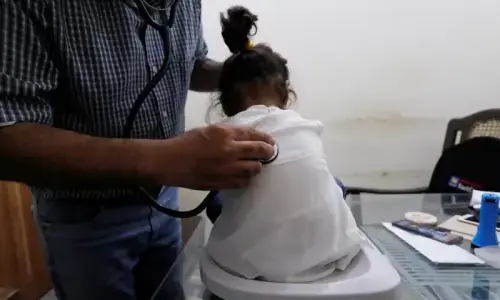
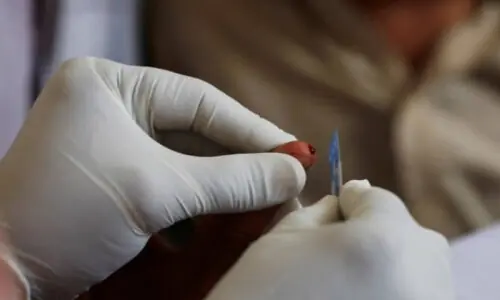
The outbreak was initially reported late last year, following which the Sindh government carried out screening at the Sindh Employees Social Security Institution (SESSI)-run hospital located in Karachi’s SITE area. According to data shared by the Sindh government, at least 78 children have been found infected with HIV at the hospital while a screening in the nearby area also confirmed 120 additional cases.
But Advocate Tariq Mansoor, the lawyer who moved the SHC on the matter, claimed in his petition filed in May that the total number of infected children is around 200.
The court observed in its order on the plea that the departmental proceedings and reports submitted so far had been “insufficient to determine the number of affected persons, the source and circumstances of transmission, compliance with infection-control protocols and the Sindh Regulation and Control of Disposable Syringes Act, 2010, as well as the supervisory and individual responsibility of the officials concerned”.
Keeping this in view, the court deemed it necessary “in the interest of justice, transparency and public confidence that an independent fact-finding mechanism be constituted by the competent authority, without expressing any final opinion regarding the guilt or innocence of any individual”.
It directed that a committee, headed by the Sindh chief secretary, be constituted. The chief secretary should co-opt two senior officers not below the rank of BS-20 and “preferably having no direct administrative involvement in the affairs of the hospital or the proceedings under inquiry” to join the committee, the court order stated.
The court directed that the committee should determine:
- The actual number and particulars of children and other patients who were found HIV-positive and who received treatment at the hospital during the relevant period
- The source, circumstances and possible mode of transmission of HIV, based on available medical and scientific evidence
- Whether any disposable syringe or other medical equipment was reused, improperly disposed of, inadequately sterilised or otherwise used in violation of the applicable law, rules, protocols or standard medical practice
- The existence and implementation of infection-prevention and control protocols at the hospital
- The procurement, supply, storage, distribution and use of auto-lock, auto-destruct or auto-break syringes and the relevant record
- The role and responsibility of medical, nursing, technical, administrative and supervisory officials concerned
- Whether any officer or official, by act or omission, failed to discharge a statutory, administrative or supervisory duty
- The status and legality of the departmental proceedings already initiated against the 37 officials and whether such proceedings adequately address the actual responsibility of the persons concerned
- Whether any provision of the Sindh Regulation and Control of Disposable Syringes Act, 2010, or any other applicable law has been violated and, if so, the persons responsible
- The measures required for preventing recurrence of any such incident in the future
The court order further stated that the committee should be empowered to examine all relevant records, including medical and laboratory reports, screening data, procurement and stock registers, syringe records, duty rosters, infection-control and inspection reports, inquiry proceedings, CCTV footage where such incidents occurred in Sindh and other material necessary for an “objective determination, while affording a fair opportunity of hearing to any person against whom an adverse finding is proposed”.
The committee should submit its comprehensive report to the competent authority, as well as the SHC, within two months of its constitution, the order read. It elaborated that the report should identify “the factual position and, where supported by evidence, fixing responsibility and recommending appropriate departmental, statutory or criminal action pursuant to Section 7 of the Sindh Regulation and Control of Disposable Syringes Act, 2010”.
Pending the inquiry, the Sindh chief secretary should ensure through the relevant departments and SESSI that all affected HIV-positive children and other identified patients receive “comprehensive, uninterrupted and appropriate medical treatment”, including medicines, investigations, counselling and follow-up care, entirely free of cost, at any institution of higher standard as medically appropriate, the court ruled.
“All such expenses shall be borne by the government/SESSI and shall not be recovered from the affected patients or their families, and the arrangement shall continue for as long as medically required,” the court directed.
Noting the “extraordinary circumstances of the case and the vulnerability of the affected children”, the court further directed the provincial chief secretary to determine and process the “entitlement of each affected child/ family to compensation, financial assistance or other lawful relief, strictly in accordance with the applicable statutory framework and government policy”.
The chief secretary should ensure that the process is completed expeditiously and without unnecessary hardship to the affected families, the order said.
Moreover, the relevant authorities should ensure that no affected child or family is discriminated against, stigmatised or denied medical, social or other lawful assistance on account of HIV status, the court ruled, adding that the identity and medical information of affected children should be dealt with strictly in accordance with applicable law and accepted medical standards relating to confidentiality.
The court further directed the chief secretary and the health department secretary to ensure immediate preventive and corrective measures at Kulsum Bai Valika Hospital to eliminate any further avoidable risk to patients and strict compliance with the Sindh Regulation and Control of Disposable Syringes Act, 2010, infection-prevention protocols and other applicable health regulations.
Where necessary, they should also ensure the framing of requisite rules in accordance with law, the court order added.
The court also observed that the matter concerned the protection of the rights to life, health, dignity and fair treatment and warranted an independent, transparent and evidence-based inquiry.
“The matter cannot be treated merely as an administrative issue, as the constitutional obligation to protect life under Article 9 [of the Constitution] extends to ensuring effective discharge of public-health and medical-safety responsibilities, particularly towards vulnerable patients,” the court order read.
However, it added, “allegations or departmental proceedings cannot by themselves establish individual culpability, which must be determined based on evidence and after due opportunity of hearing”.
Show-cause issued to petitioner
The court order also stated that during a hearing, the petitioner, Advocate Mansoor, “raised his voice and instigated the private persons accompanying him, prima facie to attract the media and allowed the private persons to record videos in court, which is a contemptuous act on their part”.
The act, the court observed, disrupted proceedings and “seriously disturbed the decorum and dignity of the court”.
“The unruly conduct of the petitioner and the persons in the shape of a mob present in court compelled this court to retire to chambers to complete the order, although almost the entire order had already been dictated in open court.
“Prima facie, the petitioner, being dissatisfied with the conclusion of the matter, attempted to obstruct the court from proceeding further in accordance with law,” the order read.
It added that the incident also exposed a “serious security lapse” on the part of the in-charge of court security, including the relevant deputy superintendent of police and senior superintendent of police.
They were also called upon to explain their position, and they sought time to hold an inquiry.
“Prima facie, they are directly responsible for maintaining order and security within the court premises. Their apparent negligence and failure to discharge their duties enabled a mob brought by the petitioner for his convenience to enter the courtroom, indulge in hooliganism and flagrantly disregard the authority and decorum of this court. Such conduct amounts to an unacceptable interference with the administration of justice, for which the petitioner and the persons acting with him must be held responsible in accordance with law,” the order read.
Therefore, the court directed that Mansoor be issued a show-cause notice, seeking an explanation as to why criminal and contempt of court proceedings may not be initiated against him.
The order stated that the petitioner should submit his written reply before the next date of hearing in separate contempt proceedings, either personally or through counsel, and to continue appearing in person on each date unless such appearance is dispensed with by this court.
“The representatives of the Sindh High Court Bar Association (SHCBA) and the Sindh Bar Council (SBC) were also called upon to intervene in the matter, who also sought time to call upon the petitioner for such misconduct and are also directed to be in attendance in the proceedings,” the order said, adding that the court office should place this matter before the SHC chief justice.
The bench also directed the SHCBA and SBC to take immediate and appropriate remedial measures in accordance with law, including coercive measures against the apparent misconduct of the petitioner.
Meanwhile, court security officials should identify the private persons involved in the incident and initiate appropriate proceedings against all those responsible, the bench directed.
It further instructed the court registrar to preserve and secure the CCTV/ video recordings of the areas inside and outside the courtroom so that the persons involved may be identified and appropriate action may be taken strictly in accordance with law to “secure and preserve the dignity of the court”.