Retrospective tax penalties are ‘unlawful’: Supreme Court


• Says sanctions under ITO 2001 cannot apply to assessments governed by repealed law
• Settles conflict between two previous rulings
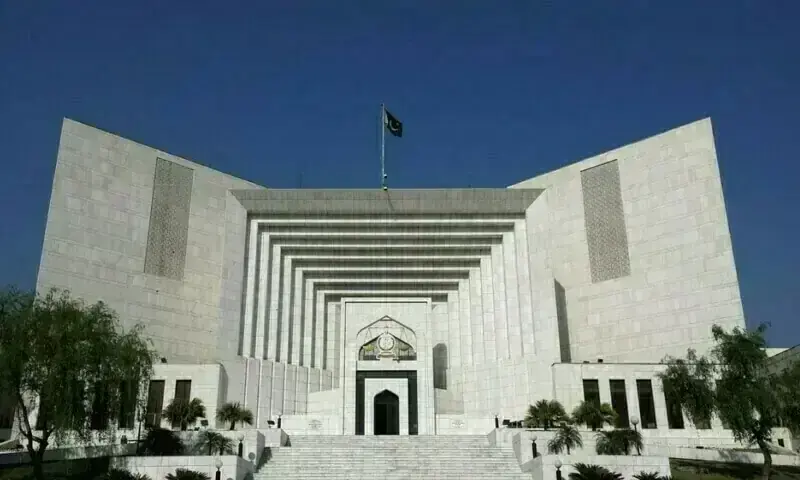
ISLAMABAD: The Supreme Court on Monday ruled that penalties imposed under the Income Tax Ordinance (ITO) 2001 for assessments completed before June 30, 2002 were illegal and legally unsustainable, emphasising that such penalties could not be applied retrospectively.
A five-judge SC larger bench, headed by Justice Shahid Waheed, also resolved a conflict between two decisions of three-member benches — the 2009 Eli Lilly Pakistan (Pvt) Ltd case and the 2016 Islamic Investment Bank Ltd case.
The question before the SC was whether penalties under Sections 182, 184 and 186 of the ITO 2001 were lawful in view of the provisions of Section 239(3) of the ordinance.
Authored by Justice Aqeel Ahmed Abbasi, the 17-page judgement explained that in the Eli Lilly Pakistan case, the court had held that assessments completed under the repealed ITO 1979 must be governed strictly by the old law, while assessments made after its repeal were to be governed by the ITO 2001.
However, in the Islamic Investment Bank case, the court had taken a contrary view, departing from the strict prospective approach and declaring that the right of the state to calculate and collect the correct tax liability vests at the end of each accounting year.
The judgment held that the conclusion drawn by the subsequent bench of co-equal strength in the Islamic Investment Bank case was erroneous in law, whereas the decision of the earlier co-equal bench in the Eli Lilly case, treating the amendments as substantive in nature and prospective in application, reflected the correct legal position.
The controversy revolves around Khadim Hussain, the respondent and an existing taxpayer falling under the jurisdiction of the director general of Regional Tax Office, Rawalpindi.
The case arose when the petitioner, commissioner inland revenue (legal), RTO Rawalpindi, initiated tax proceedings against the respondent after receiving information that he had purchased a piece of property on Sept 7, 1999, without filing a corresponding tax return.
Following his non-compliance with notices issued under Sections 61 and 62, a notice under Section 13(1) (aa) was
served on June 28, 2007, requiring the respondent to explain the source of investment for the property.
Due to the respondent’s continuous non-appearance and failure to submit documentary evidence, an ex-parte assessment was framed under Section 63 of the repealed ITO 1979, creating a tax addition of Rs300,000 for the assessment years 2000-01 to 2002-3, along with the imposition of a penalty under Section 184 of the ITO, read with Section 111 of the repealed ordinance.
Subsequent compliance and reminder notices issued under Section 190 also went unheeded.
Aggrieved by the assessment and pena-lty orders, the respondent filed an appeal before the commissioner of income tax (appeals), which upheld the income addition but deleted the penalties on Jan 31, 2008.
The tax department preferred a second appeal before the Income Tax Appellate Tribunal, challenging the deletion of the penalties. The appeal was subsequently dismissed on the ground that the penalties were legally unsustainable under Section 239.
The department then approached the Rawalpindi bench of Lahore High Court by filing a reference, which was ultimately dismissed on Oct 27, 2014.
Subsequently, the tax department approached the Supreme Court, seeking leave to appeal against the LHC order.
Justice Abbasi explained that in the absence of clear legislative language expressly giving retrospective effect to the provisions of the ITO 2001, they could not be invoked in respect of assessments governed by the repealed ITO 1979.
Any contrary interpretation, he observed, would undermine the settled principle that a taxpayer’s substantive rights and liabilities crystallise under the law applicable to the relevant assessment year and cannot subsequently be aggravated through later legislation.
“It is a well-settled legal position that in a taxing statute, if an amendment is introduced which is penal in nature or increases the tax liability of a taxpayer, it applies prospectively for the tax year in which such amendment has been introduced and cannot be given retrospective effect, unless such retrospective effect is given through the amending law itself in express language,” the judgement explained.
The Supreme Court consequently ruled that the penalties imposed under Sections 182, 184 and 186 of the ITO 2001 were unlawful and legally unsustainable. Accordingly, the question proposed in the instant case relating to the imposition of penalties under these sections was held to be legally not maintainable, and the civil appeal was refused.
Published in Dawn, August 11th, 2026