PHC stops arrest, deportation of two Afghan journalists, their families
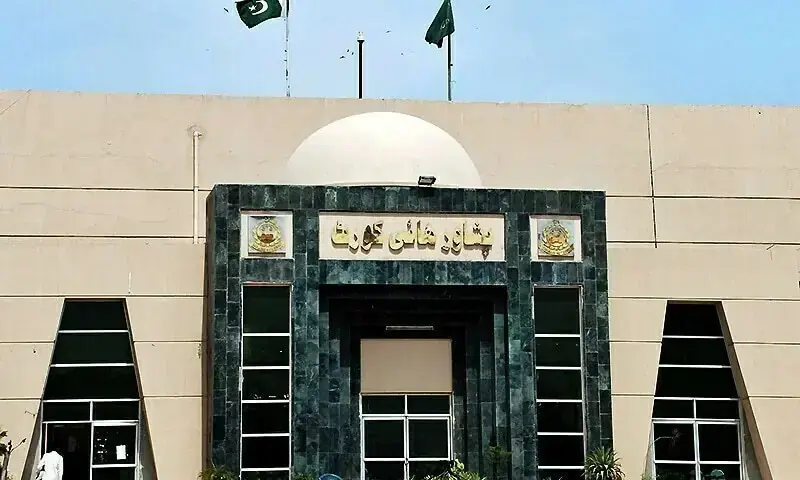

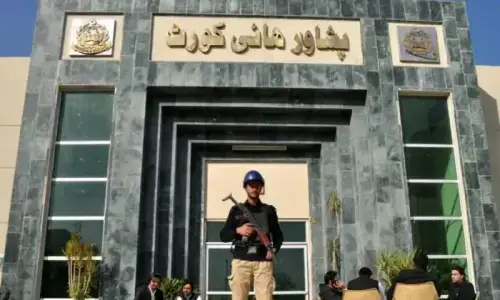
PESHAWAR: Peshawar High Court has stopped law enforcement agencies from arresting or deporting two Afghan journalists and their families awaiting resettlement in a third country and referred their cases to the federal government for granting them permission of temporary stay or asylum here.
A bench consisting of Justice Wiqar Ahmad and Justice Kamran Hayat Miankhel disposed of two almost identical petitions filed by the two journalists, Syed Munir Ahmad Hadaf and Syed Enamullah Salehi, who apprehend inhuman treatment if they were deported to Afghanistan.
The bench referred their cases to the federal government for deciding their pleas for temporary stay, asylum, etc on principle of non-refoulment.
“It is case of petitioners before this court in the instant writ petition that their cases have already been pending for third country resettlement and Embassy of France has already given an endorsement in this respect,” the bench observed in both the petitions.
Refers their cases to govt for deciding on principle of non-refoulment
“Petitioners are apprehending cruel and inhuman treatment on their immediate deportation to Afghanistan and they are pressing the principle against non-refoulment in the instant writ petition,” the bench observed in its five-page judgment in both the cases.
“Since this court has already referred similar nature cases to the Federal Government for decision and restrained the respondents from deporting them for 60 days or till decision of the Federal Government therefore case of the petitioners cannot be treated differently,” the bench ruled.
It directed the federal government to consider case of the petitioners and determine whether the essential ingredients for grant of asylum, sojourn or temporary stay existed in their favour on the principle of non-refoulment.
“If the Federal Government is satisfied that the necessary requirements for making such an order exist in favour of petitioners it shall grant asylum, sojourn and temporary stay to the petitioners for such period as may be determined by the Federal Government. This exercise shall be completed within a period of 02 months,” the bench ordered.
It further directed: “In case the Federal Government is unable to render its decision within the aforesaid period of 60 days then the worthy Secretary Ministry of Interior Government of Pakistan shall issue temporary permits to the petitioners authorizing them to remain in Pakistan for such further period as may be required by the Federal Government for rendering its final decision in the matter.”
“During the aforesaid period of 60 days or any extended period
so permitted, the law enforcing agencies of the Federal Government or Provincial Government shall neither arrest nor deport the petitioners merely on account of their stay in Pakistan,” the bench directed.
Advocate Syed Shafqat Ali Shah appeared for both the journalists and stated that Mr Munir Hadaf had served as provincial coordinator in the Afghanistan National Journalist Union and also worked with Reporters Sans Frontiers (RSF).
Submitting copies of his employment contract and relevant supporting documents, he stated that he had applied for a French visa for himself and his family, and that the Embassy of France had confirmed the validity of the relevant communication.
He claimed that the petitioner had received threats from the Taliban on account of his professional activities as a journalist.
Similarly, about Mr Enamullah, the counsel stated that the petitioner was residing in Pakistan lawfully on a valid visa.
He stated that the petitioner and his family had applied for resettlement in France in 2026 and their applications were presently pending consideration.
He stated that the petitioner had previously served as an investigative journalist with Salam Afghanistan Media Organisation (SAMO). He also produced his service card in support of his contentions.
In both the petitions, the counsel contended that despite their lawful stay in Pakistan, the petitioners were living under constant fear of arrest, detention and deportation in view of the prevailing measures concerning Afghan nationals.
He argued that such circumstances had restricted their free movement, including access to hospitals and medical facilities, compelling them to invoke the constitutional jurisdiction of this court.
He sought protection for the petitioners against arrest, detention, harassment and deportation during the validity of their visas and in accordance with law.
He requested the court to direct the respondents to determine their status strictly in accordance with law and that they be permitted to avail emergency medical treatment on the strength of their passports, visas, etc.
Published in Dawn, August 10th, 2026