HISTORY: FEEDING THE BUREAUCRACY

History often remembers the British Raj for its laws, irrigation works and railways. Yet colonial rule in Sindh also depended on practices that burdened rural people.
Many grew from the ryotwari revenue system. Colonial officers Thomas Munro and Alexander Read first introduced it in Madras at the end of the 18th century, before it became widespread with Munro’s appointment as the governor of Madras Presidency in 1820. The Bombay Presidency later adopted a modified version, based on the Wingate–Goldsmid surveys that set fixed per-acre tax rates and which Sindh also followed.
Under ryotwari, revenue officials dealt directly with cultivators over land and revenue. Officials regularly surveyed land, marked boundaries, classified soils, managed water, assessed crops, verified records and collected revenue. These duties kept them touring the countryside for long periods.
A Handbook for Revenue Officers of the Bombay Presidency, 1884, states that district collectors toured for 120 days each year and visited every taluka [administrative subdivision] in their district, while assistant and deputy collectors spent up to 210 days in the field.
Long before Independence, Sindh’s villages quietly financed the colonial administration’s travelling camps — through free food, forced payments and unpaid labour. A 1919 inquiry exposed the system, but it never really went away
These tours required large travelling camps. Senior and middle-ranking officers travelled with 20-40 labourers, besides clerks, peons, cooks, water carriers, dhobis [washermen] and camel drivers. Commissioners and judges travelled with even larger establishments, requiring 80-100 men, apart from their personal attendants.
The touring system had three weaknesses from the start: inadequate funding; low salaries for tapedars [village-level land revenue officials], supervisors and peons; and too few staff and labourers to run tours and camps.
THE TRIAD OF RURAL EXACTION
To fill this gap, the administration relied on three rural exactions: rasai [free provisions], lapo [compelled payments], and chherr [forced unpaid labour]. Officials enforced them, waderas [feudals] organised them and, over time, these exactions became part of rural life.
On July 24, 1917, Barrister Ghulam Muhammad Bhurgri challenged these practices by introducing a resolution in the Bombay Legislative Council. He argued that the exactions were not isolated abuses but a system that operated across Sindh’s collectorates. The council passed the resolution unanimously on December 3, 1917.
The government responded with an order issued on March 26, 1918, establishing the Sindh Rasai Committee, under M.H.W. Hayward, the additional judicial commissioner in Sindh. The committee began work on April 3, 1918 and, over the next five weeks, held hearings in Sukkur, Larkana, Hyderabad and Karachi, completing 21 working days.
The committee circulated a questionnaire, comprising 92 queries, on official touring, rasai, lapo and chherr, and examined 193 witnesses, including revenue and police officers, pleaders, contractors and waderas.
RASAI: FEEDING THE CAMPS
Touring camps needed a regular supply of food, goods, transport and cash. Waderas provided what villages could produce, while the mukhtiarkar [administrative head of taluka] obtained other goods from a bania [trader/shopkeeper] at the taluka headquarters through a revolving credit account. Rasai, thus, rested on two main sources: local provisions from the wadera and other goods from the bania.
Waderas supplied butter, cots, yoghurt, eggs, firewood, fish, flour, vegetables, fodder, fowls, ghee, lassi, meat, milk, molasses, pulses, mutton and rice. Although waderas organised these supplies, much of the burden fell on the haris [sharecroppers]. Rural cultivators, in effect, helped feed the touring administration.
When villages could not meet camp demands, the mukhtiarkar turned to a bania for lanterns, brandy, buggy hire, sweets, cigarettes, cloth, coal, spices, ice, kerosene oil, lemonade, country liquor, soap, sugar, tobacco, tonic water and wine. These goods kept official camps running when government funds fell short.
LAPO: FINANCING THE TOURS
Camps also needed cash for rozna [daily clerical allowances], petty expenses, and departure payments at the end of each tour. Lapo met these costs and became an important source of finance for official tours. The word lapo comes from a Sindhi term meaning “a handful.”
Lapo raised cash through three main exactions. Anagi or anki required waderas to pay one anna [1/16th of a rupee] for every rupee of assessed land revenue. Numberano charged one to two annas on each cultivated survey number, while kharch kabuliyat imposed an unauthorised payment of four annas to one rupee per acre.
Officials collected these payments during jamabandis — which is at the end of rabi [winter crops] and kharif [summer crops] harvest settlements — and at akharbandi — the close of the financial year.
The proceeds went into the taluka Rasai Fund, which financed tours, camps, clerical allowances, petty claims and incidental expenses. Lapo covered costs the state failed to finance.
CHHERR: UNPAID LABOUR
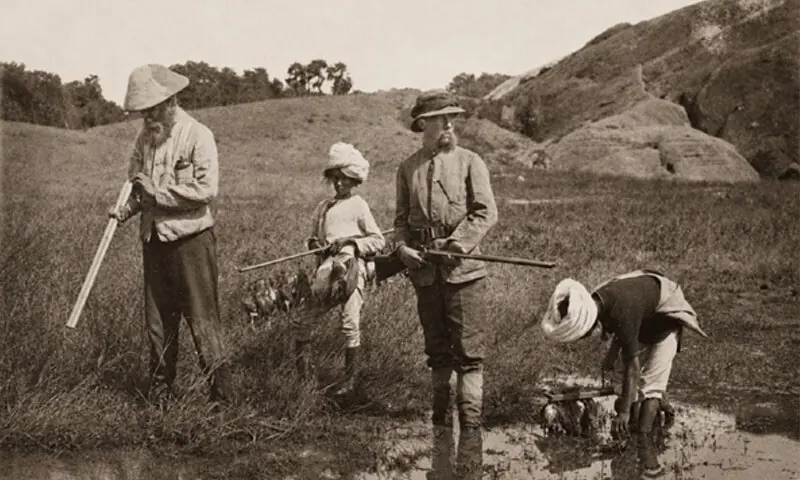
The third part of the triad was chherr, which supplied unpaid labour. Officials demanded it through waderas, who forced their haris to work without pay. Chherr mainly provided labour for camps and shikar (hunts).
In camps, haris pitched tents, carried baggage, cleared roads, gathered firewood and pushed officers’ carriages. Their unpaid labour built, maintained and moved the camps.
During shikar, haris shouted and beat drums to drive wild animals from cover. They retrieved waterfowl, built hunting platforms, skinned animals, plucked birds and prepared carcasses for the camp kitchens.
WHAT THE COMMITTEE FOUND
The Rasai Committee submitted its final report to the Bombay Government on March 26, 1919. It recommended closer supervision and field inspections, more supervisory staff and higher salaries for lower-ranking employees.
Its greater historical value, however, lies in the evidence it collected. Testimonies revealed how revenue administration operated beyond its formal rules. The evidence challenged official claims that touring officers paid market prices for goods and services. In practice, money issued for supplies did not always reach rural producers or banias, while subordinate officials sometimes pressured banias to sign inflated receipts.
The committee also exposed the economic burden of chherr. Waderas forced haris to work in official camps, taking them away from ploughing, sowing, irrigation and harvesting — labour rural farms could not spare.
Taken together, the evidence exposed the gap between the actual cost of official tours and the funds provided by the state. The touring administration, thus, shifted part of its costs on to rural society, particularly the haris.
WHY DID THE WADERAS COMPLY?
A central question follows: why did waderas continue to bear these unofficial exactions from the early 1840s until the Rasai Committee inquiry of 1919? Their testimony points to three main reasons: fear, undue expectation and the protection of izzat [honour].
Fear drove many waderas to pay lapo. They knew that refusal or even delay could invite official retaliation. Witnesses told the committee that officials could file false cases, make damaging entries in land records, impound cattle, cut off irrigation water, block canal access, assess ordinary land at the higher rates charged for garden land, or arrest, insult, detain and heavily fine them. Lapo became the price of avoiding such abuse.
Many waderas paid lapo in the hope that it would speed up mercy petitions, result in favourable land grants, and facilitate khata [property] transfers. They also expected it to help secure revenue remissions, permission to build autaqs [men’s sitting areas] on agricultural land, and longer or more favourable irrigation turns.
Izzat also mattered. A wadera’s standing depended on official favour. Refusal could bring insult and lower his status. An invitation, a chair in a government office, an arms licence, or a good-character certificate signalled his ties to power, and made haris and villagers fear him.
OUTLIVING THE INQUIRY
The committee proposed reforms, but rasai, lapo and chherr continued. The government failed to enforce them, and public faith in such inquiries soon declined.
In 1926, the Report of the Committee Appointed to Enquire into the Question of Cattle-lifting in Sindh noted that some witnesses stayed away because they believed that the results, “like the Rasai Committee, would not very much materialise.”
This triad survived because it served the touring system. Officials gained funds and labour. Lower revenue staff supplemented their low pay. Waderas gained access to official power.
The terms have changed, but the exactions still weaken the rights of ordinary people in rural Sindh.g
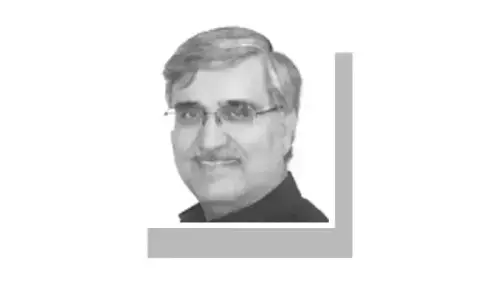
The writer is a novelist and historian.
His latest book is Hyderabad and Beyond.
He can be reached at junejozi@gmail.com
Published in Dawn, EOS, August 9th, 2026