IHC reserves ruling on maintainability of plea challenging presidential delay in judicial appointments
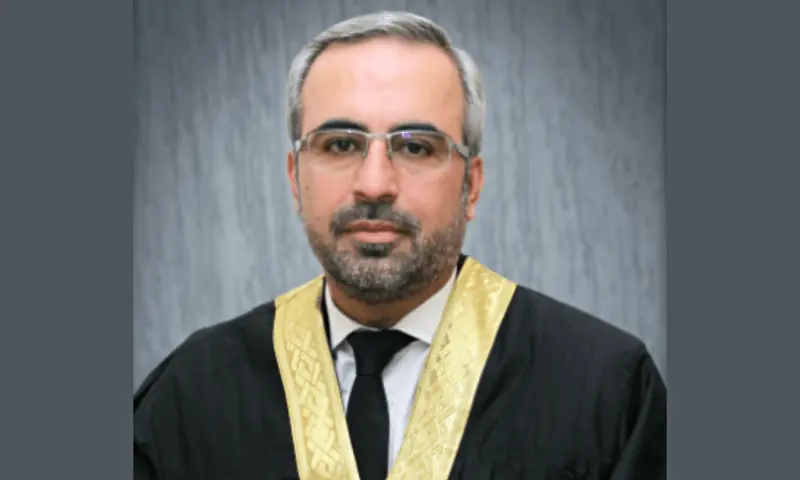


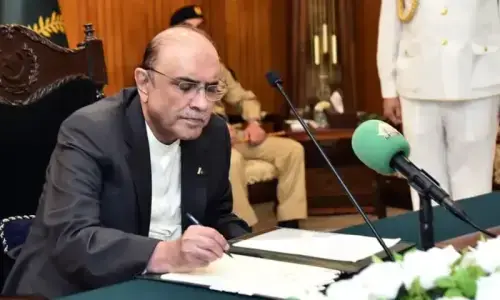
ISLAMABAD: The Islamabad High Court (IHC) on Thursday reserved its verdict on the maintainability of a plea challenging President Asif Ali Zardari’s delay in approving a summary for the appointment and confirmation of judges to various high courts.
The writ petition, filed by advocate Luqman Zafar Chaudhary through his counsel Zahid Asif Chaudhry on Wednesday, urged the court to direct the president to approve the summary forwarded by the prime minister for the appointment of 19 additional judges and the confirmation of five judges to the Islamabad, Lahore, Sindh, Balochistan and Peshawar high courts.
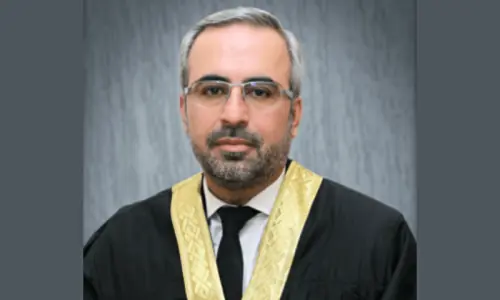
Justice Arbab Muhammad Tahir took up the plea on Thursday, with the counsel for the petitioner arguing that the Judicial Commission of Pakistan (JCP) had recommended the appointments under consideration during its meetings on July 20 and 21. He contended that the summary had reportedly not been approved by the president even after 15 days had passed.
The petitioner’s counsel told the court that according to the available information, the government had started issuing notifications regarding the appointments. He also requested the court to seek details about the status of the summary.
During the hearing, the contents of the petition he had filed on his client’s behalf were also read out on the court’s direction, and Justice Tahir repeatedly questioned if a constitutional petition could be maintained against the president. He asked the counsel to cite any precedent in which a writ had been issued against the president.
The court also observed that the judgements cited by the petitioner did not support the proposition advanced by his counsel for the court to issue directives to the president and asked the lawyer to identify any decision in which a court had issued directions to the president regarding the exercise of powers under Article 48 of the Constitution.
For his part, the petitioner’s lawyer said that usually, the notifications for the judicial appointments were issued by the law ministry after the president’s approval. But, he contended, the law ministry could also issue the notification without the president’s approval and that the president’s role in the process was ceremonial.
The lawyer argued that once the JCP nominated judges for appointment or confirmation, the summary was sent to the president through the prime minister.
The president had no discretion beyond granting approval, and if the approval was withheld, the competent authority should proceed with issuing the notification, he contended.
Justice Tahir, however, continued to question the legal basis for issuing a writ against the president and asked the counsel to identify the competent authority responsible for issuing appointment notifications.
The counsel reiterated the law ministry was the competent authority and requested the court to seek responses from the federation, the Prime Minister’s Office and the law ministry regarding the status of the summary for the judicial appointments.
The lawyer further said reports suggested the government might issue the notifications within the next 48 hours.
After hearing his arguments, the court declined the request to issue notices at this stage and reserved its decision on the maintainability of the petition.
More to follow