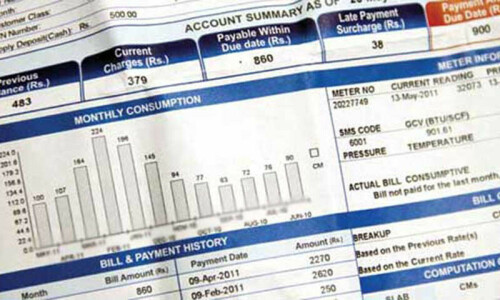
Peshawar High Court upholds abolition of free electricity for officials of Wapda, Discos
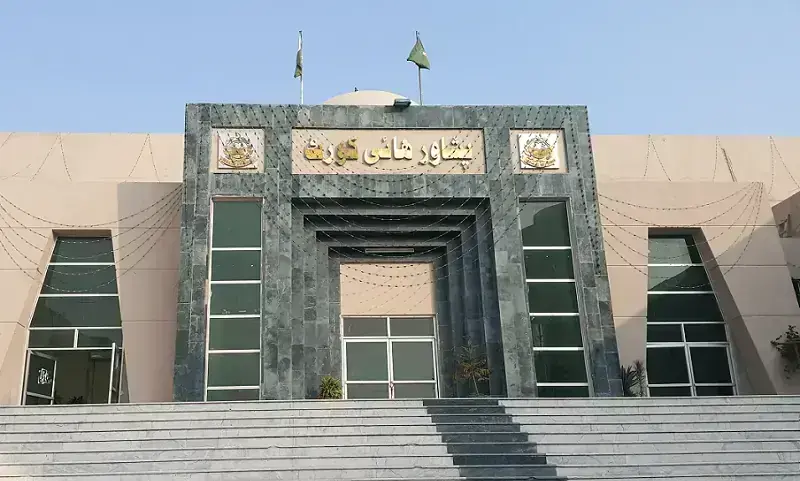

PESHAWAR: Peshawar High Court has upheld the federal government’s decision to do away with free electricity units for officers of Wapda and its distribution companies and introduce a monetised system in their place.
A bench consisting of Justice Sahibzada Asadullah and Justice Farah Jamshed rejected two almost identical petitions filed by some officials of Peshawar Electric Supply Company (Pesco) and Tribal Electric Supply Company (Tesco) against two notifications, first issued by the caretaker federal government on Dec 5, 2023, and another by the present government on May 6, 2027. The court had stayed action on the notifications in 2023 and 2026.
The petitioners had requested the court to declare that the notifications issued on Dec 5, 2023, and May 6, 2026, were illegal and issued without lawful authority. They also sought a ruling that the act of the then caretaker government was an interference with the settled policy matters and service structure of state-owned companies and a violation of the provisions of the State-Owned Enterprises (Governance and Operations) Act, 2023, so it was illegal and without lawful authority.
The petitioners also requested the court to declare that the facility of free electricity units forms part of the settled and agreed terms and conditions of service/ remuneration package of the petitioners and therefore, the same couldn’t be withdrawn, altered or amended unilaterally or arbitrarily to the detriment of the petitioners.
Rejects Pesco, Tesco officials’ plea, rules facility not immune from alteration
Additional attorney general Sanaullah appeared for the federal government, whereas Barrister Asadul Mulk represented Pesco. They opposed the petitions on multiple grounds, saying the caretaker government is competent to issue the notification as the process was started by the previous elected government.
The counsel for petitioners said that the earlier impugned notification declared that the caretaker federal cabinet had approved the monetisation of free electricity units admissible to the employees of Wapda, former Wapda companies, including distribution companies (Discos), generation companies (Gencos), National Transmission and Dispatch Company and Power Information Technology Company.
He added that the government had ordered the freezing of the monetised cost of free electricity units to all senior employees of power companies and Wapda at the existing level for the future.
“Having examined the controversy in its entirety, this Court is of the considered view that the benefit enjoyed by the petitioners remained an administrative concession and did not acquire the status of an indefeasible legal right immune from alteration. The passage of time cannot convert an executive arrangement into a perpetual guarantee against legitimate policy reform,” it declared in a 45-page detailed judgement.
It added that the petitioners had failed to demonstrate that the impugned decision was beyond the authority of the competent forum, was tainted with mala fide, suffered from arbitrariness, or resulted in discriminatory treatment.
“The constitutional jurisdiction of this Court under Article 199 is meant to preserve the supremacy of law and the limits of public power; it does not extend to substituting judicial assessment for an administrative choice made within lawful bounds. Nevertheless, the respondents shall ensure that its application remains fair, transparent and uniform,” it declared.
The bench observed that the government had justified the measure on grounds of rationalisation, transparency and administrative convenience by substituting the facility with its monetary equivalent.
It added that the petitioners had failed to demonstrate that the substituted benefit is illusory, wholly disproportionate or arbitrary.
“The mere conversion of a facility-based concession into a monetary benefit does not constitute unconstitutional deprivation under Articles 4 or 25. The Court must also remain mindful that questions relating to public expenditure and allocation of fiscal resources lie primarily within the institutional competence of the Executive,” it ruled.
The bench declared that courts exercised restraint in reviewing economic and financial policy because such matters involved balancing competing public interests and budgetary priorities, so “judicial review is directed to legality rather than policy preference.
“Applying these principles, the Court is unable to conclude that the mere conversion of a facility-based concession into a monetary benefit constitutes unconstitutional deprivation.”
The court observed that the Constitution protected citizens against arbitrary state action; it didn’t render every executive concession immutable or prevent the state from reforming administrative policy through lawful means.
It declared that the petitioners had failed to establish that the impugned restructuring offended Articles 4 or 25 of the Constitution.
“The material on record indicates that the impugned arrangement constitutes a measure of general application adopted as part of a broader sectoral restructuring. The petitioners have not demonstrated that the policy singles them out for hostile discrimination or accords preferential treatment to another similarly situated class,’ read the verdict authored by Justice Asadullah.
Regarding the competence of the caretaker government to undertake the monetisation exercise, the court held that the summary was initiated during the previous elected government’s tenure and had complied with all due formalities before being approved by the caretaker government.
As regarding the bar in Section 230 of the Elections Act, 2017, it declared that the restriction imposed on a caretaker government was intended to preserve political neutrality and prevent the assumption of functions involving major policy choices that properly belonged to an elected government.
“It is not intended to suspend the ordinary machinery of government or to deprive the executive of the authority necessary for administration and in this respect. The Legislature cannot be presumed to have intended an interpretation that produces administrative paralysis during every electoral transition.”
The court ruled that the objection under Section 230 of the Elections Act, 2017, became immaterial once the incoming elected government ratified the caretaker government’s decisions.
“Once the government possessing that democratic mandate independently elects to continue the same arrangement, the constitutional concern underlying the original objection is materially diminished. The continued operation of the arrangement thereafter derives its legitimacy from the independent exercise of executive authority by the elected government itself,” it declared.
Published in Dawn, August 4th, 2026