We throw the word ‘narcissist’ around casually — the ex who wouldn’t commit, the boss who took all the credit, the friend who made every conversation about themselves. But clinical narcissism is far more than selfishness. It is a personality structure that can leave a trail of psychological destruction.
Pakistani dramas have frequently explored narcissistic pathology. We call them ‘villains’ without recognising that they are psycho-education disguised as entertainment. Narcissism exists on a spectrum, and can perhaps be divided into two broad categories. Each destroys differently. Each requires a different survival strategy.
OVERT NARCISSISM: THE SHOUTERS
Easy to spot, they are loud, entitled and unapologetic. They demand attention and special treatment and believe rules do not apply to them. And when challenged, they rage.
1. Mubashira Jaffer (Ayeza Khan) in Main — The Textbook Grandiose Narcissist

Mubashira does not just want power. She claims it as a birthright. Her arrogance is her core identity, not a mask. She manipulates, schemes and destroys whoever threatens her position because she genuinely cannot conceive of a world in which she is not the main character.
Narcissism is more than vanity or selfishness. From domineering personalities to subtle manipulators, Pakistani dramas offer striking examples of how narcissistic behaviour unfolds
The clinical markers are unmistakable. She exhibits a sense of self-importance, exaggerates achievements, expects automatic compliance and displays a complete lack of empathy. When her plans fail, she doesn’t reflect — she retaliates. This is narcissistic rage — the violent response to any threat against the fragile ‘god self’ beneath the grandiosity.
Protecting yourself: Boundaries must be impenetrable, stated clearly and enforced. They will test every limit, gaslight, guilt-trip and escalate. Do not negotiate or explain. They thrive on reaction. Calmness is your armour.
2. Farasat Ali (Naumaan Ijaz) in Sharpasand — The Malignant Manipulator
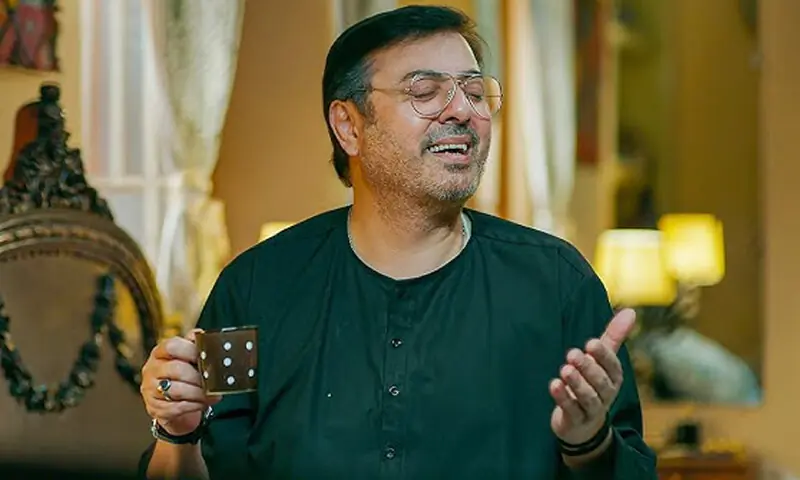
A darker sub-type, he doesn’t just lack empathy — he enjoys destruction. He destroys the character of women in his neighbourhood who do not submit to him — Shazmeen (Hira Mani), Hafsa (Zuni Sheikh) and Sanam (Hareem Farooq). His cruelty is calculated, not impulsive. He identifies vulnerability and exploits it with maliciousness.
This is narcissism with sadistic features. The pleasure is not just in winning. It is in watching you lose. Farasat seeks submission rather than admiration. He wants to see spirits break. This is the narcissist who will destroy reputations, relationships and people’s sanity — and then claim he was “just being honest.”
Protecting yourself: No contact is the only safe option as there is no reasoning with someone who derives pleasure from pain. Do not engage or confront. Document everything, protect your support system and exit. This is not a person who can be won over. This is a person who must be escaped.
COVERT NARCISSISM: THE WHISPERERS
Harder to spot, these narcissists play the victim, appear humble, sensitive and even self-deprecating. But beneath the vulnerability lies the same grandiosity — a deep belief that they are special, misunderstood and entitled to endless care. They drain you not with demands, but with need.
1. Nabeel (Mirza Gohar Rasheed) in Goonj — The Covert Harasser
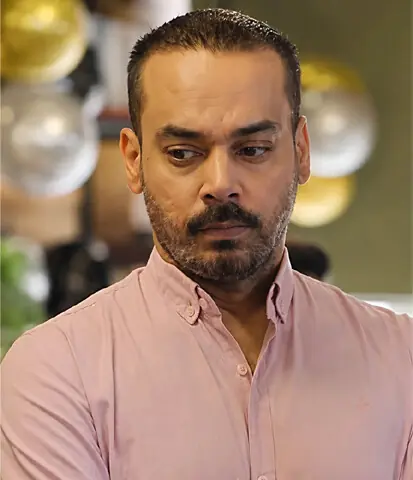
He does not shout or threaten. He makes covert comments, withholds approval and isolates his target Zarnab (Komal Meer). When she explodes, there is no evidence. He has engineered the perfect crime: abuse that leaves no fingerprints.
In slow-motion gaslighting, the victim begins to doubt her own perceptions. Nabeel’s narcissism is not loud entitlement — it is quiet control. He does not need to dominate openly. He needs to make sure you know, in every interaction, that you are less than him.
Protecting yourself: Trust your gut. If you feel small, confused, or constantly apologising around someone, pay attention. They thrive on your self-doubt. Keep a journal of interactions. Share with a trusted person. Remember, you are being psychologically conditioned.
2. Raza Haseeb (Usman Mukhtar) in Pamaal — The Love-Bomber Who Crushes
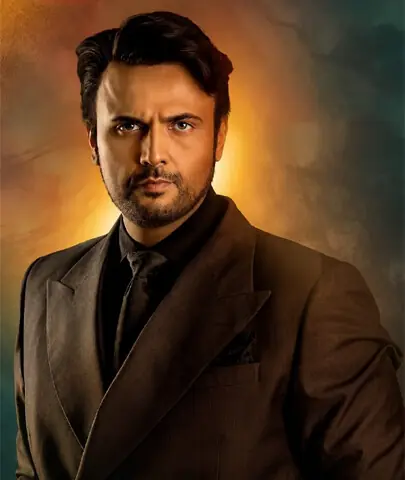
Raza is perhaps the most insidious sub-type: the narcissist who loves you into submission. He begins with overwhelming attention, gifts, declarations of devotion. His wife Malika (Saba Qamar), a writer, believes she has found her soulmate. Then slowly, the mask slips.
He critiques her writing, isolates her from her friends, portrays her creativity as a threat to their marriage. He does not yell, he acts disappointed. He sighs when she succeeds. He withholds affection when she asserts herself. He is not a monster — he is a slow poison. His wife does not leave because he is cruel. She stays because he was once so kind — and she keeps hoping that man will return. He never does. That man was the bait. The trap was her hope.
Protecting yourself: Recognise the pattern. Love-bombing is seduction as strategy. Healthy love grows slowly. It does not demand self-abandonment. If someone asks you to shrink so they can feel big, leave… because they are incapable of seeing your worth.
Regardless of their type, narcissists share core features: a fragile self-esteem masked by grandiosity, a profound inability to empathise and a relentless need for a narcissistic supply of attention, admiration or submission.
But here is what they take: reality testing — you stop trusting your own perceptions and self-worth, you believe you are the problem — and hope. You exhaust yourself trying to be good enough.
IS CHANGE POSSIBLE?
Research says yes, but it is rare and difficult. Unlike the dramatic redemption arcs we see on screen, real change requires years of committed therapy. This is the hardest step because narcissism is built on denial.
Therapeutic approaches work by helping the narcissist develop the capacity to understand their own mind and the minds of others — something stunted in childhood. With treatment, reductions in pathological narcissism are possible, but here’s the catch: change only happens when the narcissist wants to change, not because someone demanded it, but because the pain of staying the same has become unbearable. Most never reach that point. And those who do? It takes years, not episodes.
For everyone else, the only healing is the one you do for yourself.
HEALING THE PARTNER
If you have encountered a narcissist, you know: the damage is not just what they did but what you stopped being. Recovery is not about “getting over it.” It is about rebuilding the self.
1. Identify: This is not about labelling someone but about validating your experience — the confusion, exhaustion and persistent feeling of being either ‘too much’ or ‘never enough.’
2. Grieve: You will grieve the person you thought they were, the relationship you believed you had, the years you lost. Let yourself feel the anger, sadness and relief as valid.
3. Rebuild: Narcissists dismantle your sense of self. Reconnect with your own needs, voice, desires. What do you want, feel and need today? The answers will feel foreign at first. Keep asking.
4. Set Boundaries That Stick: This means walking away when they are violated. Choose yourself over the fantasy of their change. They will test every boundary. Your job is not to convince them to respect it. But to respect it yourself.
Pakistani dramas have shown us narcissism in all its forms. We fume watching these characters. But the real work begins when we recognise them in our own lives. The question is not “who is the villain?” but “who in your life is making you smaller?”
You do not have to stay small or earn love by disappearing. Narcissists may or may not change. But you can. And that is the only freedom that matters.
The writer is an integrative therapist and the founder of Khudi Wellness
She can be reached at shah.n.sarwat@gmail.com
Published in Dawn, ICON, August 2nd, 2026