EU enforces world’s toughest AI law
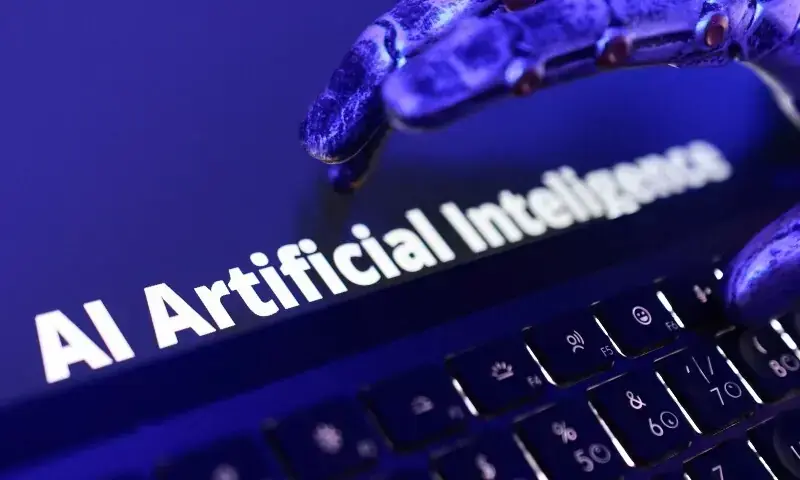
BRUSSELS: From Sunday, the European Union will have the power to enforce landmark artificial intelligence rules and to fine any companies that break the law.
The EU has the world’s most comprehensive digital rulebook covering social media, online retailers and search engines, with plans for more rules this year.
In 2024, the EU adopted a sweeping AI law known as the “AI Act”, but its rules have been introduced in stages.
New law
The EU’s new law takes a risk-based approach to the technology from Sunday.
The higher the risk to Europeans’ rights or health, for example, the greater the obligations of firms to protect individuals from harm.
Chatbots must disclose AI identity; companies face up to €35m fine in case of violation; labelling rules hit general-purpose models
It also bans AI used for predictive policing, emotion recognition systems in workplaces or schools and AI that manipulates human behaviour.
From Sunday, AI-generated content like deepfakes must be labelled, while firms must ensure their AI systems like chatbots make it clear to users they are AI.
Existing AI systems have until December 2 to adapt to the new rules, and there are exemptions for “artistic, creative, satirical, fictional” work.
Enforcement powers
On Sunday, European regulators in the AI Office will have the power to enforce the bloc’s rules on the most advanced AI models.
The regulatory body attached to the EU executive will be made up of dozens of tech experts, lawyers and economists.
The AI Office will be able to test the most advanced general-purpose AI models, such as chatbots, to ensure they comply with the law.
Companies must also give the EU access to their models, and in some cases the EU can demand access before they are placed on the market, an EU official said.
The EU will also be able to restrict a model’s deployment within the EU if it has concerns that the provider doesn’t address.
The powers arrive at an opportune moment. The EU struggled this year to get access to American AI developer Anthropic’s Mythos model, but the rules kicking in on Sunday mean an issue like that shouldn’t happen again.
National authorities will be able to enforce the rules for smaller AI systems.
If the EU finds companies breaking the rules, it can force them to take action to remedy the breach and fine the firms if they fail to do so.
The stiffest fines are for businesses that allow their systems to conduct banned practices — up to seven per cent of a company’s annual worldwide turnover or €35 million ($40m), whichever is higher.
For other violations, companies could be fined up to 3pc of their global annual revenue or €15m. They may also be fined if they hinder or fail to cooperate with EU probes.
What’s next?
More rules under the AI Act will be enforceable later this year and beyond.
From December, there will be a ban on artificial intelligence systems generating sexualised deepfakes, introduced following the global outrage over non-consensual nudes produced by Elon Musk’s chatbot Grok.
The EU is also delaying the implementation of some high-risk AI rules concerning models deemed as potentially dangerous to safety, health or citizens’ fundamental rights — to give companies more time to prepare.
The rules will apply for stand-alone high-risk AI systems from December 2027 and in August 2028 for AI tools embedded in other products.
Published in Dawn, August 2nd, 2026