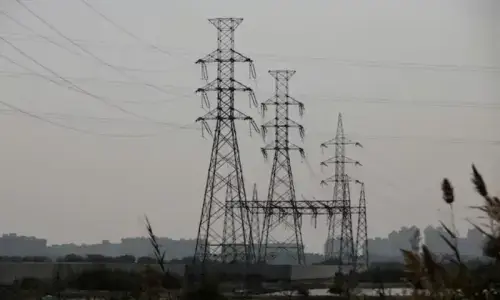
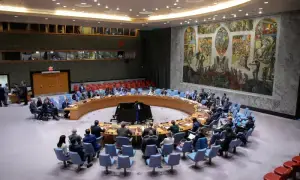
THE revived hostilities between the United States and Iran have also revived a familiar question: has Gulf security entered a genuinely new era, or a more volatile phase of an old one? The scale of the missile exchanges, the exposure of critical infrastructure, and direct American military engagement were real shocks. But shock is not structural change, and that distinction is where serious analysis must begin. This war has sharpened threat perception across the region.
Alliances endure because they reflect lasting distributions of power, not the emotional residue of one single crisis. Washington still provides the Gulf’s only comprehensive security umbrella. Gulf states weigh Iran’s missile arsenal, proxy network and maritime reach as the primary danger, while their deepening ties with Beijing remain a hedge, not a substitute. No state abandons its only credible security guarantor for a partner offering trade, but no defence umbrella.
The exchange of long-range strikes exposed real gaps in regional air and missile defence. Yet it also confirmed something easily lost in the noise: none of the three principal actors chose to escalate into unrestricted regional war, despite having the capacity to do so. Deterrence was never designed to prevent conflict outright, only to hold it below a threshold none was willing to cross. That threshold held. This is not a proof of stable equilibrium, but a proof that the old rules of restraint have not yet been totally discarded.
China’s economic footprint and Russia’s defence ties with Tehran are real and growing, reshaping the region’s diplomatic texture. But neither offers the integrated military commitment that may underwrite the existing order. The result is a Gulf more diversified economically and more multipolar diplomatically, while remaining militarily anchored to Washington. There is a change in degree, surely not in kind.
Lt-Col (retd) Syed Raziuddin
Rawalpindi
Published in Dawn, July 30th, 2026