India's Cockroach Janta Party demands release of protesters after reports of detention

India’s youth-led “cockroach” movement, whose protests have forced the education minister’s resignation, urged authorities on Monday to release all demonstrators detained in weeks of rallies nationwide.
The online Cockroach Janta Party (CJP), which organised protests over exam paper leaks and other irregularities, said they had received reports of students held in detention, particularly in the states of Assam, West Bengal and Bihar.
“Any failure to release those detained or withdraw criminal cases would amount to a breach of public trust,” the protest group said in a statement, adding they would take “further necessary steps” if their demand was not met.
The statement comes two days after Dharmendra Pradhan resigned as education minister over repeated failures in the conduct of competitive exams that have fuelled anger among millions of young Indians.
The CJP accused the government of backtracking after authorities had assured them that no punitive action would be taken against protesters.
The movement has won millions of followers on social media since it was launched in May by 30-year-old public relations graduate Abhijeet Dipke.
It emerged initially as a satirical response to Chief Justice Surya Kant reportedly likening young people to “cockroaches” and “parasites” during a court hearing.
The movement has since broadened its agenda to include concerns over unemployment, opportunities for young people and what it describes as Modi’s increasingly authoritarian style of governance.
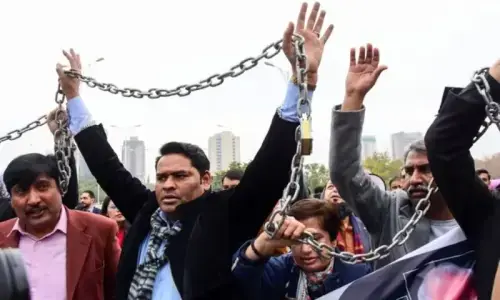
Tens of thousands of protesters, mainly students, rallied last week in New Delhi and other cities, demanding Pradhan’s resignation and broader reforms of the examination system.
Demonstrations in the Indian capital turned violent on July 20 when a crowd attempted to march towards parliament from the Jantar Mantar protest site.
Police fired tear gas and used batons to disperse the protest, triggering clashes and a wave of detentions.
The protests have emerged as one of the biggest challenges to Modi since his re-election for a third term in office in 2024.
The issue reverberated in parliament on Monday, with repeated disruptions as opposition lawmakers demanded a response from the government over last week’s police crackdown.
Despite the disruptions, the government introduced legislation in the lower house seeking tougher penalties for examination paper leaks.
A series of exam irregularities have undermined trust in India’s testing system, including the leak of a medical entrance question paper that forced more than two million candidates to retake the test.
Another dispute involving the online marking of examinations taken by nearly two million high school students has further fuelled public anger.