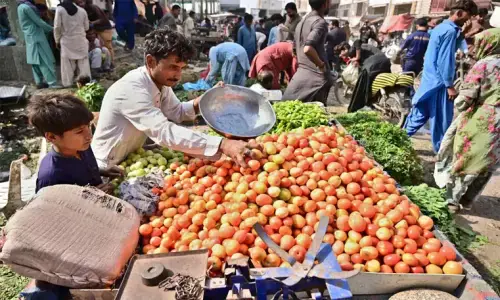
LAHORE: Farmers’ organisations have strongly criticised the federal government’s decision to import one million tonnes of wheat, arguing that the move exposes policy failures, undermines local growers and threatens Pakistan’s long-term food security.
Khalid Hussain Bath, a farmers’ leader, said the government had long claimed record wheat production but was now compelled to import one million tonnes of the commodity, a move he said would cost the national exchequer billions of rupees.
He argued that if the same resources had been spent on supporting farmers through fair wheat prices, subsidised fertiliser, quality seed and agricultural inputs, Pakistan would have remained self-sufficient in wheat.
Mr Bath said the government had focused on schemes such as kisan cards, tractor programmes and “showpiece projects” instead of ensuring remunerative prices for crops. “Had farmers received fair prices for their produce, they would have continued producing more wheat than the country’s requirements,” he said.
He maintained that ignoring farmers had forced the country to pay the price through costly wheat imports, warning that repeated neglect of the agriculture sector could push Pakistan towards a food security crisis.
Referring to wheat procurement in southern Punjab, Mr Bath claimed that farmers had been forced to sell wheat at Rs2,000 to Rs2,200 per maund, while the government was now preparing to import the same commodity at significantly higher prices.
He said that reducing the cost of production through relief on fertiliser, seed, pesticides, diesel and electricity was the government’s responsibility and would have encouraged higher domestic output. He urged the authorities to abandon “symbolic schemes” and instead ensure farmers received fair compensation for their produce.
Separately, the Markazi Kisan League (MKL) also rejected the wheat import decision, describing it as anti-farmer, poorly planned and detrimental to the country’s agricultural economy.
In a joint statement, MKL Chairman Chaudhry Zulfiqar Ali Olakh and President Ashfaq Virk said Pakistan, as an agricultural country, should not have to rely on imported wheat and that the decision reflected the government’s failure to formulate an effective agricultural policy.
They said the government’s repeated failure to procure wheat on time and offer farmers a fair support price had caused heavy financial losses to growers despite their year-long investment in crop production.
Published in Dawn, July 27th, 2026