ISLAMABAD: Prime Minister Shehbaz Sharif has taken the civic administration to task over the loss of about 50 per cent tree cover at Rawal Lake park due to commercial projects, directing it to rehabilitate it and present a report.
According to a source in the Prime Minister’s Office, the premier directed the Capital Development Authority (CDA) to restore the green cover, take measures to control untreated waste flowing into Rawal Dam and prepare a report on the progress made.
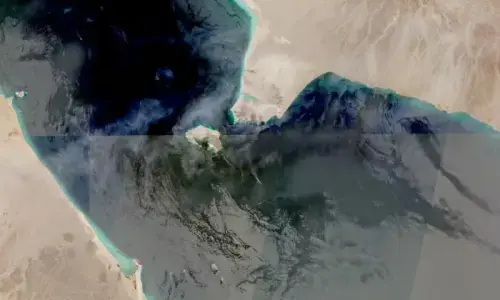
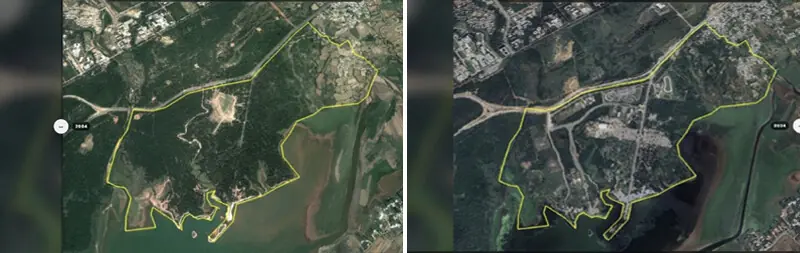
The issue came into PM’s notice after Pakistan Space and Upper Atmosphere Research Commission (Suparco) shared on its space4climate website images from 2004 to 2024.
These alarming images compared the densely covered Lake View Point of 2004 and massive anthropogenic activities up till 2024. The disturbing differences highlight Islamabad’s severe environmental degradation driven by unplanned urban expansion. The images also reveal the difference between the greenish colour of the water in the dam in 2004 compared to the blackish shade 20 years later.
Images on Suparco website from 2004 to 2024 prompt prime minister to direct CDA to restore green cover
In the last two decades, numerous recreational facilities have been established at the Lake View Park such as barbeque points, formula karting and off road tracks, a golf club and horse riding facility, dedicated food street, paintball battlefield, moj mela park, carnival park, kids play land and two massive parking spaces.
The Global Forest Watch (GFW) posted on its webpage that from 2001 to 2025, Islamabad lost 14 ha of tree cover, equivalent to a 0.46 per cent of the 2000 tree cover area, and 6.0 kilo tonnes of carbon emissions.
From 2001 to 2025, 77 per cent of tree cover loss occurred in areas of Islamabad where the dominant drivers of loss resulted in deforestation. In 2001-25, primary deforestation drivers were settlements and infrastructure (4 ha) and permanent agriculture (4 ha). Wildfires and logging are listed by GFW as temporary causes of loss of forest cover.
When contacted, CDA spokesperson Shahid Kiyani said that Rawal Lake Park was developed between 2005 and 2015. During this time, shrubs and vegetation of the area were reduced. Post-2015 tree cover of Rawal Lake Park has remained constant as evident in satellite imagery of Suparco. “No tree cutting in the area has occurred,” he said in a text message.
Last week, numerous fish died in Rawal Dam, possibly from suffocation.
The Pakistan Environment Protection Agency (Pak-EPA) attributed the fish dying to an increase in sewage and detergents flowing into Rawal Dam, degrading oxygen levels. Rawal Dam is the source of drinking water for residents of Rawalpindi.
Pak-EPA said setting up a sewage treatment plant upstream of the water body was the only technical solution to control sewage from flowing into it.
According to the Ministry of Climate Change, Islamabad’s crisis was not merely a failure in urban planning but a violation of ecological justice and fundamental rights. The polluted water of Rawal Lake impacted the health of the surrounding fauna and flora.
An official in the ministry said the phenomenon of fish deaths was a recurring concern. Every year, Pak-EPA issued such statements and came up with same findings, attributing fish deaths to thermal shock and dissolved oxygen depletion, adding that it was vital to plug the sources of untreated waste if possible, he said.
Sundaymar Dam
Meanwhile, residents living in proximity have also been complaining of increasing levels of untreated waste flowing into the Sundaymar Dam in Sector B-17. The dam is a source of drinking water for nearby housing societies. Despite complaints registered with the CDA, the concerns of the residents have not been addressed.
Published in Dawn, July 25th, 2026