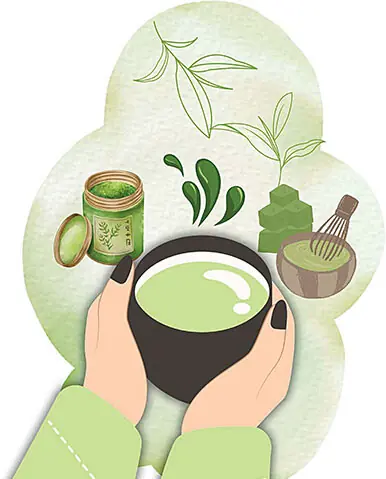
I was scrolling through reels when I landed on a recipe for matcha macarons. One after another, I saw cookies, cakes and even matcha noodles!
Matcha has transformed not only what people drink but also what they eat. It has emerged as a global trend. But matcha was not magically created in this century. Back during the Tang Dynasty in China, tea bricks were created to make the tea trade easy. The leaves were ground and made into bricks, which later led to the idea of matcha.
You might find it confusing that Japan is famous for matcha. Well, just as other ideas travelled, this technique also made its way into Japan through a Japanese monk who studied in China.
In Japan, it transformed into a status symbol. It was available in limited quantities and was highly sought after. The social hierarchy meant that aristocrats enjoyed the rich green matcha and the lower classes got bancha, which was browner and bitter.
Long before it took over our social media feeds, matcha was a sacred tradition. Explore the fascinating journey of this vibrant green tea from ancient dynasties to modern cups and cakes
But how did matcha get its vibrant colour? Well, it is because of shade growing. The process of keeping green tea plants in the shade to develop the green colour is widely used for this purpose. Making matcha requires effort, as the green tea plant must be carefully tended to, and shade growing is practiced before harvesting. The best leaves are picked and steamed. The stems and veins are removed.
The last step is to grind the matcha. Traditionally, a stone mill is used, but it is a slow process. Small quantities are ground together to make sure that the matcha does not burn due to overheating. This ceremonial grade matcha is sold around the world at premium prices. It has a rich umami flavour that people enjoy. But in modern times, new flavour tones like puffed rice, cacao, coffee, snap pea and grapefruit have been introduced.
In Japan, matcha is not just drunk as tea; it is central to the tea ceremony, a sacred and mindful ritual of making tea. Chado or Sado is the Japanese word for it, which simply means “the way of tea.”
Before the ceremony, a room is chosen and decorated minimally. Every piece is thoughtful and simple. Then the guest and host enter the room together. Both sit on the floor before a low table. The host prepares the tea while the guest observes the surroundings and the elaborate hand movements of the host. The tea is then offered to the guest, and both drink slowly, enjoying every sip.
During the ceremony, silence plays an important role as both people speak less. Emphasis is placed on experiencing the process and appreciating every part of it. This non-verbal communication brings the host and the guest closer.
This ceremony is based on four principles developed by the Japanese tea master Sen no Riky in the sixteenth century. The first is harmony between the people and their surroundings. Another element is respect, which is shown by giving attention to details and utensils, as everyone deserves the same care.
Purity is also an important virtue. It is believed that inner and outer purity bring clarity. The result of all this is tranquillity and calm. This is an important part of Japanese culture, rooted in peace and self-reflection.
So the next time you have a cup of matcha in front of you, just think a little about the significance and the history hiding in every sip you take. Enjoy!
Published in Dawn, Young World, July 25th, 2026