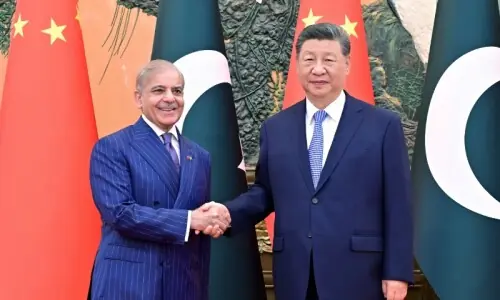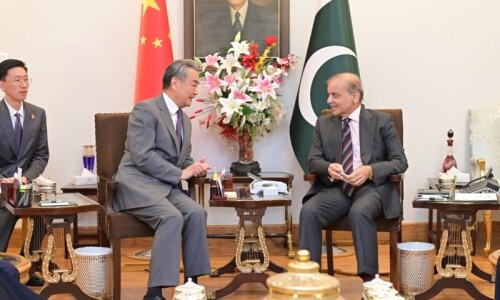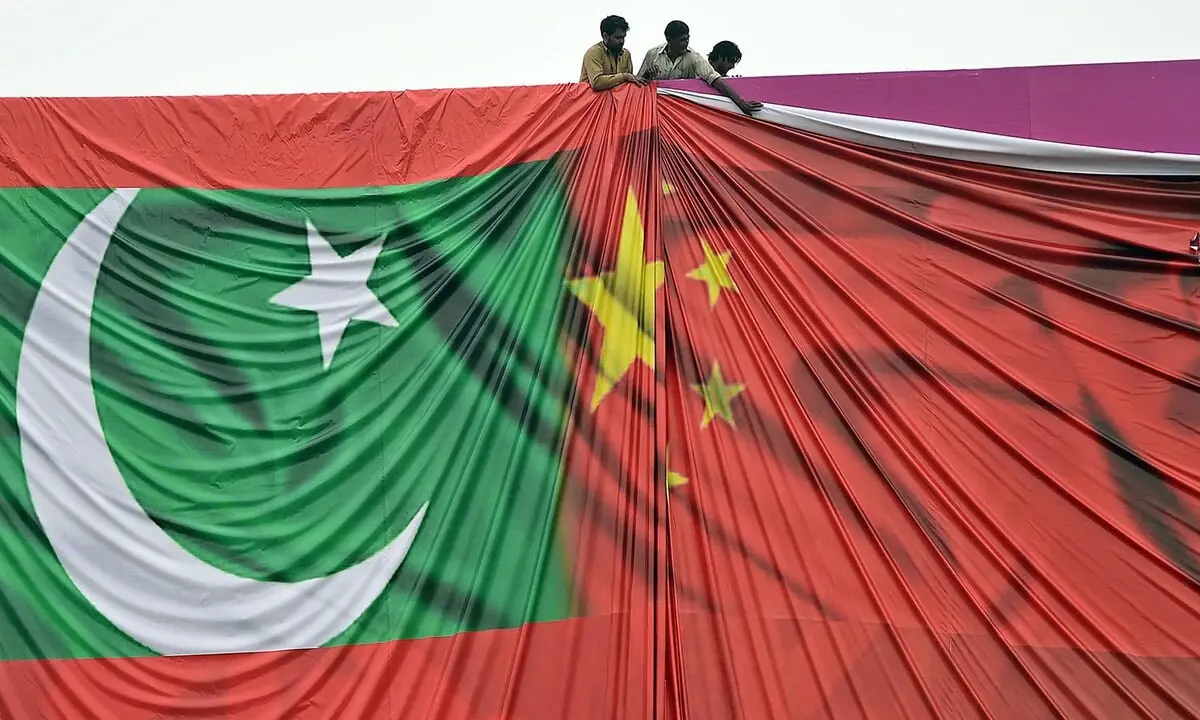
In May earlier this year, Islamabad and Beijing commemorated the 75th anniversary of their diplomatic ties, with the bilateral discourse predictably gravitating toward familiar flourishes. Bonds “higher than the Himalayas and stronger than steel” once again resurfaced in official handouts and state-level speeches. Yet, beneath the ceremonial surface of this milestone, a more consequential structural transformation is being engineered.
Over the course of this 75-year arc, the relationship has gradually evolved from a traditional diplomatic alignment into a highly structured economic partnership. What was once framed in exclusively strategic terms has increasingly been recast as a matrix of economic and technological cooperation. This ongoing evolution has allowed both capitals to systematically convert a long-standing political bond into a more functional, project-driven engine.
The bilateral partnership is now attempting to pivot from an early-stage, state-led infrastructure programme into a more intricate, market-driven economic framework. This transition, formally conceptualised as CPEC 2.0, marks a deliberate departure from the brick-and-mortar investments that characterised the last decade. However, as the multi-billion-dollar framework attempts to reinvent itself, it faces a complex landscape of macroeconomic imbalances, local security constraints, and delicate geopolitical alignments.
The architecture of the pivot
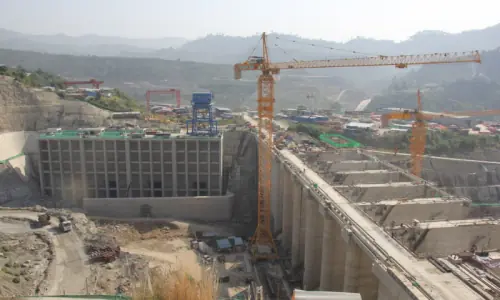
The first phase of CPEC, valued broadly at $62 billion, focused on plugging Pakistan’s critical infrastructure deficits. More than $25 billion in completed Chinese investments succeeded in addressing foundational bottlenecks, notably adding over 8,000 megawatts to the national power grid. Yet, while the first iteration built the physical skeleton of connectivity, it also left Pakistan exposed to structural repayment pressures and an underutilised industrial base.
In response, CPEC 2.0 has been designed to shift the operational centre of gravity toward business-to-business cooperation and private sector integration. Operationally, this strategy is built upon the integration of two frameworks: Pakistan’s domestic “5Es” national policy blueprint (exports, e-Pakistan, environment, energy, and equity) and China’s proposed “Five Corridors” —growth, innovation, green, livelihood, and openness.
The primary objective of this fusion is to transition Pakistan from a consumption-led economy into an export-driven entity. Bilateral trade between the two countries reached $25.23 billion, a visible increase from the $23b recorded previously.
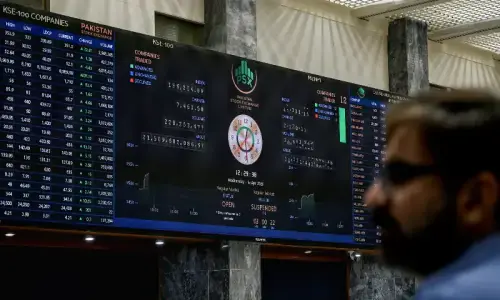
To bridge the trade asymmetry, the Upgraded Free Trade Agreement under CPEC 2.0 targets non-traditional avenues, specifically under the Growth and Innovation Corridors. This includes joint ventures in AI, biotechnology, and specialised technology parks. With Pakistan’s domestic information technology exports already exceeding $3b annually, planners hope that deeper technological integration with Chinese firms will provide the scale required for sustained growth.
Internal friction and institutional headwinds
Despite the strategic clarity offered by the 5Es framework, successful execution of CPEC 2.0 remains contingent on Pakistan’s internal operating environment. Beijing has consistently raised concerns regarding Pakistan’s persistent macroeconomic instability, institutional delays, and bureaucratic red tape. The complex domestic political environment has frequently complicated long-term policy continuity, with changing administrations altering execution timelines.
More critically, the security of Chinese nationals and projects remains an active point of friction. Persistent risks stemming from regional militancy, ethnic insurgencies, and asymmetric security threats have led to project interruptions and subsequent cost overruns.
While Islamabad has repeatedly reiterated its commitment to providing robust security protocols through specialised military divisions, Beijing continues to emphasise that sustainable economic integration cannot occur in an unstable security environment. For CPEC 2.0 to succeed, resources must be managed transparently and benefits distributed equitably across all provinces to defuse local grievances.
The geopolitical tightrope
Beyond internal governance, CPEC 2.0 is forced to navigate an increasingly polarised global arena. Pakistan’s efforts to re-engage with Western capitals —particularly its growing economic and diplomatic ties with the United States —are observed with caution by Beijing. Chinese strategists remain keen to ensure that Pakistan’s engagements with Western financial institutions or security frameworks do not undermine China’s long-term strategic investments in the region.
Simultaneously, regional opposition continues to shape the project’s external dynamics. New Delhi has maintained its steadfast opposition to the corridor, primarily on the grounds that certain infrastructure channels traverse disputed territory in Kashmir, which India argues constitutes a violation of its sovereignty.
Beyond territorial disputes, Indian strategic circles view the corridor as a mechanism that reinforces the Pakistan-China strategic partnership and expands Beijing’s geopolitical footprint in South Asia and the Indian Ocean region. While India’s historical attempts to develop Iran’s Chabahar Port were explicitly framed as a counterweight to the Gwadar deep-sea nexus, that initiative has largely failed to yield the anticipated regional advantages.
The way forward
As the initial enthusiasm of the early CPEC years gives way to more pragmatic appraisal, it is evident that the second phase cannot be sustained by state-to-state loans or celebratory diplomacy alone. The transformation of CPEC into a genuine instrument of economic sovereignty requires structural adjustments within Pakistan’s regulatory landscape.
If the corridors of innovation, green energy, and livelihood are to yield tangible dividends, the state must prioritise internal institutional stability, guarantee a secure environment for foreign personnel, and implement transparent governance.
Only by addressing these foundational internal vulnerabilities can Pakistan successfully convert physical connectivity into sustainable economic competitiveness.