LAHORE: Ngugi wa Thiong’o, along with his colleague Taban Lo Liyong and others, rebelled against the Department of English Literature at the University of Nairobi, saying that the name of the department should be Department of African Literature and Languages. That was in 1971 but we (in Pakistan) are not willing to accept it even today. If you can make this change, then you can do courses in Urdu, Sindhi and Punjabi besides English. You won’t look down upon local languages, their traditions, major writers and you will be able to evaluate literature in a much better way.
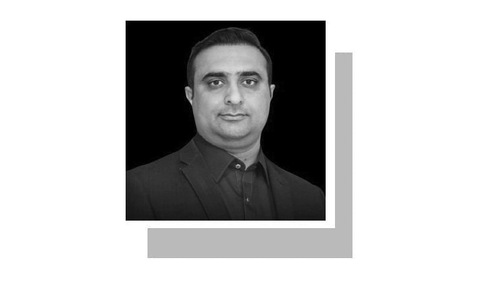
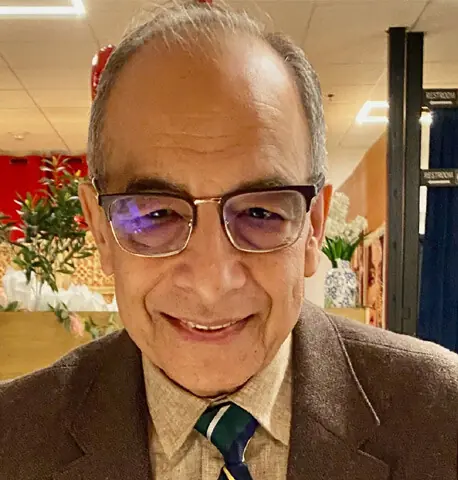
This was stated by poet Waqas Khwaja, the author of four books of English language poetry and multiple anthologies and professor of English at the Agnes Scott College in Georgia, Atlanta. He was speaking to Dawn in a casual chat which turned very serious vis-à-vis English Literature departments in Pakistani universities.
During his current visit, he says, he visited a women’s university in Lahore some days back and met its students pursuing PhD in English Literature.
“I asked them to describe their projectsand found that all of them were working on South Asian literature. Very few of them were aware of postcolonial criticism. They had very little awareness of British literature and American literature but they knew virtually nothing of Latin American or African, Australian, New Zealand, Caribbean writers. If you are working on South Asian literature and your language is an offshoot of English language, which has so many more offshoots, and you are unaware of what’s happening there, you have no basis for evaluating that (postcolonial) literature. If you know nothing of Urdu and Punjabi literature, you have read four novels of South Asian literature and some poets and a couple of books and articles on postcolonial literature, it’s woefully substandard.”
Poet Waqas Khwaja highlights ‘woefully substandard’ research, need for decolonisation and other issues
Khwaja says that four years of undergraduate studies are supposed to give you a grounding in movements, era and authors. It’s not done at the PhD level where you expand and choose one subject in that context. If you remove that context and talk in vacuum, how deep you can go? Part of the problem is that grounding is not there and undergrad education is poor in Pakistan, he points out.
Regarding the remedial practices in English literature departments in Pakistan, he suggests: “First of all you have to develop a cadre of professionals who can actually teach which you don’t have. You can’t put the cart before the horse.”
Referring to his own experiences with Pakistan universities, he says that in 2007, he was asked to review the curriculum of English Literature Department at the Fatima Jinnah Women University and suggest changes.
“The curriculum for English literature being used there was of the 1930s; entirely masculine, entirely colonial-oriented, representing the point of view of the colonizer, the white man.” He raised the question of absence of women writers, which were missing except Jane Austen in the curriculum. He suggested Norton Anthology of English Literature and pointed out women writers even from 18th century, romantic period, 19th century as well as 20th century, black writers from English tradition but the management gave the excuse that they could not make changes to what was decided for them by the Punjab University.
“The PhD students gave a performance of Beowulf but they could not pronounce words and they could not speak properly. Those students needed remedial classes instead of PhD. But the management said that they had to continue with same students for various reasons, including monetary benefits that the HEC was offering. I suggested translation studies too but they were focused only on money. I was told that the scholars would be okay once they complete the PhD. I got so frustrated that I resigned after a month.”
Divulging further details about his experience with Pakistani universities, Waqas Khwaja says being an external expert he was appalled to find pathetic dissertations, wondering how the supervisors had approved the dissertations that had problems in their each and every aspect.
The poet, who holds a PhD in English Literature from Emory University, Atlanta, Georgia, says Pakistani society has not come out of the colonial mindset as its rulers still consider themselves accountable for the British and American interests, not of this place.
“Our attitude to align with colonialism and authoritarianism is very sad. This is extreme absurdism. Maybe Pakistanis have lost self-esteem so much that they think that it does not matter that they are learning English today and Chinese tomorrow. We would bow to whatever (colonial power) appears on the scene. But living nations keep their own languages along.”
Khwaja says that we are running after awards and rewards, if there is Chinese international literary award out there everybody would start writing in it and have their works translated into it. “I am not against the monetary reward but we relate it entirely to the capitalist interest and demands of the market. The writer who says that they don’t write for the market is rare.”
In his views, the English language writers disconnect themselves from the people who are not good at English and the solution typically offered is that all should be able to speak English language and taught in that language. Compared to this,Ustad Daman looks to be at a better place as he was giving voice to the people though he was an oral poet. Saeen Akhtar was also in the same league as his poem, Allah Mian Thallay Aa, is unprecedented in poetry from this land.
In his own words, Khwaja belongs to the transitional generation that was born in Pakistan after its creation but they were carrying on the baggage given in the pre-partition days. “How to deal with that baggage and aspire to be the generation that would write in local languages or indigenized English is the goal which would be realised only when the people would become truly independent.”
Speaking about the language problem of Pakistan, he says the national language is Urdu but the official language is English as all law codes as well as the Constitution are in English. You can’t read your laws because they are in English. But Urdu is also a second form of imposition for the provinces as it is also an imported language. If you have made it national language, then allow it to develop with translation of major works into it and original research.
“Punjabi, Sindhi, Pashtun and Baloch nationalisms are there but there is no considerable work in these languages or production of landmark works, in modern times, in literature, philosophy, anthropology or sciences.”
Waqas Khwaja says that if we think that we can progress by adopting any language, we would do on terms of that language, colonial and capitalist material world.
“We can blame colonialism for it but it’s our own fault that we did not develop our languages but now if we got some awareness in this regard we should combat this mindset,” he suggests.
Published in Dawn, July 14th, 2026