0
0

WHILE participating in the recent budget debate at the National Assembly, Bilawal Bhutto-Zardari argued in favour of Azad Kashmir and Gilgit-Baltistan being given direct representation in the federal parliament. The PPP chairperson has advocated for provisional provincial status for GB, without compromising the country’s stated position on the Kashmir dispute in view of the UN resolutions.
Historically, both regions revolted against the Maharaja of Jammu and Kashmir as British rule came to an end in the subcontinent. Following a bloody struggle, the people of GB and AJK gained control of their territory. GB wanted to accede to Pakistan while in AJK, local political leaders established a government under Sardar Mohammad Ibrahim Khan. The constitutional evolution of the two regions, however, followed different paths. Under the controversial Karachi Agreement of 1949, powers relating to GB’s administration were transferred to the government of Pakistan. AJK developed a political structure with its own elected assembly, prime minister and president, within a framework subject to federal oversight. GB, on the other hand, remained under direct bureaucratic administration from Islamabad. Governance was largely managed by junior civil servants who were often unfamiliar with local realities and aspirations. The region continued to be governed through colonial-era legal structures, compounded by the introduction of the Frontier Crimes Regulation (FCR) and the appointment of political agents on the model of the former tribal areas.
This prolonged denial of representative institutions and constitutional rights became a major source of grievance for GB’s residents who continue to seek a constitutional arrangement that guarantees democratic representation, self-governance and equality with citizens of Pakistan’s other federating units, consistent with the principle of self-rule provided in UN resolutions.
During the recent election campaign in GB, the issue of constitutional and political empowerment received surprisingly little attention. Most political parties focused on routine governance matters, development projects and local political rivalries. The long-standing demand for a meaningful constitutional status and representation in Pakistan’s federal institutions remained largely absent from the public discourse.
The PPP chairman placed the issue of constitutional rights at the centre of the party’s election campaign in GB.
Bhutto-Zardari, however, placed the issue of constitutional rights at the centre of the PPP’s election campaign. He reminded voters that it was Zulfikar Ali Bhutto who initiated the most far-reaching reforms in GB after assuming power in the early 1970s. The princely states of the region were merged into a unified administrative structure, bringing an end to centuries-old feudal arrangements. Discriminatory laws, including the FCR, were abolished, and administrative reforms integrated the region more closely with Pakistan’s mainstream governance system. Further judicial and administrative reforms were introduced in Benazir Bhutto’s era. Although the powers granted remained limited, these measures marked an important step towards participatory governance and laid the foundation for future constitutional development.
The most significant breakthrough came in 2009 when the PPP government promulgated the Gilgit-Baltistan Empowerment and Self-Governance Order. Until then, the region was officially known as the ‘Northern Areas’ — a designation that ignored its historical and cultural identity. The 2009 reforms formally adopted the name ‘Gilgit-Baltistan’ and introduced institutions resembling those of a province. An elected chief minister became the head of government, while a governor represented the federation. The Legislative Assembly received enhanced powers, and the people were given a greater role in managing their own affairs.
Although these reforms stopped short of granting constitutional status or parliamentary representation, they represented a major departure from the bureaucratic system that had long governed the region. More importantly, they generated a sustained political discourse on the need for full constitutional recognition.
Faced with growing demands for provincial status, the PML-N government constituted a committee under the chairmanship of the late Sartaj Aziz, a respected statesman. The committee consulted respected diplomats, constitutional experts and public policy practitioners. Its recommendations supported representation for GB’s people in the federal parliament and proposed institutional reforms aimed at enhancing local participation in governance.
Unfortunately, the PML-N did not fully implement the recommendations of its own committee, introducing, instead, a new governance structure in 2018 that, in certain respects, rolled back the powers granted under the 2009 Order. These shortcomings were noted by the Supreme Court of Pakistan that ordered the repeal of the 2018 Order to be replaced by a revised 2019 new order drafted by the federal government based on the Sartaj Aziz report.
Building upon his party’s historical legacy, the PPP chairman has argued that the logical step in the constitutional evolution of GB is the granting of provisional provincial status and representation in both Houses of parliament while safeguarding Pakistan’s position on the Jammu and Kashmir dispute. To underline his priorities, he invoked the concepts of ‘hakmiyat’ (self-rule) and ‘malkiyat’ (ownership rights over land and resources). These themes resonated strongly with the electorate, particularly in Baltistan, where concerns over land ownership and local control of resources have remained central political issues for many years. His message contributed significantly to the PPP’s success in the recent local assembly elections.
Bhutto-Zardari has taken the debate from GB to the floor of the National Assembly. Consistent with the PPP’s historical role in advancing constitutional and political reforms in the region, he has used the parliamentary platform to articulate the aspirations of the people of both GB and AJK. He openly advocated granting both regions representation within the country’s constitutional framework while preserving Pakistan’s principled position that the final status of these territories remains subject to the eventual resolution of the Jammu and Kashmir dispute.
Whether this marks the beginning of genuine constitutional transformation or is merely another chapter in a long history of unfulfilled promises will depend on the political will of Pakistan’s leadership. GB’s people have spoken in the hope that the PPP will honour its commitment. They deserve more than assurances; they deserve a constitutional settlement that guarantees representation, self-governance and equality within the federal framework while safeguarding the country’s principled position on Kashmir. Bilawal Bhutto-Zardari has spoken clearly. The people of GB now await action.
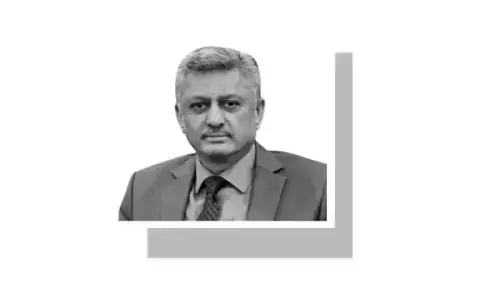
The writer, a former IGP Sindh, belongs to Gilgit-Baltistan.
Published in Dawn, July 4th, 2026