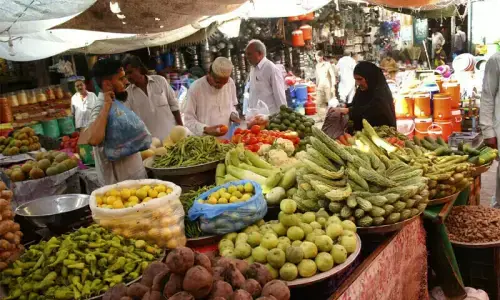
The round bottle gourd, locally known as gol lauki, is among the healthiest vegetables to eat. It offers a variety of nutritional aspects and features in diet plans of almost all patients, regardless of their ailment.
It is also beneficial for people who have to manage their weight, and those who suffer from heartburn and indigestion. Being a moderate-potassium vegetable — it contains about 150 milligrammes of potassium per 100 gramme — it is excellent for heart health, fluid balance and muscle function without overloading your daily potassium intake. The high fibre content and low calorie count of the bottle gourd induces a feeling of satiety.
Besides relieving acidity, it also acts as a laxative for those experiencing constipation. Like other varieties of the bottle gourd, the round variety is composed mainly of water and provides hydration. Some traditional remedies also credit it with easing the burning sensation during urination and other kidney-related discomfort, though this isn’t clinically established.
These health benefits make one wonder if it is only the economy of growing round bottle gourds or something else that compels veteran gardeners to opt for them. Whatever the reason, growing it at home is well worth the effort — and here’s how.
Packed with nutrients and surprisingly tricky to grow, the round bottle gourd rewards patient gardeners
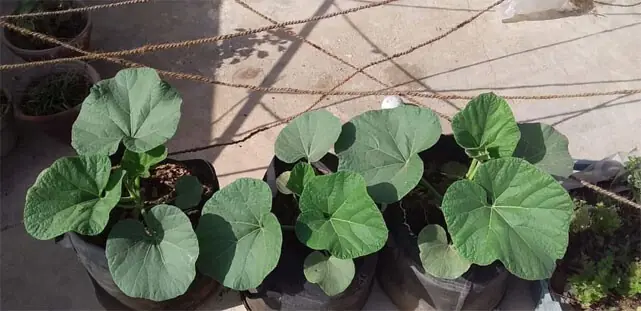
Scientifically known as Lagenaria siceraria, the round bottle gourd belongs to the Cucurbitaceae family. It is also known as calabash in some parts of the world. For kitchen gardeners, it can be tricky to grow but it is doable, especially when following gardening basics, including during the germination and seedling phase.
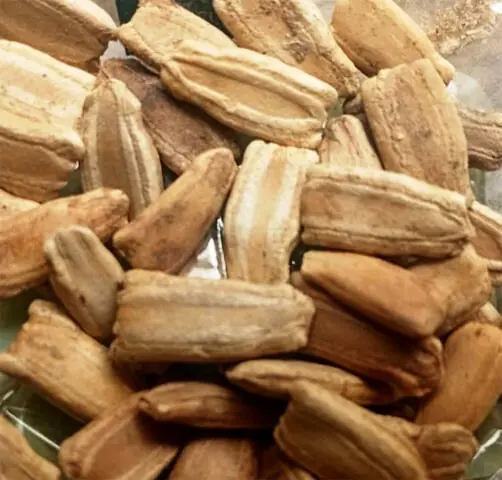
The raw seeds of the round bottle gourd are edible and healthy. Dried seeds, which are used for sowing, become too hard to eat comfortably, unlike their raw counterparts. Dried seeds are around two centimetres in length, flat, light brown and somewhat rectangular with uneven ends. In perfect conditions, the seed may take between a week to 10 days to germinate. However, the process can be shortened to less than a week by soaking the seeds in water overnight before sowing.
When sowing seeds in a seedling tray, sow only one seed per cell. When using a small container or pot, you can sow up to three seeds. For smaller seeds of other vegetables, the sowing number can be doubled or even tripled.
Round bottle gourd seeds are relatively expensive because of their greater size and weight. Usually, the seed packets are prepared on the basis of weight. As a result, the same-weight packet of carrot or okra seeds is likely to contain far more seeds than a packet of round bottle gourd seeds.
Always purchase seeds from a reliable nursery or seed store. Since the packet already contains a limited number of seeds, ensure they are fresh and undamaged for the best chance of germination. There are a few sub-varieties of round bottle gourd seeds available in the market. Depending upon the local climate and conditions, gardeners should choose the sub-variety best suited to their area.
The best time to sow the seeds is after the winter season. For Karachi, this falls between mid-January and the end of February, and again during the monsoon months of July and August. Karachi’s climate is mild enough that seeds can germinate in most months, though the two windows above yield the best results.
When sowing seeds directly into a container, ensure that the potting mix is well-drained and free of any pebbles and stones. The seeds should be sown about 2.5cm into the soil and covered with a layer of compost. The soil should be watered enough to make it moist. The top of the container should be covered with plastic to improve water retention. The container should then be placed in indirect sunlight.
Once the seeds germinate and seedlings appear, shift the container to an area with direct sunlight and increase the watering as required.
Please send your queries and emails to doctree101@hotmail.com. The writer is a physician and a host for the YouTube channel ‘DocTree Gardening’ promoting organic kitchen gardening
Published in Dawn, EOS, July 5th, 2026