Govt stopped from deporting Afghan petitioners for 60 days
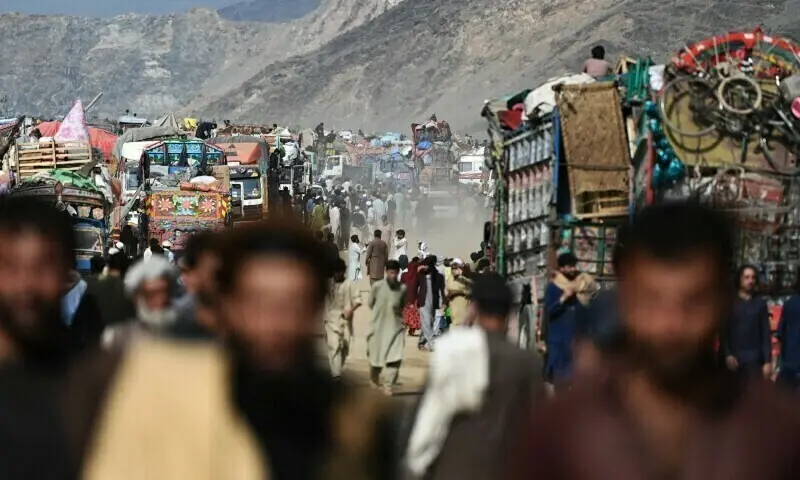
PESHAWAR: Peshawar High Court has disposed of pleas of around 140 Afghan families and individuals, who fear persecution if they are deported to Afghanistan, with the direction to the government to determine their refugee status.
A bench consisting of Justice Wiqar Ahmad and Justice Inamullah also ordered the government and its law enforcement agencies (LEAs) here on Wednesday that the petitioners should not be arrested, detained or deported for a period of 60 days or till decision on their pleas.
The bench announced that it would release a detailed order on the matter wherein directives issued to the government as well as to petitioners would be explained.
Most of the petitioners in these 140 cases have approached United Nations High Commissioner for Refugees (UNHCR) for international protection and their resettlement in a third country.
PHC orders authorities to determine their refugee status
They have sought directives of court for ministry of interior that they may not be deported to Afghanistan as they would be facing persecution there at the hand of the present Afghan regime.
They sought directives for LEAs and government to allow their stay in Pakistan and not to harass them pending the finalisation of their resettlement/relocation process.
The petitions were filed by Afghan nationals from diverse professional backgrounds, including former employees of the US-supported former Afghan government and allied institutions, worker of defence and security sectors, judges, prosecutors, lawyers, university professors, teachers, journalists and members of civil society workers as well as women, who had been employed in private sector there.
The federal government opposed their pleas with the request to the high court to reject the petitions as those were not maintainable.
The additional attorney general, Sanaullah, submitted comments on behalf of federal government in those cases. He said that ministry of interior had appointed section officer, Umar Hayat Chatta, as focal person for obtaining updated reports concerning those petitioners from relevant entities.
He stated that ministry of foreign affairs had also given its view, stating that following commencement of final phase of illegal foreigners repatriation plan (IFRP) on Sep 1, 2025, and sufficient time afforded to third countries for processing resettlement cases since 2021, any Afghan national residing in Pakistan without a valid visa and passport was liable to be repatriated irrespective of his or her inclusion in any third-country resettlement programme.
He said that the presence of foreigners was regulated exclusively by Foreigners Act, 1946, and was a matter within exclusive domain of federal government.
Several lawyers including Saifullah Muhib Kakakhel, Faheem Marwat, Malik Shehbaz, Nazir Ahmad, Qaiser Ali Shah, Osama Khalil, Raees Mohammad, Yousaf Khan and Muazzam Butt appeared for the petitioners.
Lead counsel Saifullah Kakakhel stated that following the change of regime in Afghanistan, the petitioners fled their country due to a well-founded fear of persecution on account of their previous employment, political opinion, gender or social profile.
He said that most of the petitioners were registered with UNHCR as asylum seekers, while many had already been recognised as refugees or recommended for resettlement to third countries.
He said that the petitioners had lawfully approached UNHCR seeking international protection and their refugee claims were pending before competent authorities.
He submitted that the principle of non-refoulment, recognised as a fundamental principle of international law, prohibited return of any individual to a country where his or her life, liberty or freedom would be at risk.
He argued that although Pakistan was not a party to 1951 Refugee Convention, it had consistently respected humanitarian principles and remained bound by constitutional guarantees protecting life, dignity, liberty and due process of law.
The petitioners’ lawyers stated that many petitioners had already completed interviews, security clearances and other stages of the refugee status determination (RSD) process, while several were accepted or recommended for resettlement in third countries.
They said that arresting, detaining or deporting them before completion of refugee determination process would not only frustrate their pending asylum claims but would also expose them to serious threats to their lives and personal safety upon their return to Afghanistan.
Published in Dawn, July 2nd, 2026