City Council okays Karachi Metropolitan Corporation's Rs60.45bn surplus budget for FY27
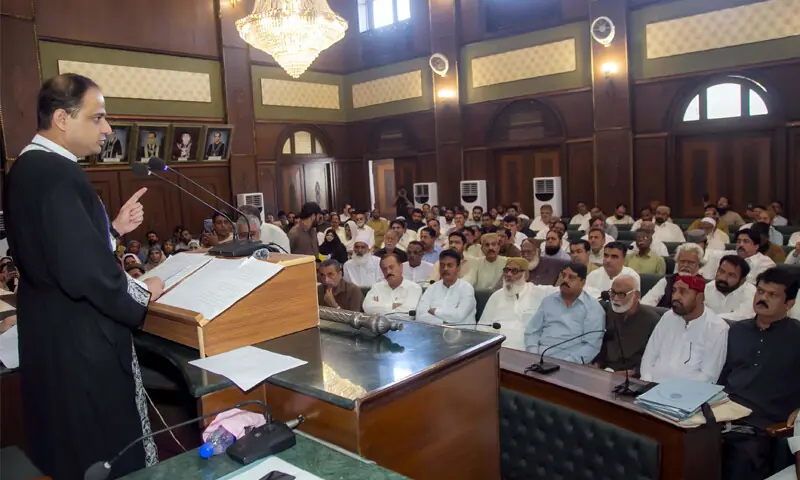
KARACHI: The City Council on Sunday approved the Rs60.45 billion surplus budget of the Karachi Metropolitan Corporation (KMC) for the fiscal year 2026-27 by a majority vote.
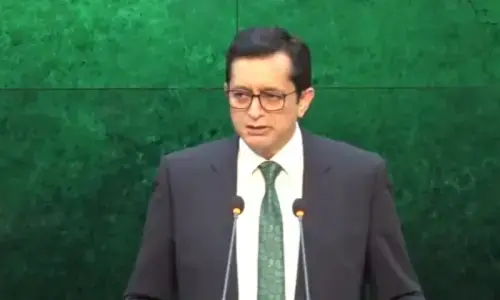
The budget was presented by Mayor Barrister Murtaza Wahab.
According to the budget document, the total receipts are estimated at Rs60.451bn while expenditures of Rs60.406bn, leaving a surplus of Rs44.905m.
The budget is, however, not tax-free as the KMC levied a new tax on hotels in Karachi, projecting an estimated collection of Rs1bn in FY27.
The KMC estimated that it would collect a whopping Rs5.95bn in the head of municipal utility charges tax (MUCT) and advertisement during the next fiscal year.
Mayor Wahab presents annual financial plan in rare calm session
The budget document shows the major expenditure during FY27 is on payment of pension, including a bailout package for KMC retirees, for which a sum of Rs18.210bn has been allocated.
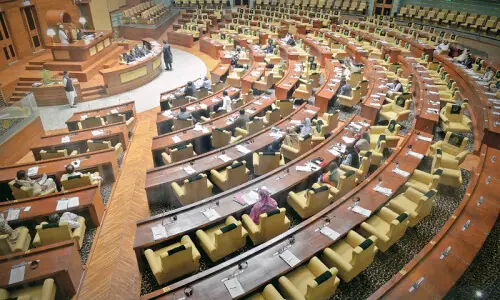
Unlike previous budget sessions, this year’s proceedings remained largely peaceful during the mayor’s budget speech, as opposition members chose not to chant slogans or stage a noisy protest and listened to his speech without interruption.
However, the atmosphere inside the City Council turned charged moments before the budget presentation. As the mayor entered the council hall, treasury and opposition members engaged in a brief but noisy exchange of slogans in support of their respective political parties before order was restored and the budget session formally commenced.
The budget session began with prayers for the departed family members of council members and for Rangers personnel who embraced martyrdom before the council concluded the budget debate and passed the financial plan.
‘Roadmap for development’
In his speech, Mayor Wahab said the budget had been prepared with the objective of addressing Karachi’s pressing civic challenges.
“This budget gives top priority to resolving citizens’ problems and serves as a roadmap for Karachi’s development,” he said.
He said that the KMC allocated Rs8.59bn from its own resources for development projects, while Rs9bn has been earmarked under the District Annual Development Programme (ADP).
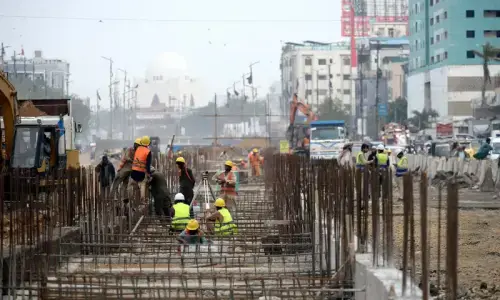
The mayor said the new financial plan focuses on rehabilitation of roads, bridges, flyovers, sewerage infrastructure, parks, green belts, urban forests, solar energy projects, sports facilities, hospitals, heritage buildings, information technology and other civic amenities.
Specific allocations include Rs800m for cleaning storm-water drains and Rs500m for parks and horticulture.
The budget provides development funds for UCs, road rehabilitation, infrastructure improvement, solarisation projects, development grants for minority communities and several new development schemes.
Opposition wants larger allocations for Karachi
While the treasury benches maintained that the budget reflects realistic priorities and seeks to improve civic services despite financial constraints, the opposition insisted that Karachi’s infrastructure backlog and growing population demand substantially larger financial allocations.
Opposition members criticised the financial plan, arguing that it falls far short of the city’s requirements.
Leader of the Opposition Advocate Saifuddin of the Jamaat-i-Islami said the size of the budget was insufficient for a megacity like Karachi.
“A Rs60 billion budget cannot meet the needs of a megacity like Karachi. The city requires at least a Rs300 billion local government budget, while the present budget lacks the resources needed to resolve citizens’ problems,” he said.
Members belonging to Pakistan Tehreek-i-Insaf (PTI) and Jamiat Ulema-i-Islam (JUI-Fazl) also participated in the budget debate, calling for greater financial powers for UCs, special allocations for underdeveloped areas, greater transparency in budget preparation and equitable distribution of development funds among all elected representatives.
When put to a vote, the City Council passed the budget with a majority.
Published in Dawn, June 29th, 2026