Seven sisters: the timeless railway tunnels of Kala Chitta

Across the tunnels, Jhalar Railway Station lay slumbering in its eternal “year 1880”. The plaque marking its construction still hangs on its facade. The railway quarters stand in a row along the riverbank, as if quietly watching the passage of time.
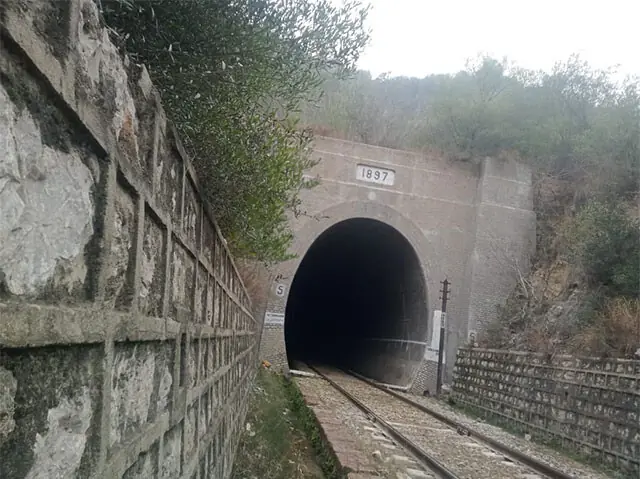
The construction of the seven railway tunnels in the Kala Chitta mountain range, located within the geographical limits of Attock, the last district of Punjab, is no less than a miracle. They are a remarkable example of the technical expertise of British railway engineers in the subcontinent. The tunnels are popularly known as the “Seven Sisters” because there are seven of them.
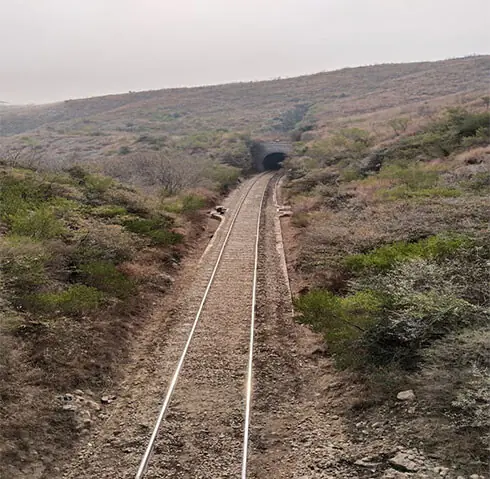
These remarkable tunnels, carved through the Kala Chitta mountains, resemble seven sisters guarding the valley’s timeless beauty. They are not only a reflection of British engineering excellence but also an important part of the country’s historical heritage.
Asghar Ali Mirza, station master at Jhalar Railway Station, said that while travelling from Attock Railway Station to Jand on the Attock–Mari Indus branch line, Kanjur Railway Station comes after about seven kilometres, followed by Jhalar Railway Station. White willow trees surround the station, and an iron fence has been installed because of its elevated location.
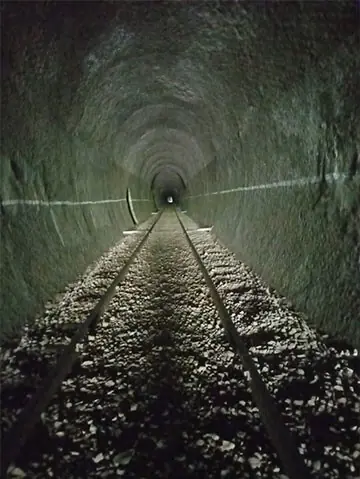
According to Mr Mirza, only three trains currently operate on this scenic route, while the distance between Kanjur and Jhalar stations is about 10 kilometres. He said the Kala Chitta mountain range stretches across a vast area, and the railway tunnels were carved through these mountains. The seven tunnels extend over a distance of five kilometres, with a combined length of 9,046 feet, or about three kilometres.
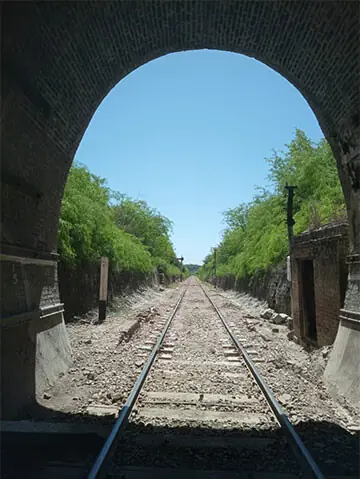
Mr Mirza said the tunnels measure 892 feet, 1,180 feet, 855 feet, 1,776 feet, 1,131 feet and 1,616 feet respectively, while the seventh tunnel is 1,596 feet long. Construction began in 1896 and was completed in 1898. “Like other British-era structures, a plaque bearing the year of completion is fixed above the entrance of each tunnel,” he added.
Senior archaeologist Dr Abdul Ghafour Lone said that nowhere else in the world are seven consecutive railway tunnels found over such a short distance, which perhaps explains their uniqueness and significance. He added that the third and seventh tunnels have continuous natural springs, with water flowing along the banks before entering channels built beside the railway track and running downhill, where shepherds and livestock quench their thirst.
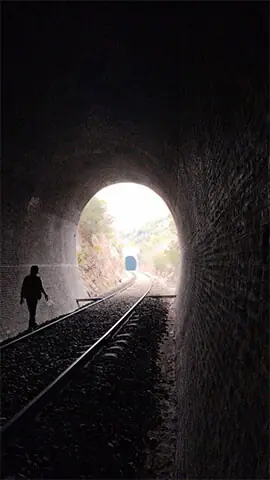
Historian Raja Noor Muhammad Nizami said the tunnels have another unique feature. Unlike ordinary railway tunnels, which are built in straight lines, the fourth tunnel is considered a marvel of civil engineering.
“If you walk through this tunnel, its alignment creates an optical illusion. As you cannot clearly see the next section, it feels as though you are standing still while moving your feet,” he said.
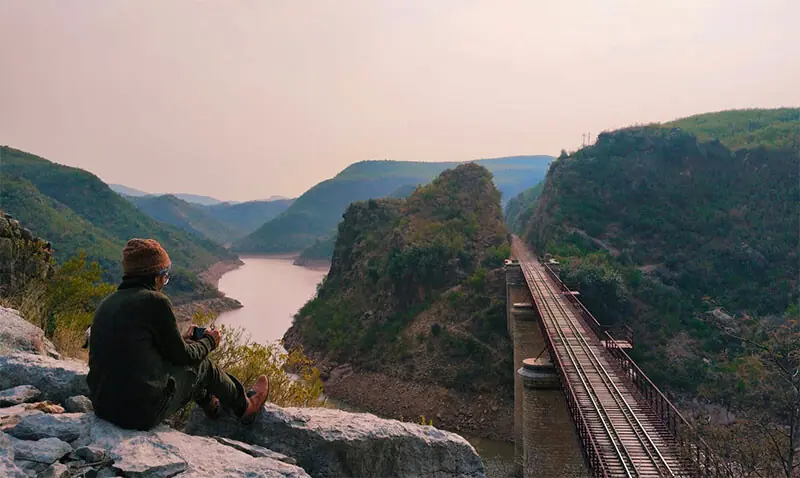
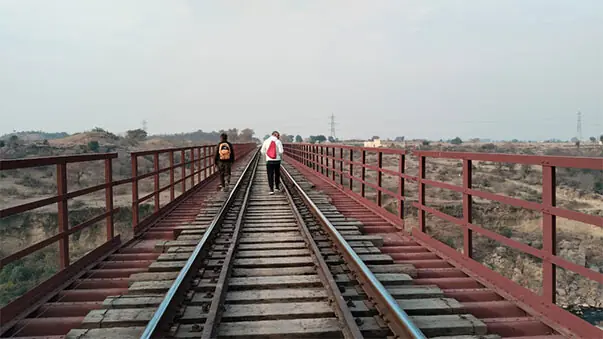
Before Shakardara Bridge lies Nandana Bridge, located about half a kilometre from Kanjur Railway Station. The bridge is another masterpiece of engineering. Unlike other bridges in the region, its pillars are built with bricks instead of cut stone. The bridge stands about 100 feet high. Anyone standing beneath it can watch trains crossing overhead, with the coaches appearing like toy boxes rolling one after another.
Passengers looking down from the windows often instinctively pull their heads back as if to avoid the dizzying height.
The beautiful chain of seven railway tunnels is flanked by the historic stations of Kanjur and Jhalar. At the eastern end, Kanjur Railway Station still reflects the Victorian era. The name Kanjur is believed to have been derived from the soft limestone found abundantly in the area. Surprisingly, however, Kanjur stone was not used in the construction of the station. The station was instead named “Conjur”, perhaps merely by coincidence.
“Trains travelling north and south on this branch line would stop briefly at this hill station before passing through the tunnels with loud whistles, while the smoke from the engines would linger around the tunnel entrances for a long time,” said Arif Khan, an adventure tourist who organises expeditions to the area.
He said the nights at Jhalar have a unique charm. The atmosphere is completely pollution-free, allowing star clusters and galaxies to be seen clearly. Even on moonlit nights, the surrounding hills and valleys are visible. “Looking around, it feels as if night watchmen are patrolling with lanterns, while the calls of owls add to the feeling of staying awake,” he added.
Tariq Khan, a visitor to the area, said that promoting Jhalar as a tourist destination would encourage people to discover this hidden attraction.
He suggested establishing hotels and restaurants, encouraging student visits and organising annual walking competitions. Such initiatives, he said, would help preserve the country’s historical heritage, promote peaceful tourism and generate additional revenue for Pakistan Railways.
Published in Dawn, June 29th, 2026