Indian Sikh pilgrims depart after offering religious rituals for two days


 0
0
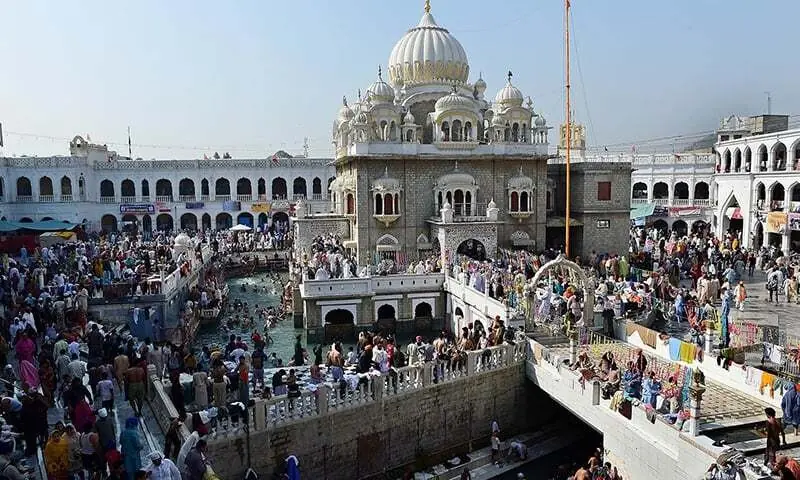

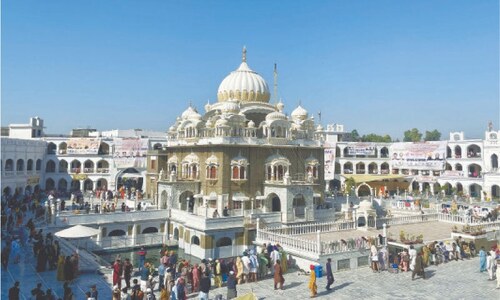
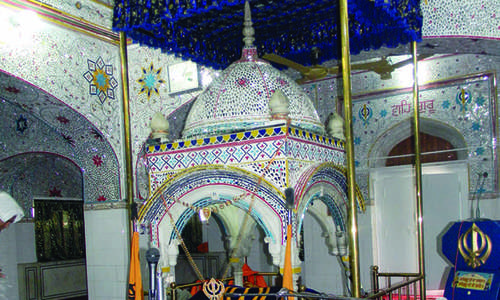
TAXILA: The over 300 Sikh pilgrims who arrived from India this week to commemorate the 187th death anniversary of Maharaja Ranjit Singh, departed for Kartarpura on Thursday after offering religious rituals at Gurdwara Punja Sahib Hassanabdal.
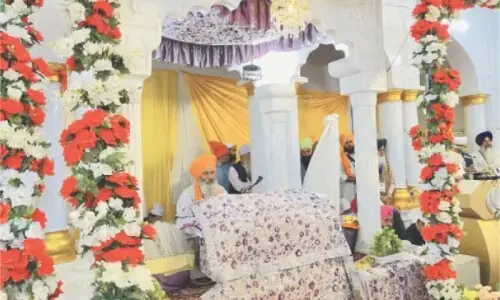
It is an emotional homecoming to a land that occupies a central place in Sikh history and spirituality. As dawn breaks over the centuries-old city of Hassanabdal, the tranquil atmosphere surrounding Gurdwara Punja Sahib begins to resonate with the melodious recitation of Gurbani.
The sacred hymns, carried gently by the morning breeze, blend with the footsteps of hundreds of devotees who have travelled across borders in search of a deeper connection with their faith.
The Sikh pilgrims were sponsored by three different Sikh bodies, including the Shiromani Gurdwara Parbandhak Committee (SGPC), Amritsar, Haryana Gurdwara Parbandhak Committee (HGPC) and Delhi Sikh Gurdwara Management Board (DSGMB).
Officials of the Evacuee Trust Property Board (ETPB) and the local administration said comprehensive arrangements had been made to facilitate the pilgrims during their stay. Accommodation, transportation, medical assistance and security measures were ensured to provide a comfortable and secure environment for the visitors.
Many of the visitors, most of them elderly and undertaking their first pilgrimage to Pakistan. “This feels like our second home,” remarked Jatha leader and member Shiromani Gurdwara Parbandhak Committee (SGPC) Khushwinder Singh Bhatia as he reflected on the deep spiritual bonds that connect the Sikh community to Pakistan.
“For Sikhs around the world, the region is not merely a geographical location but the cradle of their faith, housing some of Sikhism’s most sacred sites”, he added.
Another SGPC member, Harjinder Kaur, described the pilgrimage as a profoundly spiritual experience.
She said the pilgrims had come carrying a message that transcends political boundaries, a message of peace, friendship, harmony and mutual respect among people of different faiths and cultures.
The pilgrimage coincides with the remembrance of Maharaja Ranjit Singh, the visionary ruler who united Punjab under the Sikh Empire in the early nineteenth century. Revered by many Sikhs as a symbol of courage, religious tolerance and statesmanship, his legacy continues to command respect across South Asia.
Beyond the religious ceremonies, the gathering serves as a reminder of the enduring cultural and spiritual ties that have survived the passage of time and the drawing of borders.
At a time when divisions often dominate headlines, the scenes at Punja Sahib present a different narrative, one where faith builds bridges and shared heritage fosters understanding.
Deputy Secretary Shrines of the ETPB, Faraz Abbas, said every effort had been made to ensure that the pilgrims could perform their religious obligations in a peaceful and dignified manner.
As the sacred hymns continue to echo through the marble courtyards of Punja Sahib, the pilgrims bow their heads in devotion, carrying with them prayers, memories and a renewed connection with their spiritual roots.
For many, the journey may last only a few days, but the emotional bond forged with the land of their Gurus is likely to endure for a lifetime.
Published in Dawn, June 26th, 2026