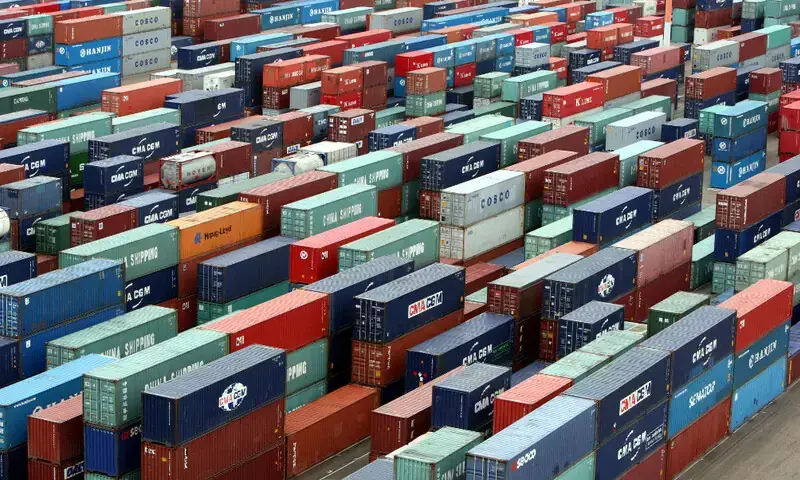

Pakistan entered the FY27 budget cycle against the backdrop of a widening external trade imbalance. During the first eleven months of FY26 (July 2025-May 2026), merchandise exports declined to $27.9 billion while imports rose to around $62.7bn. As a result, the goods trade deficit expanded to nearly $34.8bn.
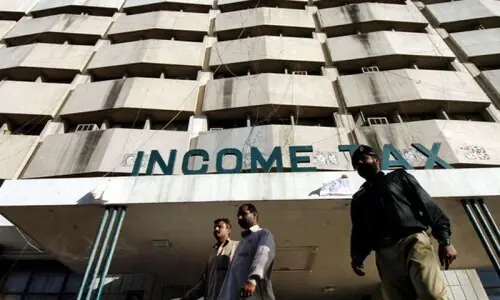
These figures help explain the strategic direction of the FY27 federal budget. Faced with a widening trade gap, pressure on foreign exchange reserves, and ongoing International Monetary Fund-backed reforms, the government has prioritised export-led growth, tax documentation, investment promotion, and digitalisation of revenue administration.
In many respects, the budget reflects a broader shift in economic policy. Rather than attempting to stimulate growth across all sectors simultaneously, policymakers have chosen to concentrate incentives on industries capable of generating foreign exchange earnings. The underlying assumption is that stronger exports will help stabilise the balance of payments, reduce external vulnerabilities and create a foundation for more sustainable economic expansion.
Export-oriented industries receive significant relief with the measures represent one of the most comprehensive packages of support provided to exporters in recent years. Lower taxes, cheaper financing and improved liquidity directly enhance competitiveness in international markets where producers often operate on thin margins.
While tax incentives can improve profitability and encourage investment, they cannot fully offset structural impediments such as high energy costs, infrastructure gaps and limited development spending
The information technology sector retains the concessional 0.25pc final tax rate on export earnings until June 2029. Pakistan’s IT and telecom exports reached approximately $4.2bn during the first eleven months of FY26, representing year-on-year growth of about 20pc. The sector has emerged as one of the country’s fastest-growing sources of foreign exchange earnings, reinforcing its importance within the government’s export-led growth strategy.
The emphasis on technology exports reflects an important structural reality. Unlike many traditional industries, the IT sector generates foreign exchange without placing significant pressure on imported raw materials, energy consumption or logistics infrastructure. The sector therefore, offers policymakers an opportunity to expand exports while minimising some of the constraints that have historically limited industrial growth.
Tariff reforms under the National Tariff Policy 2025-30 include reductions in customs duties, additional customs duties and regulatory duties on industrial inputs. Additional customs duty may be reduced across 3,149 tariff lines, while the 20pc slab covering 2,166 tariff lines may see the duty reduced from 4pc to 2pc.
Construction and real estate receive substantial tax relief. The significance of construction extends well beyond the property market itself. Activity in the sector stimulates demand for cement, steel, transport, logistics, engineering services and a wide range of skilled and unskilled labour. As a result, construction remains one of the few sectors capable of generating employment and economic activity across multiple industries simultaneously. The construction sector, which recorded growth of 5.73pc during FY26, should now grow faster with the support of the above-mentioned incentives.
For small businesses and retailers, the Fixed Tax Asaan Scheme allows traders with annual turnover up to Rs200m to discharge tax obligations through a flat payment equal to 1pc of turnover, subject to a minimum annual payment of Rs25,000. Participants will be exempt from Point-of-Sale installation requirements, withholding-agent responsibilities and routine physical inspections.
The withholding-tax exemption threshold has been increased from Rs100m to Rs200m. Property transaction taxes for tax filers have also been reduced, lowering the cost of acquiring commercial real estate. The budget also proposes regulatory simplification and improved access to credit for small and medium enterprises through banks and specialised financing programmes.
The Public Sector Development Programme has been capped at Rs1.126 trillion, Rs126bn below the level approved by the Annual Plan Coordination Committee. Ministries sought nearly Rs4tr for ongoing projects, leaving an estimated funding gap of just under Rs3tr.
Meanwhile, the federal development portfolio carries a throw-forward of around Rs10tr. Energy-sector pressures remain significant. Combined circular debt in the power and gas sectors has reached Rs5.206tr, including Rs1.764tr in the power sector and Rs3.442tr in the gas sector. Gas-sector circular debt alone stood at Rs3.4tr by December 2025, equivalent to 2.7pc of GDP.
These challenges highlight the central contradiction within the budget. While tax incentives can improve profitability and encourage investment, they cannot fully offset structural impediments such as high energy costs, infrastructure gaps and limited development spending.
The budget aims to accelerate the digital transformation of tax administration, which deserves appreciation. A National Faceless Centre will conduct audits, assessments and appeals electronically. The Finance Bill introduces an Algorithmic Settlement Mechanism, while banks and electronic money institutions will provide data on high-value transactions. Large retailers, wholesalers and manufacturers will be required to integrate with the Federal Board of Revenue (FBR) systems for real-time transaction reporting.
A tax credit equal to 10pc of investment in FBR-linked electronic systems has been introduced. Penalties for non-compliance may reach Rs1m and rise to Rs5m for continued violations.
Perhaps the most far-reaching aspect of the budget is this transition towards data-driven tax administration. Over time, digital monitoring, automated risk assessment and integrated databases could fundamentally reshape the relationship between businesses and the tax authorities.
Published in Dawn, The Business and Finance Weekly, June 22nd, 2026