ISLAMABAD: The opposition alliance Tehreek-i-Tahafuz-i-Ayin-i-Pakistan (TTAP) on Sunday demanded the removal of Minister of IT and Telecom Shaza Fatima Khawaja over a controversial telecommunication bill and sought representation in an inquiry committee investigating the matter “to ensure impartiality”.
The Pakistan Telecommunication (Re-organisation) (Amendment) Bill 2026, which seeks changes to a 1996 act and was tabled by the IT minister, was approved by the National Assembly (NA) on June 11 by a majority vote. It is currently pending before the Senate Standing Committee on IT and Telecommunication, where it was referred on June 15.
The proposed changes have been the subject of discussion on social media, with some users voicing concerns over provisions relating to the use of private property for infrastructure such as telecom towers.
TTAP spokesperson Akhunzada Hussain Ahmad Yousufzai said the bill — presented in Senate for final approval after passage through the cabinet and National Assembly — was stopped due to the “timely intervention by the Senate committee chairperson, who objected to the anti-people legislation”.
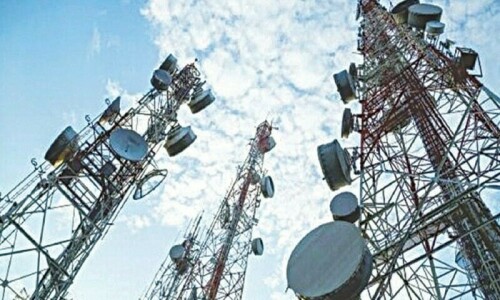
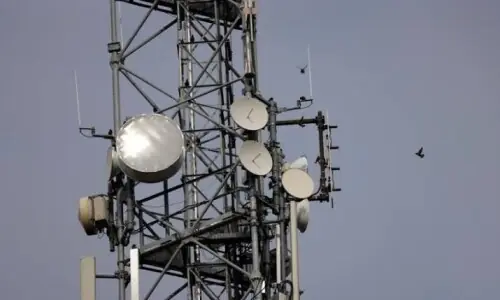
He alleged that the bill would have enabled telecom operators to legally install cellphone towers on private properties anywhere in Pakistan.
“The private owner of the property would have no right to object to it, and if the property owner refused to comply, the owner would have been punished with a fine of Rs50 million regardless of the value of the property,” he claimed.
“We oppose this draconian law as it breaches the fundamental right of the citizen as envisaged in our constitution. It restricts constitutional property rights and it encroaches upon the privacy of a citizen,” he said.
Yousufzai claimed that bill was initiated and passed by the NA without any of the meaningful consultation required for such important legislation.
The TTAP spokesperson alleged that the IT minister had accepted a misstep in proceeding without proper scrutiny of the bill, adding that the move “clearly demonstrates the incompetence, unprofessionalism and total indifference given to matters directly affecting the people of Pakistan”.
He claimed that some journalists had also raised concerns of corruption involved in the matter, insisting that the issue was too serious to be ignored.
“TTAP therefore demands that the prime minister should immediately remove the IT minister,” he said.
Additionally, the spokesperson highlighted that PM Shehbaz’s decision to set up an inquiry committee to review the proposed legislation was “in itself an acknowledgment of the poor legislation”.
He noted that the committee consisted only of government representatives, and insisted that “in order to ensure impartiality, the committee should include members from the opposition as well”.
Concerns about the intentions behind the amendment have intensified due to the timing of the government’s attempt to secure its passage through both houses of parliament.
The bill to amend the Pakistan Telecommunication (Re-organisation) Act of 1996 proposes redefining some terms, replacing Section 27A on Right of Way (ROW), and inserting a Section 27B about its enforcement.
‘Right of Way’ itself — previously defined under Section 2qb as simply a right to “pass over land or property of other person to provide telecom licence services” — becomes ‘access by licensee for telecommunication infrastructure’.
Notably, the new definition introduces the right to enter or use premises, rather than simply passing over the land.
However, the IT ministry on Saturday stated that the new ROW provisions in the bill “do not permit telecom operators to enter individual private property without the owner’s permission or due legal process, and do not authorise compulsory acquisition of private land”.
It stressed that the ROW provisions are “designed to accelerate telecom infrastructure deployment, improve connectivity for citizens, and establish a transparent legal framework while fully safeguarding private property rights”.
The IT ministry asserted that the proposed amendments aim to address challenges hindering fiberisation and investment in telecom infrastructure. It drove home the importance of the latter in the wake of the recent 5G spectrum auction earlier this year, in which 480 megahertz were sold for $507 million.