• Petrol price cut by Rs74, diesel by Rs67 per litre
• Govt still charging around Rs100 levy on HSD, Rs125 on petrol
• PM Shehbaz says govt fulfilling its promise to provide relief
• Vows to pass on full benefit of global decline in oil prices
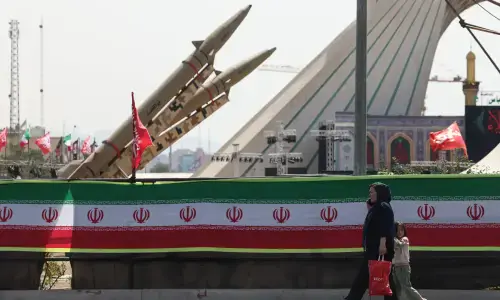
ISLAMABAD: Keeping his promise to the nation, Prime Minister Shehbaz Sharif on Friday announced a record 18pc and 20pc reduction in the prices of diesel and petrol, respectively, owing mainly to a sharp decline in the international market following the signing of a US-Iran peace deal.
“Thanks be to Allah, we are fulfilling the promise made to the nation,” the prime minister said in a statement issued by his office, adding that the petrol price was being cut by Rs74 and diesel by Rs67 per litre for the week ending June 26.
As such, the ex-depot price of high-speed diesel (HSD) was fixed at Rs311.78 per litre, down from Rs378.78 at present, a decrease of Rs67 per litre, or 18pc.
In doing so, the government took advantage of lower global prices while revising upward the rate of petroleum levy. The diesel price has come down from a peak of Rs520.35 recorded in the first week of April. It had started moving up from Rs275 per litre after the US-Israel attack on Iran on Feb 28. HSD is considered the most inflationary fuel because of its extensive use in freight transportation.
Likewise, the ex-depot rate of petrol was set at Rs299.78 per litre for the next week, compared with Rs373.78 at present, showing a decrease of Rs74, or 20pc. The petroleum levy on petrol was reduced to Rs80 from Rs107. This is the sixth consecutive weekly downward revision in the petrol rate, with a cumulative reduction of about Rs107 per litre.
The petrol price had touched a peak of Rs459 per litre in the first week of April after starting its upward journey from a pre-war rate of Rs258 per litre.
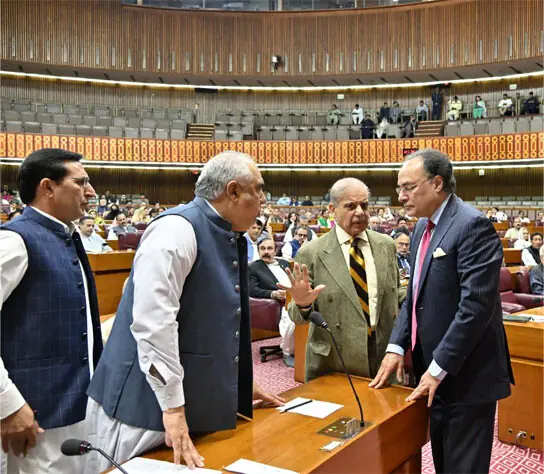
The prime minister said the government was immediately transferring the benefits of an improved regional economic situation and a fall in oil prices to the people. Earlier, in his speech on the floor of the National Assembly, he had hinted at a “significant” decrease in oil prices as the regional conflict eased and a peace deal was signed by the parties, as well as Pakistan, which brokered the historic agreement.
“We fully understand the hardships faced by the people. You demonstrated extraordinary patience and resilience during these difficult circumstances,” the prime minister said, while extending his appreciation to the people for standing by the government during testing times.
He recalled that the government had been trying from the outset to reduce prices as much as possible through its own resources and had utilised Rs129bn for relief by slashing the development programme and adopting other austerity measures.
The prime minister said that while some countries resorted to fuel rationing in the wake of the regional crisis, Pakistan avoided any energy crisis by adopting a well-planned strategy.
“Because of better planning, there were no long queues and the people did not experience any fuel shortage,” the premier said. He thanked the four provincial chief ministers, noting that the federal and provincial governments worked in “complete coordination” to keep the country’s economy stable.
“We took every possible step to protect the public from the impact of global inflation,” PM Shehbaz asserted. “Whatever reduction occurs in international oil prices will be passed on to the people in full.”
He vowed to continue taking effective measures to maintain economic stability and further reduce inflation, asserting that “providing maximum relief to the public remains the government’s highest priority”.
The government is still charging about Rs100 per litre on HSD in the form of customs duty, petroleum levy and Rs2.5 climate support levy, besides the inland freight equalisation margin. Meanwhile, the total tax on petrol amounts to Rs125 per litre, including petroleum levy, customs duty and Rs2.5 per litre climate levy.
The government is also charging about Rs21 per litre as petroleum levy on kerosene and about Rs16 per litre on light diesel oil.
Petrol and HSD are the major revenue spinners, with monthly sales of about 700,000 to 800,000 tonnes compared to just 10,000 tonnes of monthly demand for kerosene.
Published in Dawn, June 20th, 2026