FY2026-27 budget: Senate seeks increase of income tax exemption threshold, reduction in electricity tariffs
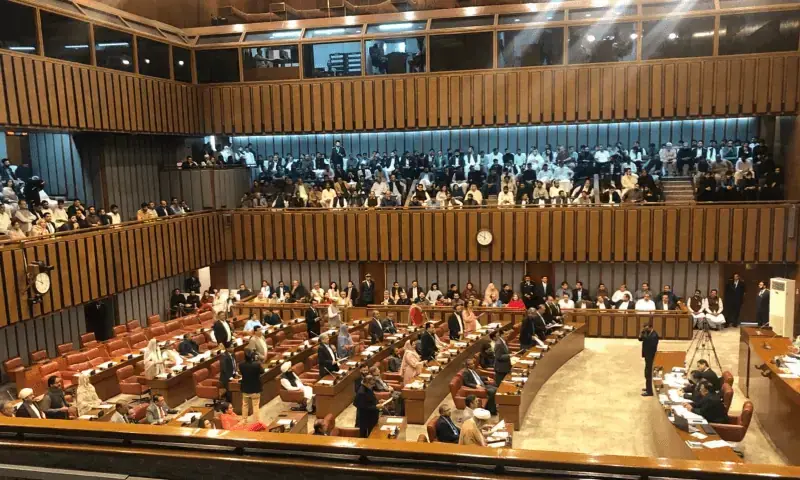


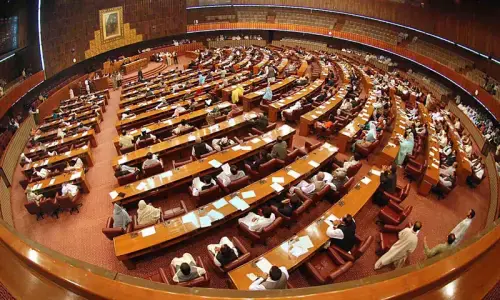
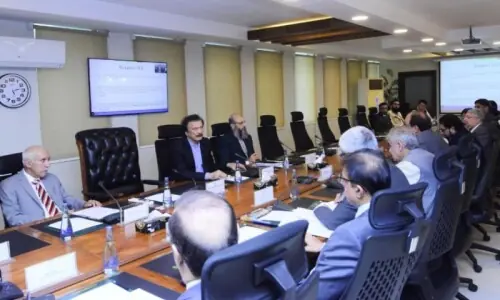
ISLAMABAD: The Senate on Thursday adopted 123 recommendations regarding the federal budget for FY2026-27, seeking an increase in the income tax exemption threshold for low-income earners, a reduction in electricity bills and increased taxes on luxury assets.
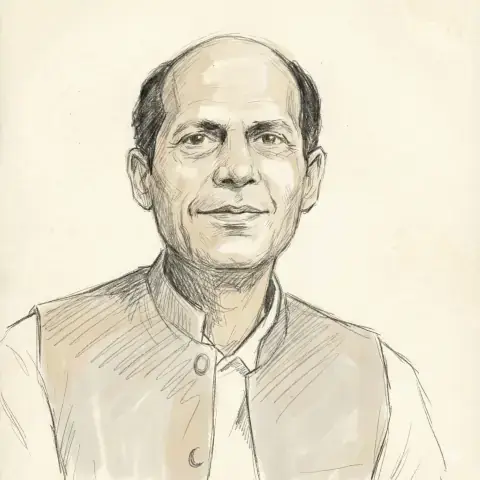
A motion for this purpose was moved by Senate Standing Committee on Finance and Revenue Chairperson Saleem Mandviwalla.
The standing committee finalised the recommendations earlier in the day. The report was then laid before the Senate for adoption and would now be transmitted to the National Assembly (NA), as per the Constitution.
The NA will take up the recommendations before the final vote on the budget. However, these recommendations are non-binding.
Senate’s recommendations include:
- Increase in the income tax exemption threshold for low-income earners
- Reduction in tax rates for salaried individuals affected by inflation
- Rationalisation of 7.5 per cent to 8pc income tax deducted at source to function as simplified final tax regime
- Expansion of targeted social protection programmes for vulnerable households
- Reduction in general sales tax on essential food items, medicines, educational material and agricultural inputs
- Avoidance of imposition of new taxes on basic necessities that disproportionately affect lower income groups
- Allocation of funds for reduction in electricity tariffs
- Introduction of a transparent roadmap for reducing capacity payments and circular debt
- Targeted subsidies for only low-consumption domestic electricity consumers and withdrawal of fixed charges, financing cost surcharge and GST on electricity bills
- Provision of targeted subsidies for low-consumption domestic consumers
- Reduction in taxes and duties on fertilisers, seeds, pesticides and agricultural machinery
- Increase in allocations for water conservation and agricultural research
- Increase in federal allocations for public hospitals and primary healthcare
- Enhanced funding for higher education, scholarships and vocational training programmes
- Publication of all tax exemptions and concessions granted to specific sectors or entities
- Set a requirement for periodic reporting to Parliament on public debt, circular debt and major public sector expenditures
- Reduction in non-development expenditure where possible
- Presentation of a medium-term reduction strategy before Parliament
- Simplification of tax procedures for small- and medium-sized enterprises
- Provision of concessional financing and incentives for employment-generating industries
- Increase in allocations for flood protection, drought mitigation and climate-resilient infrastructure
- NA reconsiders the proposed taxation measures on essential commodities and salaried class, and instead broaden the tax base by eliminating preferential exemptions, enhancing tax administration, and ensuring equitable taxation of undertaxed sectors, so as to protect ordinary citizens from further inflationary pressures
- The climate support levy shall be kept separate from the petroleum levy and shall be utilised exclusively for decarbonisation efforts, combatting climate change impacts and environmental protection
- Removal of additional withholding taxes collected through electricity bills from consumers who are already registered tax payers
- Extension of tax incentives for IT exporters and freelancers for an additional 10 years
- Increased taxation on luxury vehicles above 3,000cc, luxury properties and non-productive assets, as well as on high-end mobiles, imported chocolates, soft drinks, cosmetics, watches and jewellery
- Creation of a dedicated federal transfer mechanism ensuring development funds are channelled directly to elected local governments
- Introduction of comprehensive documentation and taxation measures for high-value retail, real estate speculation and non-filer luxury transactions
- Lithium-ion cells imported as raw material for local battery manufacturing be granted zero-rated status or substantial duty and tax relief be provided on them
- Cutting advance tax on telecom services from 15pc to 8pc
- At least 15pc increase in salaries and de-freezing of medical allowance for federal employees
- Abolition of petroleum levy for motorcycle users
- 5pc-10pc luxury consumption levy on non-essential imports
- Allocate minimum recurring budget of Rs130 billion for universities in FY2026-27, and raise it to Rs190bn by 2030-31
- Reinstatement of 1pc final tax regime and sales tax refunds within 72 hours for exporters
- Setting up a statutory National Disaster Risk Financing Fund for disaster management
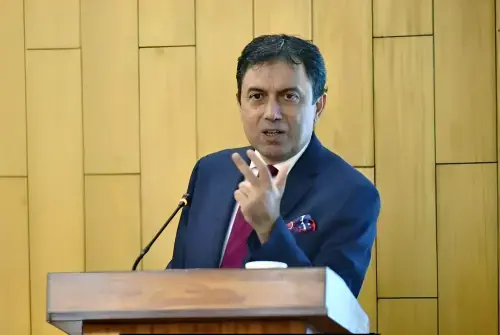
Elaborating on these recommendations in the Senate, Mandviwalla noted that he was presenting the Senate Standing Committee on Finance and Revenue’s suggestions for the eighth consecutive budget.
He added, “We should avoid repeating the mistakes made every year.“
The PPP senator stressed the need for measures to put the country’s economy on the path to stability.
Mandviwalla also emphasised the need for measures to promote solar energy across the country.
He called for the abolition of taxes on transactions through credit cards and ATM cards, saying that they put an “unnecessary burden” on consumers.
Further detailing the committees’ recommendations, he said a minimum of 15 per cent increase in salaries of government employees was suggested, and a reduction in taxes on food items and the agriculture sector was proposed to provide relief to the public and support economic activity.
Expressing concern over social sector spending, he said allocations for health and education had been kept very low in the budget. He also noted that existing taxpayers were being further burdened instead of the tax base being broadened.
Mandviwalla said the committee’s report proposed several practical and effective recommendations aimed at improving the budget and addressing public concerns.
The Senate was given the responsibility to submit budget recommendations under the 18th Amendment in 2010. Under the constitution, the Senate has no power to vote on a money bill and this power exclusively lies with the National Assembly, which is the directly-elected house.
Finmin wraps up Senate budget debate
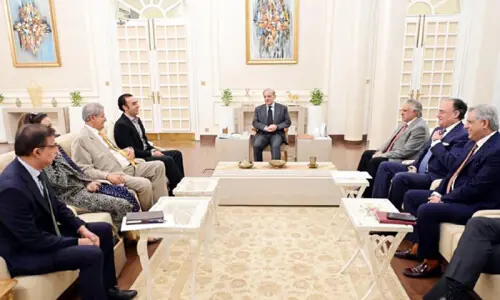
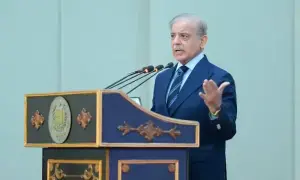
Separately, Finance Minister Muhammad Aurangzeb said Pakistan missed its GDP growth target for FY26 due to global and regional conditions, as he wrapped up the Senate debate on the FY27 budget.
Aurangzeb told the House that extensive discussions were held on all aspects of the budget with senators and representatives of various chambers and trade organisations. “Some proposals of trade bodies were also included,” he said.
Referring to the ‘Fixed Tax Asaan Scheme’, Aurangzeb said the programme would bring small shopkeepers into the tax net with minimal compliance burden.
The minister noted that the government was carrying out fundamental changes in the structure of the Federal Board of Revenue (FBR), highlighting the minimisation of human intervention and the digitisation efforts.
He said the reforms were aimed at helping the nation “stand on its own feet”.
Pointing out key concessions proposed in the budget, Aurangzeb said advance tax on the export sector would be abolished to improve cash flow for exporters. He added that markup rates on various financing schemes would be reduced and customs duties would be cut in different categories.
The finance czar asserted that no new taxes have been proposed for the IT sector.
“We are taking steps to provide a better ecosystem for freelancers and arranging training to improve their professional skills,” he affirmed. The decision aligns with the Senate committee’s recommendation to extend IT tax incentives for 10 years.
On agriculture, Aurangzeb said the government was simplifying loan disbursement for small farmers and highlighted that Rs10 billion has been earmarked for the Youth Loan Scheme for the sector.
To reduce input costs, the minister said the tax on the import of agricultural machinery has been abolished.
Referring to the 2025 floods, the finance minister said the government had the resources to cope. “We faced flood conditions in three provinces of the country. We had the resources, so we did not go for international aid,” he said.
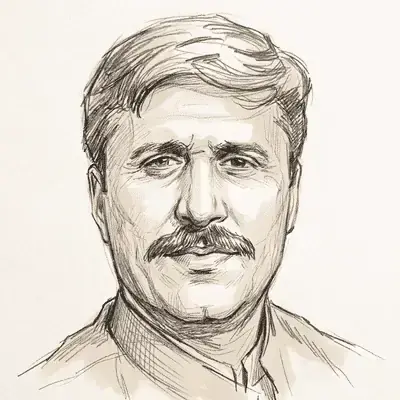
Meanwhile, PPP Senator Waqar Mehdi launched a scathing critique of the proposed budget, saying the finance ministry “has perhaps never spent a day with a poor person” and questioning whether the budget truly considered the plight of low-income households.
He highlighted the burden on motorcycle users, who form the backbone of daily commuting for millions. “Around 30 million motorcycles are used in the country. If even two litres of petrol are used daily, the monthly expense comes to Rs22,000,” Mehdi said.
Mehdi also targeted the FBR’s performance, contending that it never met its target. The PPP senator also raised the issue of water scarcity in Sindh, claiming the province “never received its share of water”.
On the other hand, Khalida Ateeb of the Muttahida Qaumi Movement-Pakistan (MQM-P) criticised the Sindh government over Karachi’s water shortage and collapsing health and education sectors.
“Karachi has been left at the mercy of the tanker mafia,” she said.
Broadening her critique, she said, “Forget Karachi, the condition of schools across Sindh is bad and there are serious health problems.”
She cited the rabies vaccine shortage as an example of the crisis: “In Sindh’s hospitals, there isn’t even a vaccine for dog bites. The situation is extremely deplorable.”