0
0

LARKANA: The Larkana Chamber of Commerce and Industry (LCCI) has demanded a fair distribution of tax revenue among federating units.
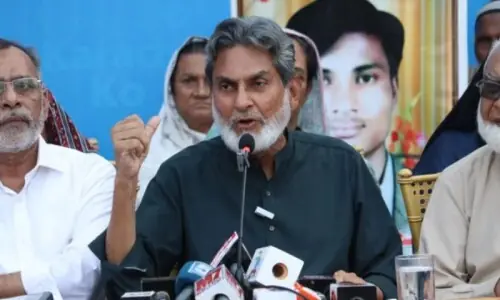
Addressing a news conference at the Larkana Press Club on Monday, LCCI President Khair Muhammed Shaikh, who is also the Special Assistant to the Sindh chief minister, condemned concentration of federal allocations on Karachi and Hyderabad and terming it “step-motherly treatment”.
Mr Shaikh argued that Larkana, Sukkur, Mirpurkhas and Nawabshah divisions also contributed heavily to agriculture, trade and human resources.
“Larkana division alone exports 342,000 metric tonnes of IRRI-6 rice annually, generating $2 billion in foreign exchange and driving Rs90 billion in local economic activity,” Mr Shaikh revealed.
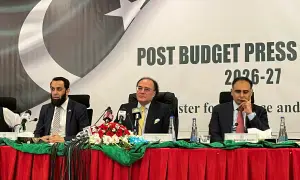
Flanked by business leaders Haresh Lal, Asad Tunio, and Jamal Shaikh, the LCCI president criticised the federal budget’s agricultural provisions. He described the Rs20 billion fertiliser subsidy as “meagre” and warned that the Rs1.676 trillion petroleum levy would place immense financial pressure on farmers and consumers. While welcoming the increased defence budget and diplomatic efforts regarding a US-Iran ceasefire, he dismissed the 7 per cent public sector salary and pension rise as entirely inadequate.
The LCCI strongly criticised the Federal Board of Revenue (FBR), alleging that officers routinely use powers under Section 175-C to harass traders, fostering uncertainty and discouraging potential taxpayers. Conversely, the chamber commended tax reliefs granted to overseas Pakistanis.
Key infrastructure demands presented by the LCCI include: restoration of Mohenjo Daro Airport operations and upgraded railway services, enhanced facilities at the industrial Free Economic Zone and the revival of the Larkana Dry Port, increased funding for the Sukkur-Hyderabad Motorway (M-6), calling the current Rs30 billion allocation a “shoe-string” budget and the dualisation of the Larkana–Tando Masti road and the prioritisation of the incomplete Ratodero–Gawadar Motorway.
Mr Shaikh expressed grave concern over acute irrigation water shortages saying that the Rice Canal is currently flowing at a critical minimum level.
Published in Dawn, June 16th, 2026