In search of lost Bengal beyond Tagore and Ray
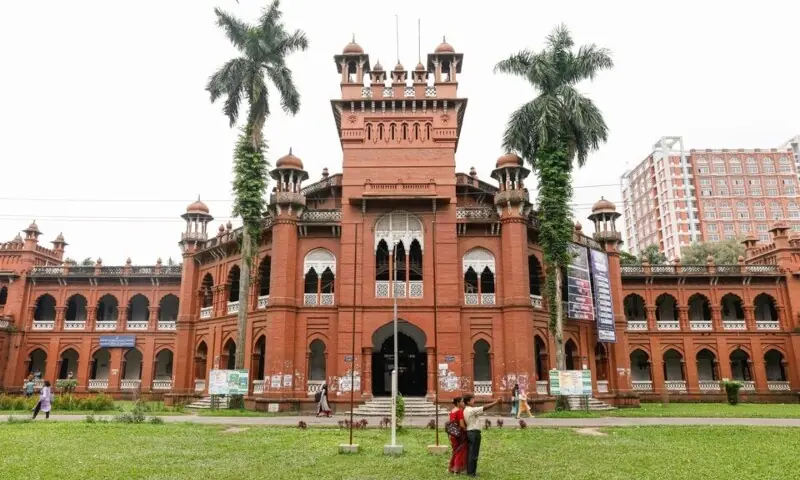
THERE was a time when Bengal was not merely a geographical region but a civilisation of the mind. Its language carried poetry in everyday speech. Its literature shaped the intellectual imagination of India. Its music nourished the soul. Its theatre challenged political orthodoxy and social complacency. To be Bengali once meant inhabiting a world where books mattered, where poetry was recited from memory, and where evenings flowed with Rabindra Sangeet, Nazrul Geeti, theatre, political debate, and adda.
Today, one cannot help but wonder whether that Bengal is slowly disappearing before our eyes. Bengali is not simply another Indian language. It is one of the great literary languages of the modern world. It gave India Bankimchandra Chattopadhyay, whose Vande Mataram stirred the nationalist imagination; Sarat Chandra Chattopadhyay, whose compassion for ordinary people touched generations across South Asia; Rabindranath Tagore — poet, philosopher, composer, dramatist, and the first Asian Nobel Laureate — whose genius elevated Bengali literature onto the global stage; and Kazi Nazrul Islam, the rebel poet whose verses thundered against oppression and communal hatred.
Cinema became another of Bengal’s great cultural triumphs. Satyajit Ray brought Bengali cinema to the world through films of extraordinary humanism and artistic sophistication. Ritwik Ghatak captured the pain of Partition and displacement with unmatched emotional intensity. Mrinal Sen turned cinema into a vehicle for political and social introspection.
Literature, music, cinema, theatre, and political consciousness coexisted naturally within middle-class Bengali life. Bookshelves overflowed with Tagore, Bibhutibhushan, Tarashankar, and Ashapurna Devi. Rabindra Sangeet drifted through open windows. Theatre groups flourished in neighborhoods. Adda itself became an informal institution of intellectual exchange. But much of that world now appears to be fading. Many young Bengalis today seem increasingly disconnected from the cultural inheritance that once defined Bengali identity.
Few read Bengali literature outside school syllabi. Tagore survives more as an obligatory cultural icon than as a living presence in everyday life. Rabindra Sangeet, once heard in countless homes, has steadily given way to Bollywood music, social media trends, and the endless noise of algorithm-driven entertainment. Today’s young Bengalis often derive their cultural references not from Bengali literature, music, theatre, or cinema, but from Instagram reels, YouTube influencers, Netflix shows, and Hindi popular culture. Attention spans have shrunk dramatically.
The slow pleasures of reading novels, listening carefully to poetry, or attending theatre performances increasingly appear alien to a generation raised on digital speed and instant gratification. One now hears a strange linguistic hybrid in urban Bengal — a “khichri” of Bengali, Hindi, and English. Many young Bengalis appear far more comfortable consuming Hindi or English media than Bengali cultural forms. Chaste Bengali increasingly sounds unfamiliar even to educated urban youth. Conversations casually slide between Bengali, Hindi, and English, producing a fragmented linguistic identity.
Languages naturally evolve and borrow from one another. Bengali itself absorbed words from Sanskrit, Persian, Arabic, Portuguese, and English over centuries. Cultural purity has never existed. But what we are witnessing today feels less like organic evolution and more like cultural displacement. Across Kolkata, Hindi increasingly dominates everyday communication. In ride-sharing services, shopping malls, restaurants, and customer-care centers, one frequently encounters people who speak only Hindi. Bengali speakers automatically shift to Hindi or English.
Rarely does anyone ask why those settling permanently in Bengal should not also learn Bengali — the language of the land in which they live and work. This is not an argument against Hindi or against migrants from other parts of India. Migration is natural in any modern economy, and Hindi serves as a practical link language across much of the country.
The issue is not the spread of Hindi but the growing unwillingness of Bengalis themselves to assert the importance of Bengali in Bengal. Perhaps this silence reflects a deeper cultural insecurity.
Bengalis often fear appearing provincial if they insist upon their own language. English remains associated with education and upward mobility, while Hindi dominates mass entertainment and national politics. Bengali, by contrast, is increasingly treated almost apologetically — as though attachment to one’s mother tongue were somehow old-fashioned. Politics too shapes linguistic priorities. Increasingly, political leaders in Bengal choose to speak in Hindi during rallies and public events to reach wider audiences. While electorally understandable, this also sends a symbolic message.
When leaders of Bengal choose not to speak Bengali in Bengal itself, they unintentionally reinforce the impression that Bengali is becoming secondary even within its own homeland. One cannot help but compare Bengal with Tamil Nadu, where linguistic identity continues to command enormous emotional and public respect. Tamils embrace modernity without abandoning Tamil. Bengal, by contrast, often appears uncertain about its own civilisational confidence. The tragedy is not that young Bengalis watch international cinema, listen to global music, or speak English.
The tragedy is that many seem increasingly detached from the extraordinary cultural inheritance that once made Bengal one of the intellectual and artistic centres of Asia. A civilisation that produced Tagore, Nazrul, Jibanananda Das, Satyajit Ray, Ritwik Ghatak, and Utpal Dutt should not become culturally insecure in its own homeland. The survival of Bengali culture will not depend on political slogans or sentimental nostalgia.
It will depend on whether Bengalis once again begin reading Bengali literature, listening to Bengali music, supporting Bengali theatre and cinema, and speaking their own language with pride rather than embarrassment. Civilisations rarely disappear overnight. They fade gradually — through indifference, neglect, and silence. And sometimes, by the time people realise what they have lost, it is already too late.
Published in Dawn, June 15th, 2026