Pakistan and law of mediation



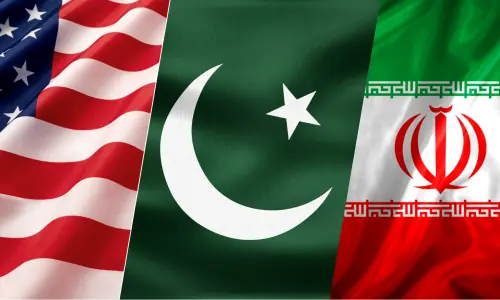
PAKISTAN’S ongoing role in helping bridge differences between the US and Iran has attracted considerable attention. Given the depth of hostility between Washington and Tehran, even keeping channels of communication open is nothing short of an achievement.
That said, an important aspect of this episode has received surprisingly little attention: it’s the significance — albeit limited — of both Pakistan’s role in shaping the development of international law and its implications for Pakistan’s positive image. In my view, that may ultimately prove to be the more enduring part of Pakistan’s success story.
Most people think of mediation as diplomacy. It is only partly that. We lawyers see more. Mediation is part of the legal architecture that governs relations between countries. The idea itself is as old as statehood. Long before the UN was established, countries recognised the need for resolving disputes instead of resorting to war. The Hague Conventions of 1899 and 1907 underpinned the belief that war shouldn’t be the default method for settling disputes. Bringing in a neutral third party as mediator was often a better option for managing differences.
After World War II, that principle became part of the modern international legal order. The UN Charter requires states to resolve disputes through peaceful means and specifically identifies mediation as one of the available tools.
If not projected well, diplomatic successes have a tendency of fizzling out.
There is a clear reason why mediation has endured. Unlike international courts and arbitral tribunals, mediators do not impose results. They create opportunities for dialogue, keep conversations alive, and help reduce the chances of miscalculation. In reality, preventing a crisis from spiralling is often the most valuable contribution any country can make.
What makes Pakistan’s recent involvement particularly important is that it highlights how international law develops in practice and the role that smaller countries now increasingly play in this new, emerging space. This dimension is often overlooked in discussions that focus exclusively on the immediate diplomatic outcome.
International law is not just shaped by treaties and international court judgements. It also evolves through the conduct of countries known as customary international law. The concept sounds technical, but the underlying idea is simple. When states repeatedly behave in a certain way because they believe it is the proper course of action, those patterns gradually acquire legal significance and are followed as a matter of binding obligation.
That process rarely attracts headlines, but it unfolds quietly and meaningfully.
Every time states choose dialogue over escalation and mediation over confrontation, they reinforce an expectation about how international disputes should be handled. Over time, those expectations harden into binding norms.
Viewed from that perspective, Pakistan’s role matters and is a commendable development under international law.
By helping sustain communication between two deeply bitter adversaries, Pakistan did not just perform diplomatic service. It contributed, however modestly, to mediation — a long-standing legal norm that favours peaceful dispute resolution. It appears to me that this contribution deserves greater recognition than it has so far received.
Equally, there is another reason Pakistan’s role deserves attention. For decades, mediation was often associated with major powers or international organisations. Today, that monopoly is fading. Influence in diplomacy now increasingly depends on access and credibility rather than power. Countries that can speak to opposing sides are becoming more valuable than countries that can merely pressure them.
Pakistan’s engagement reflects that new reality. It demonstrates that middle powers can sometimes play roles that larger states cannot. Possessing leverage is useful but holding trust can be even more useful. That, in my view, is one of the central lessons of Pakistan’s story.
None of this is intended to suggest that Pakistan has single-handedly transformed international law. International norms do not change because of a single event. They evolve through countless acts of state practice accumulated over years.
And that is precisely the point. The development of customary international law is not driven by dramatic overnight breakthroughs but by repetition and obligation to follow norms. Countries help shape norms when they consistently act in ways that reinforce them. Pakistan’s conduct squarely falls in that territory and is emblematic of an emerging trend among smaller and less influential states to mediate disputes between rivals for geopolitical clout. As a result, the implications now extend beyond legal doctrine for Pakistan.
For years, discussions about Pakistan have been dominated by security concerns and geopolitical competition. Sadly, that has often been the lens through which the country has been traditionally viewed. Successful mediation now offers a different picture. It portrays Pakistan as a state capable of facilitating solutions rather than merely managing problems. I would, however, argue that this is a narrative Pakistan has not fully capitalised on. That image has value that must not go unrecognised. Diplomatic credibility, once earned, tends to create opportunities that military power alone cannot.
But the challenge now is to build on this moment rather than simply celebrate it. Pakistan’s military and civilian leadership, the Foreign Office, policy institutions and academic community should ensure that this contribution receives the attention it deserves in international forums and legal circles. Diplomatic successes have a short shelf life. If they are not projected, they tend to fizzle out and are quickly forgotten.
At a time when conflict seems to dominate international affairs, Pakistan’s recent efforts offer a reminder that mediation still matters. Quiet diplomacy rarely generates the excitement of military action. But if history is any guide, it shows that it often delivers results where louder approaches fail.
More importantly, it reminds us of something that is frequently overlooked. International law is not written exclusively by great powers. It is shaped every day by the choices that smaller countries such as Pakistan make. Countries do not need overwhelming military strength to influence its development.
Sometimes they only need the willingness to keep adversaries talking when everyone else has given up. That, in itself, is a contribution worth recognising for which Pakistan’s story deserves significant praise.
The writer is an international law practitioner and a graduate of Harvard Law School.
Published in Dawn, June 13th, 2026