Heavy security on Herat streets amid deadly crackdown against women
• Planned protests abandoned amid fears of clash as armed patrols, checkpoints blanket city
• UN experts say Taliban fired on men, women and children
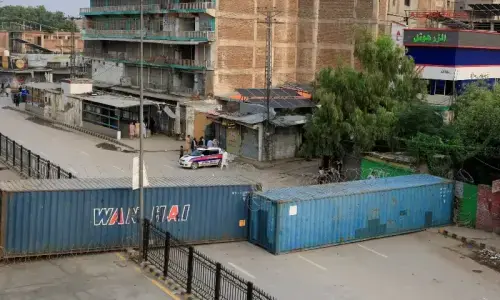
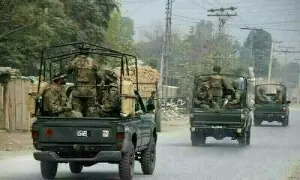
HERAT: Heavily armed security forces deployed across Herat on Friday, prompting residents to scrap planned protests following a crackdown where morality police arrested at least 30 women for alleged dress code violations and violently dispersed a subsequent rally, killing at least two people.
Independent experts noted that Taliban forces allegedly fired on men, women, and children on Tuesday, administering beatings to some. Among the two reported dead was a boy, and more than 20 others were injured.
Local police denied that any weapons were used during the demonstration and accused the protesters of seeking “to disturb public order.”
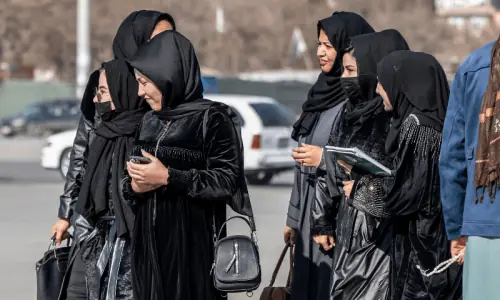
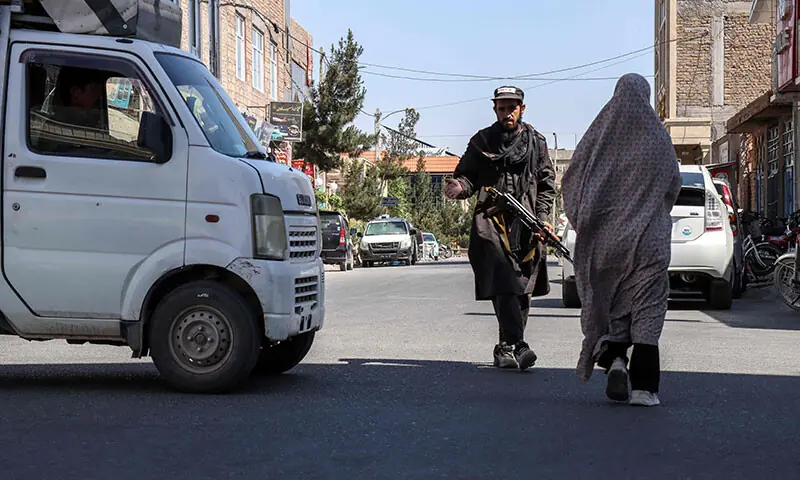
Taliban authorities rule according to their extreme interpretation of Islamic law. While the hijab or flowing abaya robe is common in many Muslim-majority countries, the Taliban mandate that women must be almost entirely covered when they leave home.
This includes a requirement to wear a body-cloaking burqa or chador with a face mask, an interpretation of face-covering that is widely considered extreme.
Following calls on social media for further demonstrations against the crackdown after Friday prayers, military vehicles and heavily armed security forces were stationed around the city.
Armed police officers patrolled on motorcycles, and extra checkpoints were manned by police and intelligence agents.
“People gave up on the demonstration today to prevent more bloodshed,” said a 34-year-old teacher, whom the AFP did not name for safety reasons. “Even the movement of a small number of people from one area became difficult due to these security measures. The atmosphere is very bad.”
A 27-year-old resident described the heavy security presence as horrible.
“On every street there is a suspicious private car with (people wearing) casual clothing, sitting in their cars and observing people,” the resident said.
The UN mission in Afghanistan (Unama) documented the initial arrests of the women over the weekend. The women allegedly violated decrees that include a ban on perfume and the strict face-covering requirement.
Among those detained was a hospital worker employed by Doctors Without Borders (MSF) who the organisation said was held for two days.
Before her release, the medic, her husband, and relatives had to sign a written commitment to wear clothing mandated by the Propagation of Virtue and the Prevention of Vice authorities. MSF said it was outraged by the detention.
The arrests have heightened fear and apprehension among women and girls across the country. UN Women, the world body’s gender equality agency, voiced grave concern over the profound and long-term impacts of arbitrary detentions.
“A woman’s detention in Afghanistan carries enormous stigma, which can put women at risk of further violence and isolation in their families and communities even after they are released,” said Georgette Gagnon, the UN deputy special representative leading Unama.
UN Human Rights Council-appointed experts expressed deep concern over reports of excessive force.
On Wednesday, Herat’s Propagation of Virtue and the Prevention of Vice wing published a new list of rules for women. The notice included a ban on wearing makeup or having any hair visible, alongside an order to wear socks and face masks. Failure to comply may result in “detention and imprisonment,” the notice warned.
Across the country, women are already banned from a host of public places, including parks and gyms, while girls’ education is halted at age 12.
Published in Dawn, June 13th, 2026