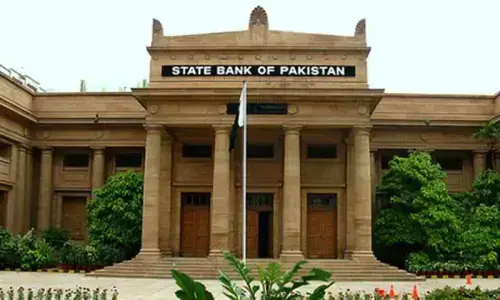
KARACHI: Finance Minister Muhammad Aurangzeb, in his budget speech on Friday, announced that the government has expanded the Export Refinance Scheme (EFS) to Rs88 billion, meaning the State Bank of Pakistan (SBP) will allocate more subsidised capital to help local businesses in the next fiscal year.
The government has been struggling to improve exports but has been unable to achieve the $60bn target. In the macroeconomic framework for 2026-27, the government set the combined export target at $44.2bn — $32.9bn in merchandise and $11.3bn in services exports.
The EFS allows exporters to secure low-interest working capital, thereby lowering their cost of production, helping them compete more aggressively in global markets and boosting Pakistan’s foreign exchange reserves.
As a pro-export policy signal, the prime minister at the beginning of this calendar year announced a series of relief measures, including targeted incentives for exporters and broader cost relief for the industrial sector. The measures were viewed as a positive signal for exporters and investors alike. While the initiatives were expected to ease financing conditions and reduce operational costs.
For exporters, a key measure is the 300bps reduction in the Export Refinance Scheme rate to 4.5pc from 7.5pc. This adjustment significantly enhances the attractiveness of export financing by lowering working capital costs, particularly in energy-intensive and value-added segments.
For the wider industrial base, the government announced a Rs4/kWh reduction in tariffs, along with a Rs4.04/unit cut in electricity wheeling charges, bringing them down to Rs8.51/unit from Rs12.55.
Analysts said this provides meaningful cost relief across industries by lowering energy expenses. The announced measures were supportive for export-oriented and energy intensive sectors, led by textiles, cement, and engineering (steel), as lower EFS rates for exporters and reduced power costs for all industries improve margins, liquidity, and competitiveness.
The SBP has introduced special schemes under its refinance window to ensure an adequate supply of financing to the value-added industries at competitive rates for enhancing their production capacity and meeting working capital requirements.
These schemes mainly include the Export Finance Scheme to ensure short-term credit availability for exporters and the Long-Term Financing Facility to encourage export-led growth over the long term.
Published in Dawn, June 13th, 2026