0
0

ISLAMABAD: The Supreme Court on Friday lifted the austerity measures it had imposed on March 10, 2026, due to disruptions in petroleum supplies amid the ongoing Iran-US conflict.
On March 10, the apex court announced that the country’s courts would observe four-day work weeks. It further stated that the monthly ceiling of Petroleum, Oil and Lubricants (POL) allocated to judges and entitled officers should be reduced by 50 per cent.
A notification issued with the approval of the Chief Justice of Pakistan Justice Yahya Afridi stated that the notification, dated March 10, 2026, has been withdrawn.
“Accordingly, all austerity measures adopted in the said notification shall cease to have effect from June 15, 2026,” it added.
The government had announced unprecedented austerity measures on March 9 in the wake of the Middle East war to deal with the global energy crisis, which had arisen due to the closure of the Strait of Hormuz.
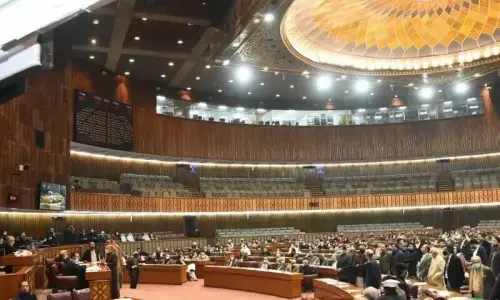
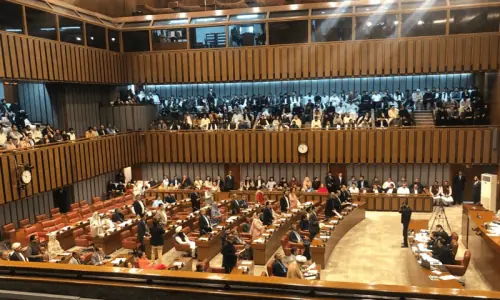
Following the government’s announcement, institutions including the Supreme Court, the National Assembly, the Senate and others said they would follow suit.
NJPMC considers PHC, LHC’s proposals
Earlier on Thursday, the 60th meeting of the National Judicial Policy Making Committee (NJPMC), presided over by the chief justice, considered proposals from the Peshawar High Court (PHC) and the Lahore High Court (LHC), seeking reconsideration of the policy of observing three weekly holidays in the district judiciary.
The committee observed that the policy had been introduced under the Judicial Austerity and Energy Conservation Strategy approved by the NJPMC in its 58th meeting to promote prudent utilisation of resources and energy conservation.
During the meeting, the NJPMC appreciated the support of the federal government and considered the eased-out situation conveyed through the secretary of the law ministry, deciding that the district judiciary may revert to a six-day working week in accordance with the working schedule that existed prior to the implementation of the Judicial Austerity and Energy Conservation Strategy.
The committee, however, urged the high courts to implement appropriate resource management and energy-saving measures while maintaining the smooth and uninterrupted administration of justice.