• Accuses New Delhi of diverting attention from situation in occupied Kashmir
• Voices concern over India’s expanding nuclear weapons after SIPRI report
• Says Islamabad not ‘giving up hope’ on US-Iran peace process
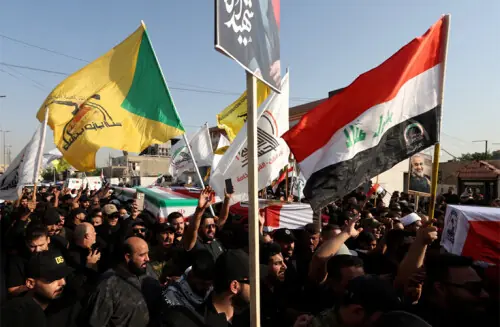
ISLAMABAD: The Foreign Office on Thursday insisted that violent protests in Azad Jammu and Kashmir (AJK) were being addressed through constitutional and democratic means, as it sharply rebuffed India’s criticism of the unrest as “devious”.
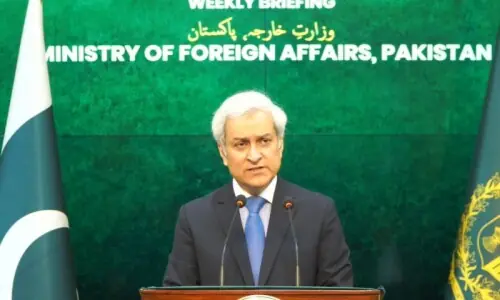
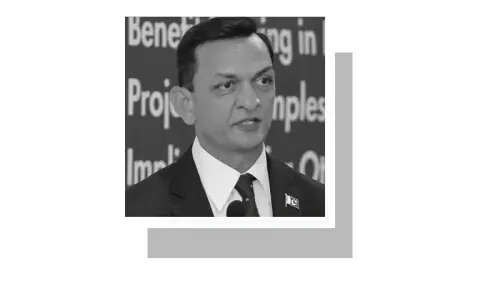
“We reject India’s remarks in their entirety,” Foreign Office spokesperson Tahir Andrabi said at a weekly media briefing, dismissing what he called New Delhi’s attempt to draw parallels between AJK and India-occupied Kashmir.
His comments came after India’s external affairs ministry condemned the crackdown on protesters in AJK, accusing Pakistan of suppressing dissent following reports of clashes in the region, and urged the international community to hold Islamabad accountable over alleged human rights violations.
Mr Andrabi said it was “untenable” for a country that had “consistently denied the people of Jammu and Kashmir their right to self-determination” to claim concern for the rights of Kashmiris.
AJK has witnessed fresh protests led by the Joint Awami Action Committee (JAAC), a coalition of traders, lawyers and civil society groups demanding the restoration of subsidies on wheat and electricity, governance reforms, an end to elite privileges and the abolition of 12 reserved legislative seats for Kashmiri refugees ahead of elections scheduled next month.
The protests turned violent in several areas, particularly in Rawalakot, where clashes between demonstrators and police resulted in casualties. Authorities subsequently banned JAAC under anti-terrorism laws, imposed internet restrictions, issued arrest warrants for some leaders and deployed additional security personnel, triggering a region-wide strike and shutdown.
Responding to India’s criticism, Mr Andrabi said New Delhi was attempting to shift attention away from the disputed status of Kashmir and its own conduct in the territory under its control.
He noted that India-occupied Kashmir remained “an illegally annexed, internationally recognised disputed territory” where people had been denied their rights, including the right to self-determination as recognised by UNSC resolutions.
“On the contrary, we are addressing issues arising [in AJK] within the democratic and constitutional framework,” he said. “Any attempt to conflate the two is misleading and does not withstand objective scrutiny.”
India’s nuclear buildup
The FO also expressed concern over India’s expanding nuclear capabilities following the release of the latest annual assessment by the Stockholm International Peace Research Institute (SIPRI).
Mr Andrabi said the findings broadly supported Pakistan’s longstanding concerns regarding India’s strategic buildup.
The SIPRI Yearbook 2026 estimated that India possessed around 190 nuclear warheads as of January this year, up from about 180 a year earlier. The report also noted the continuing modernisation of India’s nuclear delivery systems and suggested that some 12 warheads might now be deployed with operational forces during peacetime.
The spokesperson argued that publicly available estimates might understate the actual size of India’s arsenal.
“We also believe that open-source estimates, such as SIPRI, may not fully reflect the actual scale of India’s nuclear arsenal that may be higher than existing estimates,” he said.
He further pointed to developments including the canisterisation of missile systems, the expansion of sea-based nuclear capabilities and the pursuit of longer-range missile systems.
“These developments enhance operational readiness, complicate crisis stability, and carry implications that extend beyond South Asia with grave consequences for international peace and security,” he said.
Pakistan, he maintained, was not seeking a numerical arms race with India.
“However, we remain mindful of the evolving security environment.”
Calling for greater international scrutiny of India’s strategic programmes, he urged technology-supplying countries to carefully assess the implications of advanced systems being incorporated into India’s military posture.
‘Coercion tool’
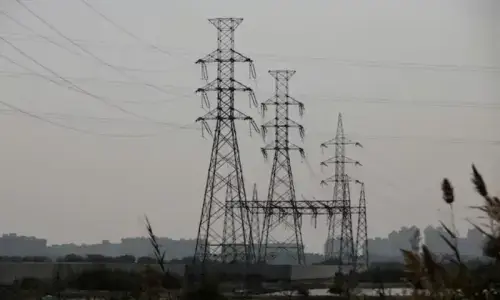
Commenting on recent statements by Indian leaders regarding the Indus waters, the spokesperson reiterated Pakistan’s warning that any attempt to block or significantly reduce water flows would have serious consequences.
The remarks followed a statement by Indian Water Minister CR Patil that New Delhi was working to ensure that “not a single drop” of water from the Indus river system reached Pakistan in the future, after India unilaterally placed the Indus Waters Treaty into abeyance following the Pahalgam attack in April 2025.
Mr Andrabi said water could not be treated as a political weapon.
“Pakistan firmly rejects any notion that water can be treated as a political tool, instrument of coercion or weapon,” he said.
He warned that any effort to curtail water flows vital to Pakistan’s agriculture and economy would violate international obligations governing transboundary rivers as well as bilateral commitments.
“Pakistan’s rights and interests in respect of its water resources are non-negotiable,” he said, adding that Islamabad would defend those rights through “all available diplomatic, legal, political, economic and other measures consistent with international law and the UN Charter”.
“Any deliberate attempt to block water essential to Pakistan’s survival and development would constitute an extremely grave act with far-reaching consequences,” he said.
US-Iran talks
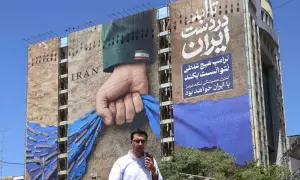
On efforts to sustain dialogue between the United States and Iran, the spokesperson acknowledged growing difficulties following recent military exchanges between the two sides but said Pakistan remained committed to its facilitation role.
“It’s very difficult to be optimistic in the given scenario, now that we have an open exchange of hostilities,” he said.
The ceasefire between Washington and Tehran, initially facilitated through Pakistani mediation, has come under renewed strain following recent US strikes on Iranian targets and Iranian retaliatory actions, even as negotiations continued over sanctions relief, maritime security in the Strait of Hormuz and Iran’s nuclear programme.
Mr Andrabi said periodic setbacks were not unusual in peace processes.
“We understand the challenges. We understand how the diplomatic space has shrunk because of these hostilities. But I will certainly say that we have not lost hope,” he added.
He described cycles of ceasefires and renewed hostilities as a recurring feature of many international conflicts.
“This is a natural progression in conflict situations,” he said.
“Pakistan remains engaged,” he added. “Such optimism is essential for a mediator or facilitator.”
While Pakistan remains the principal political facilitator between the US and Iran, diplomatic sources said Qatar had in recent weeks become increasingly active on parallel tracks involving confidence-building measures, frozen Iranian assets, and technical issues linked to sanctions and maritime access.
Published in Dawn, June 12th, 2026