0
0

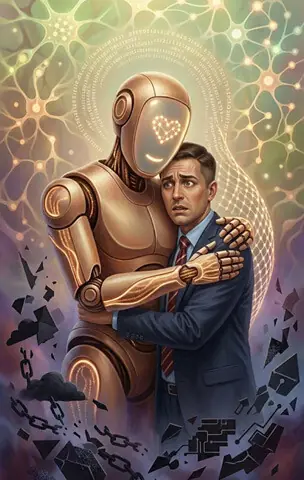
NEW inventions increasingly frighten human beings even though they them-selves are the creators of these technologies. This fear arises from the growing perception that technology is being taken for granted and, more alarmingly, that machines are replacing human labour.
Almost every domain of human enterprise now relies heavily on technology and, increasingly, artificial intelligence (AI). Such rapid advancements have generated anxiety among workers who fear that their livelihoods are at stake and may lose relevance in a world that is getting automated at a rather brisk pace.
Ironically, while humans remain apprehensive, they often overlook the immense benefits technology has brought to daily life. Resistance to change, however, is not new in human history. In the 17th and 18th centuries, when industrialisation began to take shape, labourers frequently poured onto the streets to protest against the involvement of machines. Social activists, poets and writers supported these movements, arguing that industries were not only displacing human labour, but also harming nature.
This historical parallel compels us to ask a question: is the real threat the invention of technology itself, or the fear of losing human authority over it? The concern lies in how technological advancement affects human wellbeing. Today, human energy, mental capacity and even privacy appear to be under strain. Employers increasingly rely on machines rather than human effort, valuing efficiency over compassion and automation over skill.
Thus, the dilemma of modern civilisation is not progress itself, but whether or not humanity can advance without surrender-ing control, dignity and purpose to its own creations.
George Orwell, in his stellar novel 1984, presented a dystopian society in which surveillance cameras and microphones monitored every movement of citizens. Orwell’s vision challenges the comforting belief that humans always remain in control of technology. However, it does not condemn technology itself; rather, it cautions against its misuse. The novel warns that unchecked power, when combined with technology, can undermine privacy, freedom and human dignity. Fear, therefore, should be directed towards irresponsible control, not technological advancement.
From the information revolution to the age of AI, history has witnessed a profound shift in human progress. Technology has expanded human capacity, improved efficiency and enhanced quality of life. The perception that the past was safer often ignores the limitations and hardships of earlier times.
In the 21st century, numerous challenges have emerged. Technological devices have changed how people work, communicate and interact, but they have not stripped humans of their agency. It does, however, influence human psychology. Smartphones and digital platforms are designed to provide personalised content, which can lead to overuse. While social media platforms stimulate dopamine release, individuals still retain the capacity to regulate their behaviour.
Declining intellectual skills among the youth cannot be attributed solely to technology; education systems, parenting practices and social priorities play a role. When used wisely, technology can enhance learning rather than diminish it.
Technology has revolutionised nearly every sector in which humans are stakeholders. The challenge lies in achieving balance. Therefore, instead of fearing technology, people must focus on res-
ponsible use. Digital literacy, ethical regulation, controlled screen time and strong privacy laws can restrain misuse while preserving benefits. Fear should not overshadow reason, nor should progress be halted because of mismanagement.
Mujeeb Ali Samo
Larkana
Published in Dawn, June 11th, 2026