KOLKATA: India has deported nearly 5,000 Bangladeshi citizens since Prime Minister Narendra Modi’s Hindu-nationalist party swept to power in West Bengal last month, according to official statistics.
The Bharatiya Janata Party (BJP) won a sweeping victory in elections in the eastern border state of more than 100 million people, promising to “detect, delete and deport” illegal migrants.
India shares a long and porous border with Muslim-majority Bangladesh, where migration has historically been driven by economic hardship and longstanding family links.
On taking power, the new West Bengal government ordered the establishment of detention centres for undocumented Bangladeshis and Rohingya refugees, a mainly Muslim people who fled persecution in Myanmar.
Critics accuse BJP of conflating religious identity with illegal migration
State Chief Minister Suvendu Adhikari, speaking in the capital Kolkata on Sunday, said nearly 5,000 Bangladeshi citizens had been deported across the border.
“We have started the work of deporting Bangladeshi infiltrators who do not fall under the purview of the Citizenship Amendment Act,” Adhikari said, adding that the government had “established holding centres in all districts of the state” in May.
“From these centres, 4,800 Bangladeshi infiltrators have already been deported so far. Another 836 people are currently in the holding centres... we are making arrangements to deport the 836 soon,” Adhikari said.
The deportation campaign comes against a backdrop of longstanding political tensions over immigration in the border state.
Top Indian officials have referred to migrants as “termites” and “infiltrators”.
Critics say the BJP’s rhetoric and policies have added to the unease and marginalisation of India’s more than 200m Muslims, accusing the party of conflating religious identity with illegal migration.
Rights groups have previously accused India of also pushing hundreds of Bengali-speaking Muslims into Bangladesh without due process.
Relations between India and Muslim-majority Bangladesh soured after a 2024 revolution in Dhaka ended the autocratic rule of then-prime minister Sheikh Hasina, an ally of New Delhi, who fled to India.
A new government in Dhaka was elected in February, and relations have since slowly improved. Bangladesh and Indian border force chiefs are due to meet in New Delhi on Monday.
Shortly after taking office in May, the new West Bengal chief minister, Suvendu Adhikari, directed all districts to set up specialised “holding centers”.
These facilities are being used to process arrested immigrants and Rohingya refugees before sending them across the border.
Chief minister Adhikari stated the state is executing actions under the existing Foreigners’ Act rather than drafting new laws. He issued an ultimatum warning undocumented individuals to leave voluntarily or face strict government action.
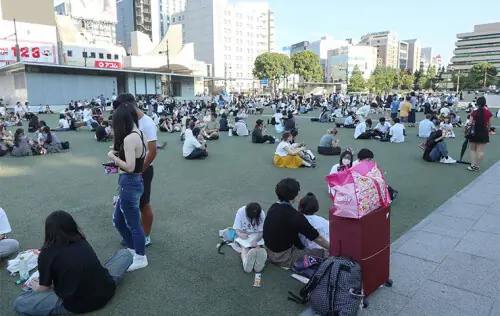
This triggered crowds of people lacking legal residency papers to gather at border points like the Hakimpur crossing to return to Bangladesh on their own.
Published in Dawn, June 9th, 2026