0
0

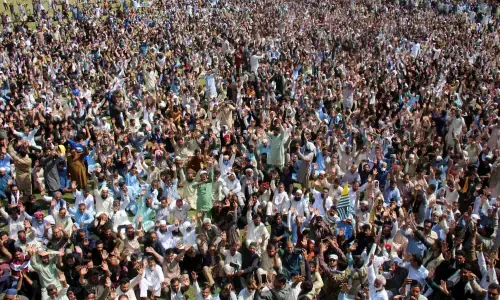
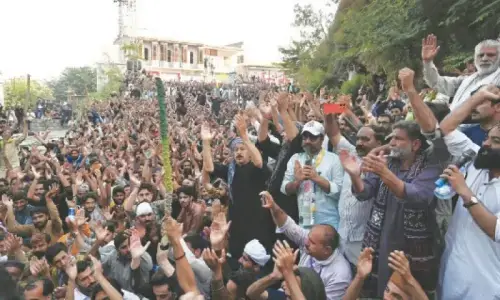
TENSION has once again gripped Azad Jammu and Kashmir, with the region’s administration proscribing the Jammu Kashmir Joint Awami Action Committee on Friday, ahead of a protest planned on June 9. The AJK government has also ordered visitors to leave the region at the peak of the tourist season, while communications have experienced disruptions.
Such confrontations between the AJK authorities and the JAAC have become all too frequent over the past few years; the last major flare-up occurred in October, resulting in deaths as protesters and authorities clashed. The JAAC has evolved from advocating for civic rights for the local people to demanding constitutional changes. In particular, the organisation wants the abolition of 12 seats reserved for refugees from India-held Kashmir who have settled in the region. General elections are scheduled for AJK on July 27.
Though the JAAC’s demands are open to scrutiny, banning any political party or organisation — as long as it remains committed to peaceful activism — is undemocratic. Peaceful protest is a fundamental right and should not be curtailed. In fact, the JAAC’s demands are not without substance. There is some truth in the claim that mainstream parties in Pakistan use refugees’ seats to make and break governments in Muzaffarabad.
It is also true that governments in AJK usually ally themselves with the party in power in Islamabad. Moreover, many of those elected on refugees’ seats live in different parts of Pakistan, and often do not pay enough attention to affairs in AJK. But a blanket abolition of refugee seats is also not advisable.
Instead of taking maximalist positions, both sides — the Azad Kashmir administration and the JAAC — need to handle this issue and all other allied matters in a democratic manner. The government should reverse the ban on JAAC as it is an organisation with popular support, and suppressing dissenting voices will not make them go away. For their part, the JAAC’s leaders need to realise that delicate constitutional issues cannot be decided on the streets.
The right forum to discuss changes to the law is the AJK legislature. Reforms regarding the number of refugee seats and other related questions can be debated in the House. Right now all stakeholders need to step back and pursue a political solution to this deadlock, instead of digging in for a confrontation. It should also be remembered that AJK is a sensitive region, and the state can ill-afford disturbances here.
Let both sides meet halfway and discuss their differences in a rational manner. The state must listen to the genuine grievances of the JAAC, while the latter should ensure that all protest activity is peaceful, and adopt the legal and constitutional route for reform and better governance.
Published in Dawn, June 7th, 2026