0
0

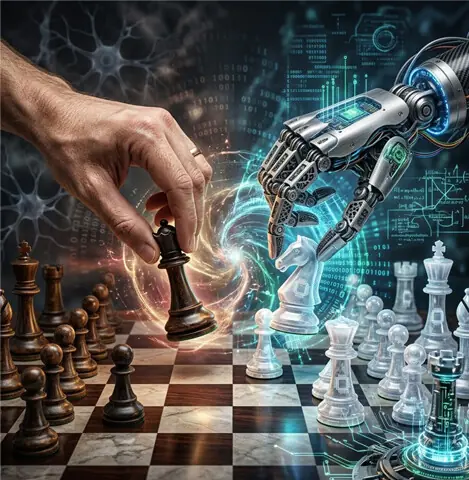
AT a time when the world is reckoning with the reach of artificial intelligence (AI) into nearly every human endeavour, there was something quietly poetic about the International Chess Federation (FIDE) Candidates Tournament held earlier this year in Cyprus. The game humanity once considered its purest measure of intellect, now finds itself at a peculiar crossroads. The best players on earth competed under AI’s long shadow.
For those of us who grew up watching chess as a symbol of strategic genius, the Candidates field this year was quite extraordinary. Names like Javokhir Sindarov, Praggnanandhaa Rameshbabu, Fabiano Caruana and Matthias Blübaum — won ultimately by Sindarov — carried the weight of national pride and decades of grinding study.
And yet, every grandmaster at that table had spent considerable time training not against other humans, but against AI engines that do not tire, do not feel any pressure, and play moves that surprise the best of humans. The irony is not lost: to compete at the highest human level, one must first become fluent in the non-human.
This mirrors what is happening across society at large. Doctors are diagnosing with AI assistance. Lawyers are drafting with it. Writers, engineers, teachers and programmers are all learning, willingly or reluctantly, to work alongside systems that are faster and, in narrow domains, more accurate than they are. The question that haunted the Candidates hall — can human creativity still surprise a machine? — is the question haunting offices, hospitals and classrooms around the world.
For a country like Pakistan, these developments deserve serious attention. We have a young population that is already engaging with AI tools daily, often without any structured education about their implications. Meanwhile, our own chess talent, though growing, remains under funded and under-celebrated.
There is a lesson in how India has invested in both: producing a generation of grandmasters and simultaneously becoming a global AI hub. Intellectual sport and intellectual technology are not separate conversations. They share the same foundation, a culture that takes thinking seriously.
What moves me most about the Candidates is the humanity that was on display. They were not just chess players. They were human beings doing something extraordinary under pressure and in an age when machines can simulate almost anything. Chess will not tell us how to regulate AI. It will not solve the jobs crisis that automation may bring, nor answer the questions of authorship and originality that generative models raise. But it offers something valuable: a long record of how human beings adapt when they discover they no longer happen to be the smartest player in the room. They do not quit the game. They study harder, think differently, and find meaning in the contest itself. That is a lesson which is worth taking seriously on the board and off it.
Muhammad Usama
Gujranwala
Published in Dawn, June 7th, 2026