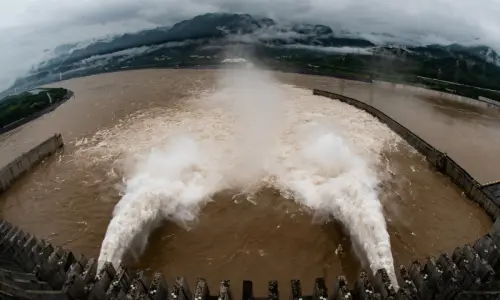
INDIA’S latest move to advance the Chenab-Beas Link Tunnel Project and its plan to flush silt from the Salal Dam reservoir clearly exposes the real motive behind its illegal, unilateral suspension of the Indus Waters Treaty. New Delhi plans to divert about 1.9 MAF of water annually from the Chenab basin to the Beas basin. The project violates both the Vienna Convention on the Law of Treaties, as well as principles reflected in the UN Convention on the Law of the Non-Navigational Uses of International Watercourses. Likewise, Indian plans to flush silt from the reservoir of the Salal Dam would provide India with a degree of water-flow control not permitted under the IWT framework or the 1978 Salal Agreement. As a Foreign Office spokesman said, the move reinforces Pakistan’s concerns that India is seeking to weaponise water. This also shows that India has no respect for the broader principles of international water law, let alone the bilateral transboundary water treaty. The fact that India’s plans to breach the treaty will have lasting consequences for Pakistan’s agriculture and economy shows that the Narendra Modi administration is using water resources as a strategic tool against Islamabad.
Another significant issue is not the immediate volume of water being diverted but the precedent it could set. If India proceeds with inter-basin transfers from a western river allocated to Pakistan, it could fundamentally alter the interpretation and future functioning of the IWT, one of the world’s longest-standing transboundary water-sharing agreements, besides undermining the framework of other such international treaties. However, it must realise that its attempts to alter flows of Pakistani rivers could also have serious consequences for regional and international peace and security. That India has officially neither informed Islamabad about either project, nor shared technical details, nor invited it for consultations as required under the IWT underscores its mala fide intent. Islamabad has reiterated that the western rivers were allocated to Pakistan for unrestricted use under the treaty and says it retains all available options to protect its rights. Though Pakistan has called upon the international community to pressure India to adhere to the treaty, Islamabad must now invoke every legal and diplomatic mechanism available under the IWT to defend its water rights before India’s unilateral actions render the treaty a dead document.
Published in Dawn, June 6th, 2026