0
0

THE World Environment Day, which falls today (June 5), carries added significance because the rate of climate change has surpassed some projections as well as the Paris Agreement target, which called for limiting global warming to 1.5-2 degrees Celsius over pre-industrial levels. The average global temperature is rising at a pace of 0.17 degrees per decade, and is predicted to rise by 2.5 to 4.5 degrees.
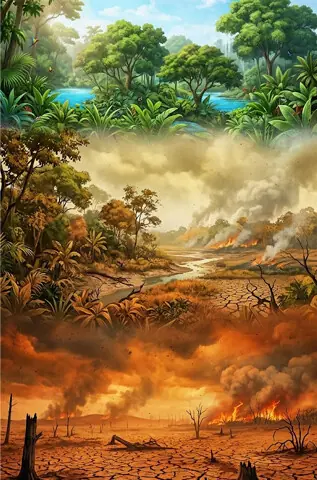
The term ‘greenhouse effect’ was first used in 1907 to describe the process by which greenhouse gases (GHGs) found in Earth’s atmosphere cause the planet to warm. Earth is sometimes referred to as the ‘Goldilocks’ planet because of its ideal climate, which is neither too hot nor too cold and sustains temperatures that are conducive to life. The term ‘Hothouse Earth’ was first used in 2018 to describe a potential course in which human-caused climate change sets the planet on a warming path that would be difficult or impossible to control, as the phenomenon is more intense, sometimes abrupt, and undoubtedly disruptive. In this scenario, human efforts to reduce emissions will become futile, and recovery may be impossible, even with reductions in carbon dioxide (CO2) emissions.
To be clear, there are a number of forces at play that might place us on the Hothouse Earth trajectory. These mechanisms include GHG emissions, which are driven by the burning of fossil fuels, industrial processes, deforestation and land-use change; climate feedbacks, which are looping reactions in Earth’s systems; and tipping points, which are the combined warming impact of human emissions and climate feedback loops. In a Hothouse scenario, the global temperature stays significantly above the 4-degree rise and activate mechanisms in Earth’s climate that eventually push the global climate well over the threshold into continued, self-perpetuating warming, independent of human emissions, driving a domino-like cascade of melting ice, warming seas, shifting currents and dying forests, and may impact temperatures, weather patterns, ice sheets, ocean circulation and human societies.
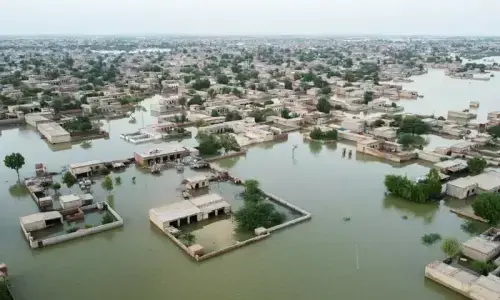
Pakistan, despite contributing less than one per cent to global GHG emissions, is considered being on the front line of global climate change — a state where melting glaciers, water crises, extreme heatwaves, agricultural vulnerability, food and livelihood security, and economic strain are together making climate change uncontrollable.
The window of opportunity to keep global temperatures below the critical levels may be fast closing. Therefore, addressing climate change necessitates more drastic, rapid, fundamental trans-formations both locally and globally.
Stronger legislative frameworks that expedite emission reductions are needed, such as the rapid phase-out of fossil fuels, the deep and immediate decarboni-sation of transportation and industry, mass-level energy efficiency, the needed improvement in natural carbon sinks, and the use of advanced technology for CO2 removal.
Advances in high-resolution Earth-system modelling, coordinated global tipping-point monitoring, and anticipatory governance to control cascading risks are examples of other innovative strategies that might enhance human capacity to identify early warning signs and avert an irreversible transition from a Greenhouse planet to a Hothouse planet.
Dr Ainy Zehra
Islamabad
Published in Dawn, June 5th, 2026